You have forty saved wedding hairstyles and not one of them is photographed with a veil. So you are about to walk into a hair trial holding pictures that do not include the single heaviest object you will wear on your head all day.
That is the whole problem in one sentence. A veil is not an accessory you add at the end. It is a metal comb pushed into your hair with a metre or more of fabric hanging off it, pulling backwards and downwards for nine hours, and it changes the structure of whatever style it sits in.
The good news: once you know where the comb needs to go, the decision gets simple. This guide covers the four situations brides actually ask about, what changes for short, fine and thick hair, how to combine a veil with a headpiece without losing one of them, and how to make the whole thing survive the reception. Updated in July 2026.
Key takeaway: A veil comb needs an anchor, meaning any place your hair changes direction or density: the seam of a low bun, the gather of a half-up style, or a backcombed section at the crown when hair is worn down. Low chignons hold most securely, half-up is the most forgiving, and loose hair works if the comb sits high with texture to grip. Always insert a comb against the direction of the hair.
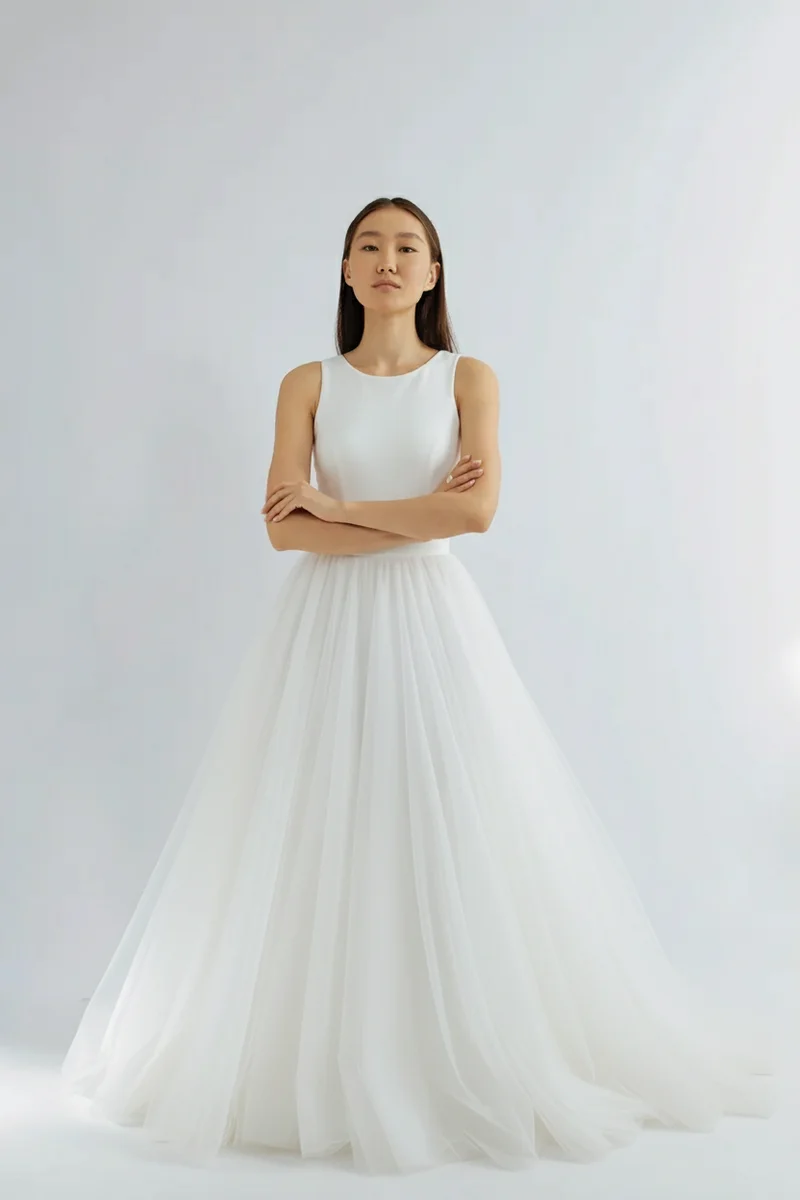
See this dress on you, before the boutique
Upload one photo and preview this style on yourself in seconds. No appointment, no pressure.
 Her photo
Where Does the Veil Comb Actually Go?
The comb goes wherever your hair changes direction or density, because that is the only place it can grip: the seam of a bun, the gather of a half-up style, or a small backcombed section at the crown. Pick the hairstyle first, find its anchor, and the veil placement answers itself.
Every veil, from a birdcage to a cathedral, attaches at one point. That point takes tension all day, and a longer veil pulls harder. Hair gives you exactly three kinds of anchor:
- A seam, where a twist or bun meets the rest of the head. The strongest anchor available.
- A gather, where hair has been pulled back and secured, as in a half-up style.
- Backcombed hair at the crown, which is what a stylist builds when there is no natural anchor, for example when hair is worn fully down.
| Hairstyle | Anchor | Comb placement | Veil lengths it handles | Difficulty on your own |
|---|---|---|---|---|
| Low bun or chignon | Seam at the nape | Just above the bun, teeth angled down into the seam | Any, including chapel and cathedral | Moderate |
| Half-up, half-down | The gather | Directly under the gathered section | Fingertip to chapel | Easy |
| Hair fully down | Backcombed crown section | Crown to mid-back of head | Birdcage, bow, fingertip | Moderate, needs texture |
| Short hair or bob | Backcombed crown, or none | Clip-based veil or small headpiece | Birdcage, bow, short tiers | Easy with the right veil |
Trying it the other way round, choosing where you want the veil and then finding a hairstyle, is how brides end up with a comb that slides out during the group photos.
One more thing to settle early, because it rules out more combinations than any face-shape rule ever will: are you keeping the veil on all evening, or taking it off after the ceremony? If it comes off, the style underneath has to look finished on its own, and the comb must not leave a visible gap when it goes.
Updo and Low Chignon With a Veil
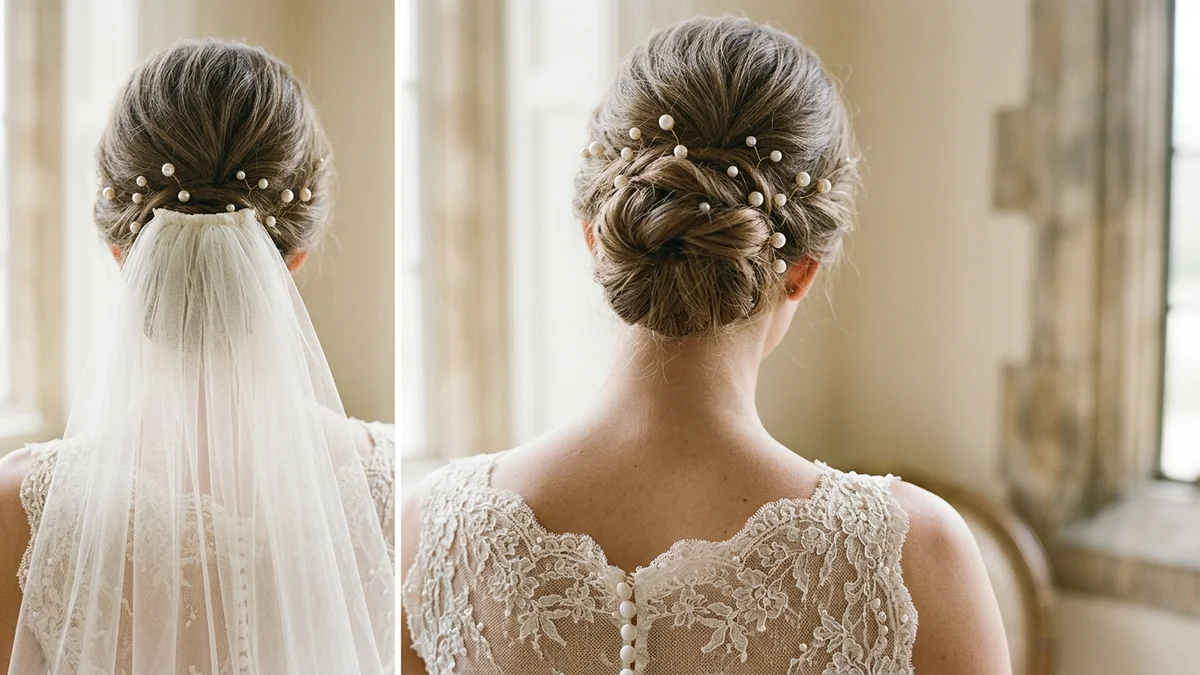
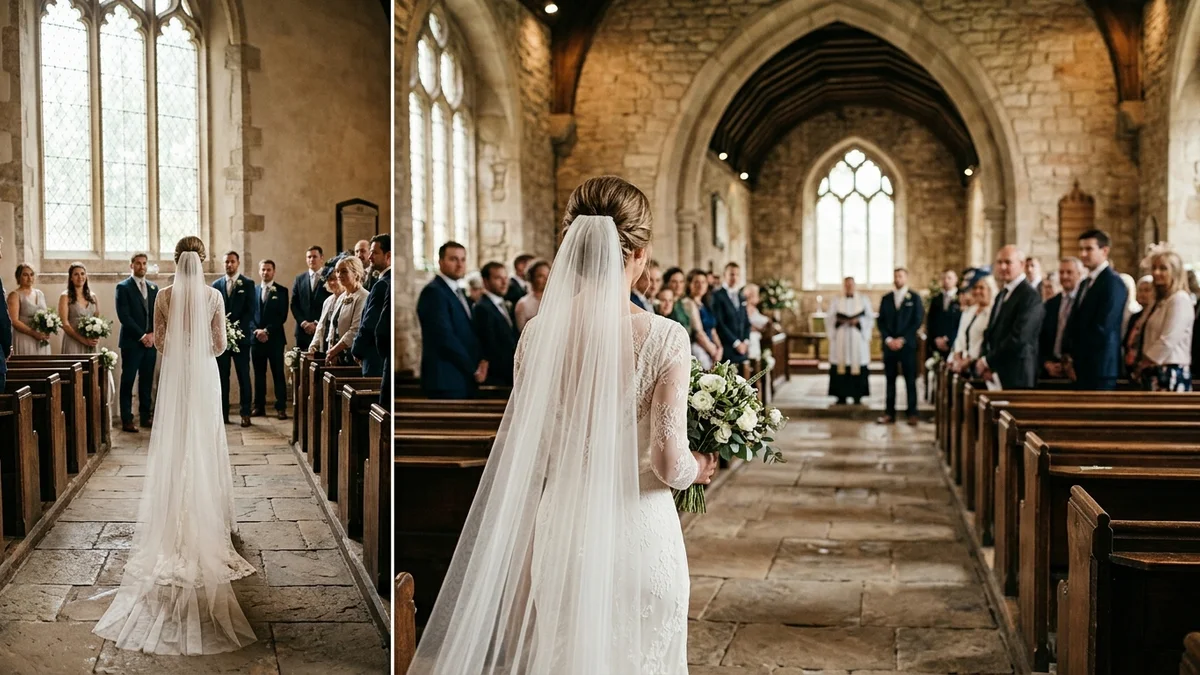
This is the most secure pairing and the reason it dominates bridal photography. A low bun creates a firm seam at the nape, and the comb pushes into it and stops moving.
Set the comb just above the bun, teeth angled downward into the seam, so the fabric falls over the bun rather than out of it. A veil set below the bun drags the whole style backwards over the course of the day.
The look works because it leaves the back of your head structured, which is exactly the angle a ceremony gets photographed from: walking down the aisle, the first look, the wide shot during the vows. It is also the easiest style to decorate, and here is the detail brides forget: pearl pins scattered along the twists of the bun stay visible after the veil comes off. A full updo takes eight to twelve pins, which is why our pearl pin set comes as eighteen at $29 rather than as a pair. If you would rather make one decision than compose a scatter, a single pearl hair comb does the same job in one push.
Bridal Consultant Tip: For a chapel or cathedral veil, ask for the bun to be secured with a criss-cross of pins rather than one elastic, and set the veil comb before the final spray. A long veil weighs nothing in your hand and a great deal at the end of a nine-hour day.
Half-Up, Half-Down With a Veil
The most forgiving of the four, and the one to choose if you are doing your own hair.
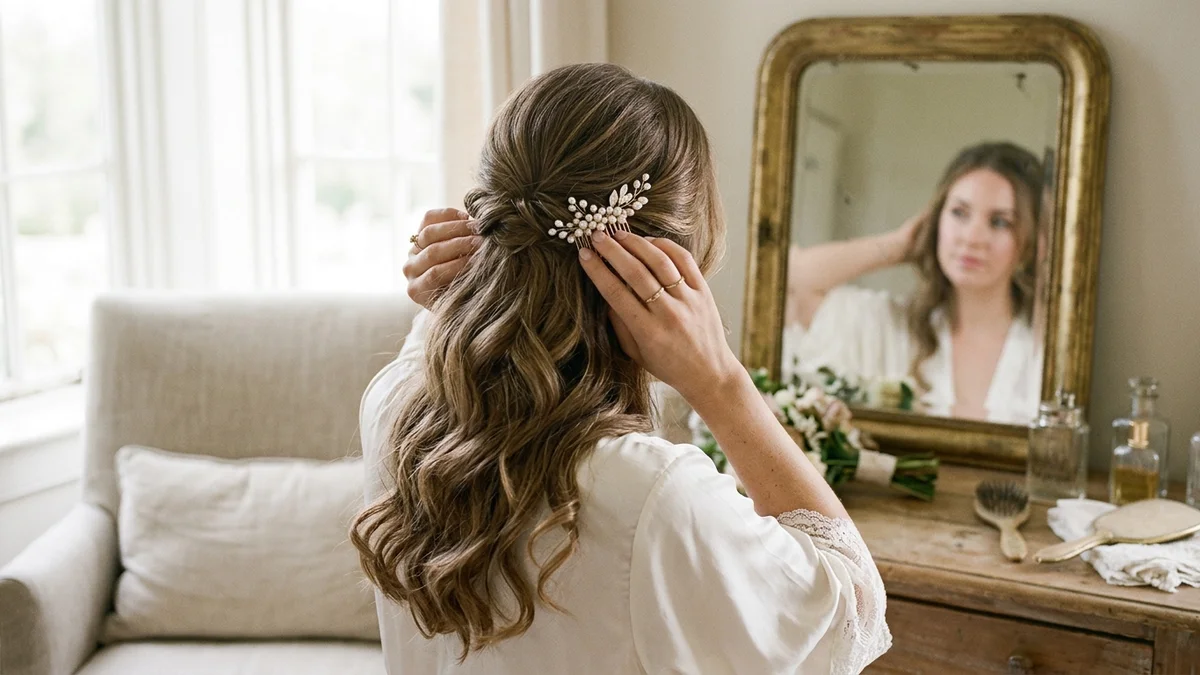
Push the comb in just underneath the gathered section, where the hair changes direction. The veil then falls over the loose hair, and because the base is completely hidden you have room to be imprecise. A centimetre off and nobody can tell.
This style also has the best answer to the after-ceremony question. Removing a veil from a half-up style leaves a finished look, because the shape was never dependent on the veil in the first place. A single decorative piece set just above the veil comb keeps the back of your head interesting once the fabric is gone.
The order matters and it is the mistake most people make: put the decorative piece in first, then the veil comb underneath it, so the pearls stay on top and visible.
Can You Wear a Veil With Your Hair Down?
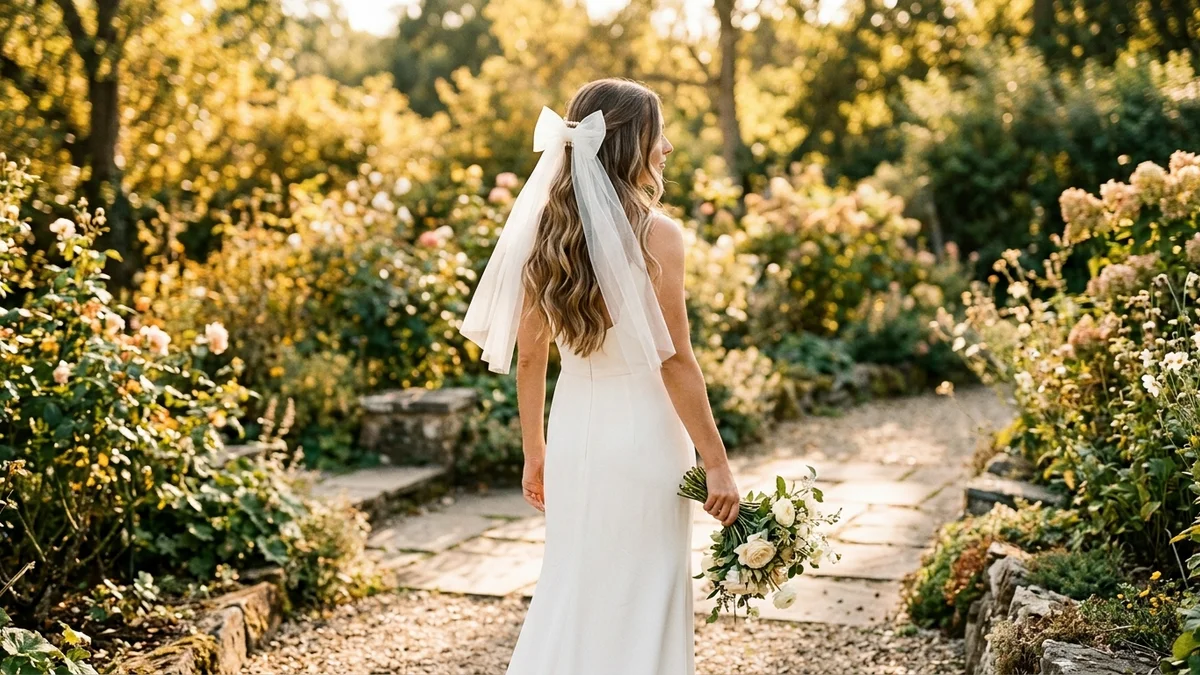
Yes. The comb has to sit higher than instinct suggests, at the crown to mid-back of the head, in a small backcombed and lightly sprayed section. Loose hair offers no natural anchor, so you have to build one. Keep the veil short and light, and add texture: dead-straight hair gives a comb nothing to bite into.
A lot of stylists discourage this pairing, and the reason is mechanical rather than aesthetic. Two conditions fix it.
Texture first. Soft waves are both a styling choice and a structural one. Silky straight hair plus a comb equals a comb on the floor by the second dance.
Then weight. A fingertip length or a bow veil sits happily on loose hair. A cathedral veil on a backcombed crown section is a nine-hour headache, literally.
If you want the hair-down look for the reception specifically, the cleanest route is a low chignon with the veil for the ceremony, then take both out for the evening. You get the secure version when it matters and the loose version in the photographs where people are dancing.
Short Hair, Fine Hair, Thick Hair
| Hair type | The real constraint | What to do |
|---|---|---|
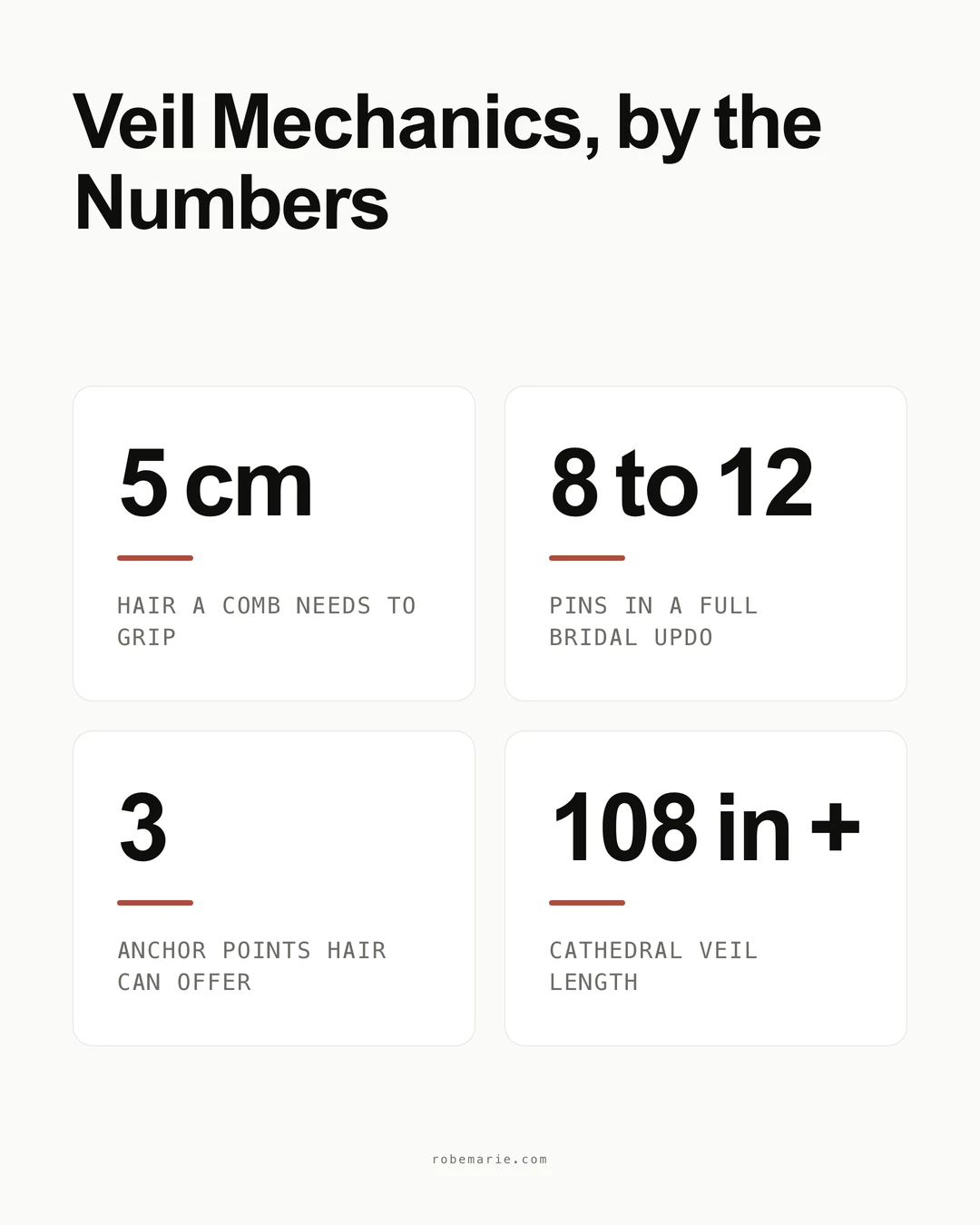
| Short hair or a bob | A comb needs roughly 5 cm of hair to grip | Use a clip-based veil or small headpiece, or backcomb a crown section. Short veil styles were built for this |
| Fine hair | The comb slips and the style collapses | Backcomb plus light-hold spray at the anchor, and keep the veil short so there is less pull. U-shaped pins grip fine hair better than straight bobby pins |
| Thick or curly hair | Anchors everywhere, but volume competes with the veil | Set the comb deeper, let the veil sit against the hair rather than on top of it, and prefer a single layer over a two-tier |
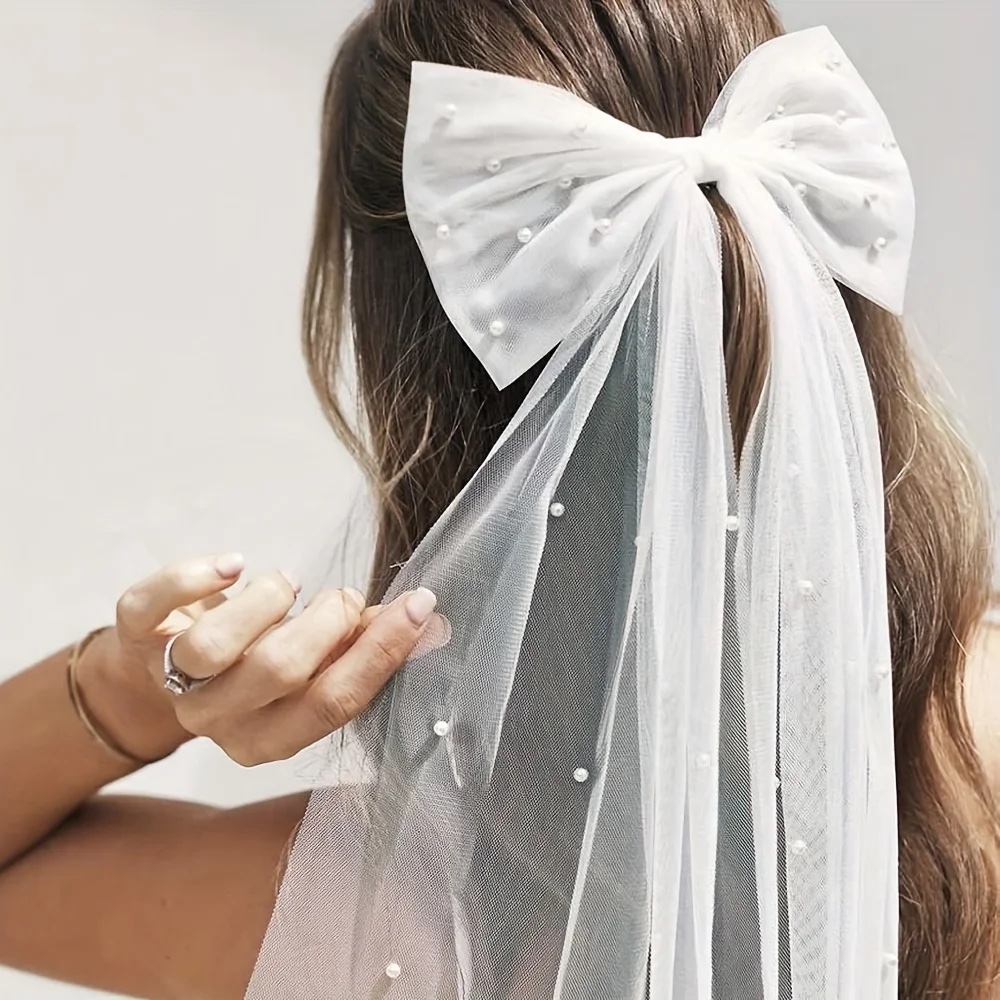
Short hair deserves a note of its own, because it gets written off unfairly. A bob and a veil work, and they work best with the shapes designed for less length. Birdcage and bow veils both read as intentional structure rather than as an anchor for hair you do not have. Our bow veil trend guide covers why that shape took over 2025 and 2026, and the complete wedding veil guide runs through every length from birdcage to cathedral.
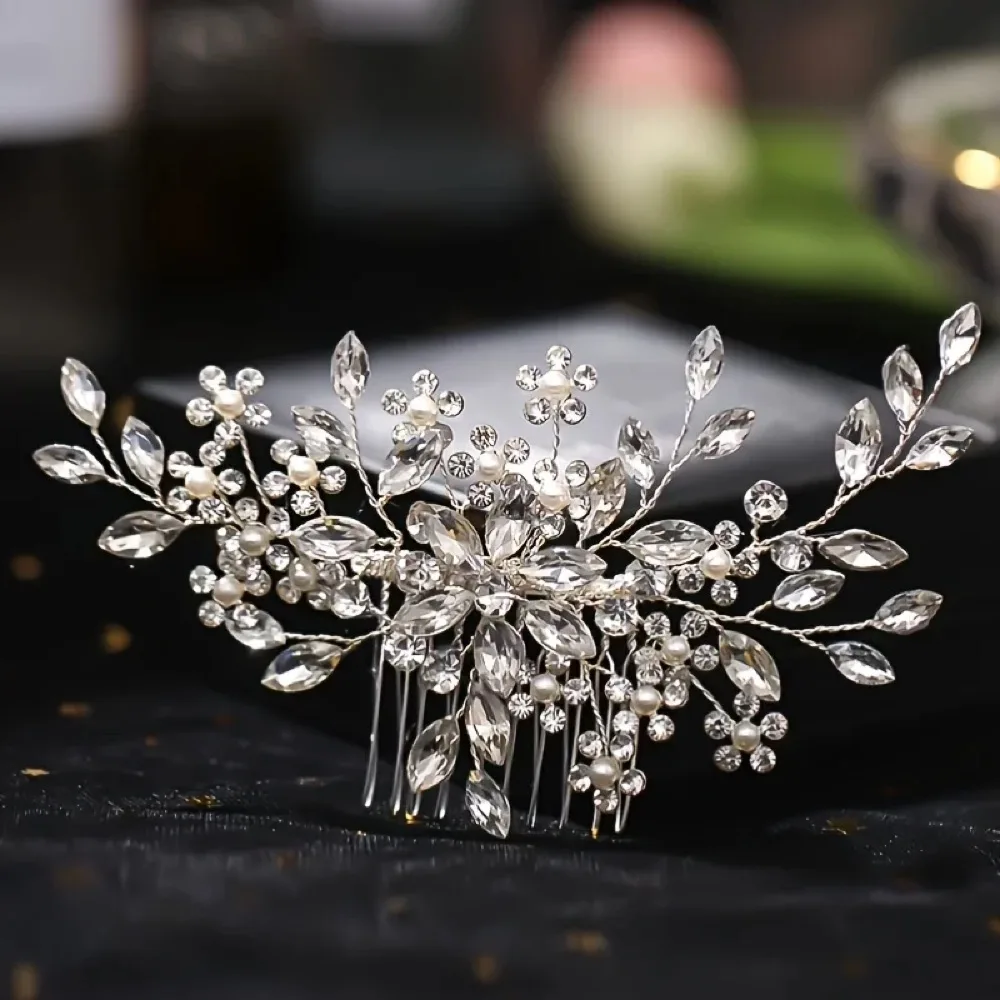
Veil Plus a Tiara, Headband or Decorative Comb
One rule prevents almost every failure here: the decorative piece goes in first, the veil comb goes in underneath it. Reverse the order and the veil hides the piece you paid for, and taking the veil off later pulls the headpiece out with it.
| Combination | Where each sits | Notes |
|---|---|---|
| Tiara or crown + veil | Tiara at the front of the crown, veil comb behind it at the back of the head | The easiest pairing, since the two sit far apart. A longer veil actually helps here |
| Headband + veil | Headband across or behind the crown, veil comb below it | The safest formal combination going, with a plain single-layer veil |
| Decorative comb + veil | Decorative comb at the seam or above the gather, veil comb directly beneath, teeth the other way | Tightest pairing. They lock against each other rather than fighting |
Bridal Consultant Tip: Photograph the back of your head at the hair trial, from about two metres away, with your phone. Everyone checks the mirror at arm's length, which is the one distance nobody will ever see you from. Half the arrangements that look intricate up close read as nothing at all in a ceremony wide shot.
What not to do: three elements at once. A tiara plus a decorative comb plus a two-tier lace veil is where a bridal look becomes a costume department. Pick the two that matter.
This is also where the current trend cycle helps you. Bridal veil coverage for 2026, from Emmaline Bride's 2026 veil trend roundup to the styles Kleinfeld Bridal reports brides are asking for, points the same direction: pearl detailing, softer fabrics, and layering a veil with a hairpiece rather than choosing between them. The layered look is in fashion, so the insertion order is worth getting right.
Making It Survive the Whole Day
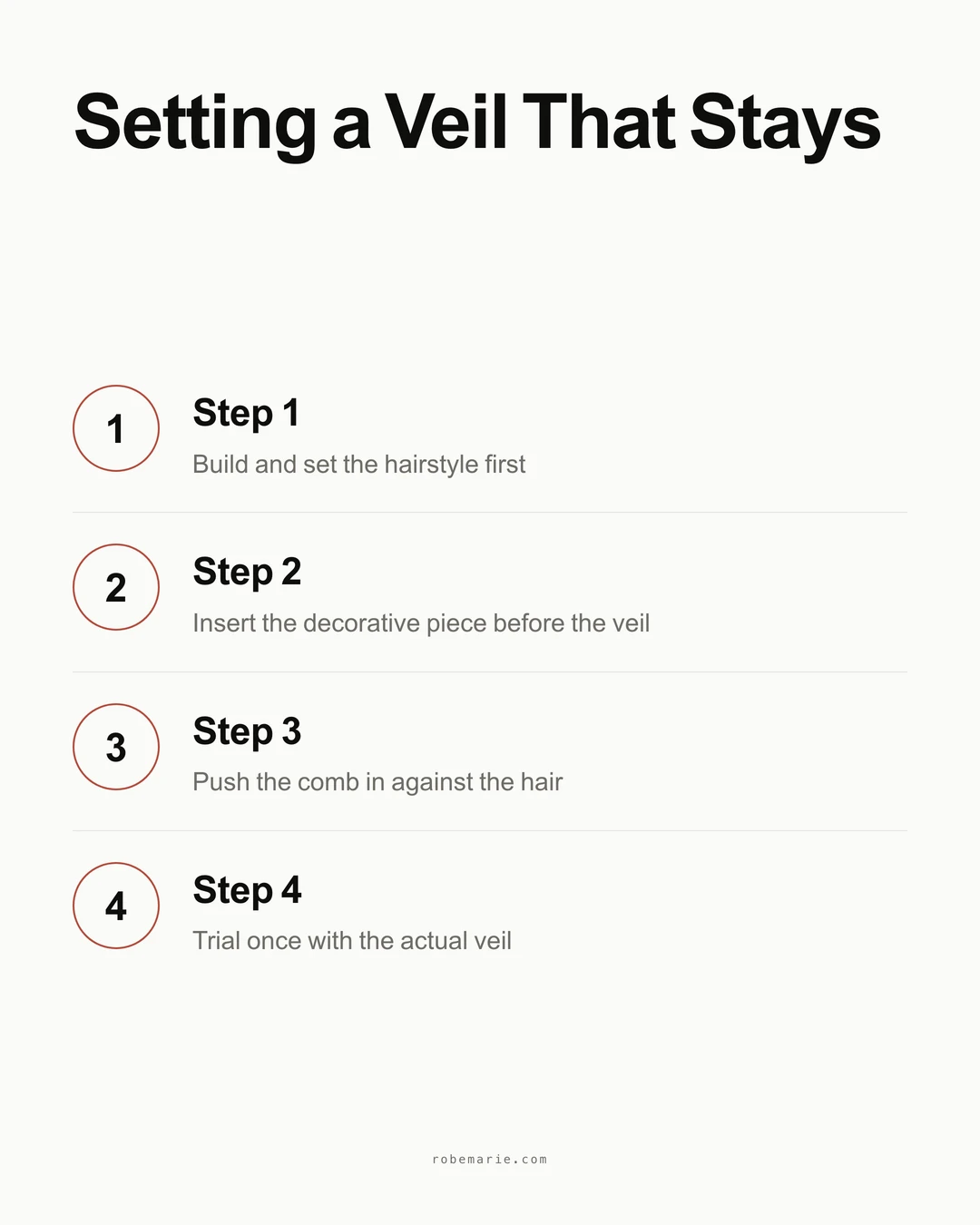
- Push every comb in against the direction of the hair. Not with it. This is the single most common mistake and the reason veils fall out.
- Do the trial with your actual veil, not a stand-in. Comb width and fabric weight differ by piece, and a stylist who has never handled yours is guessing. The Wedding Veil Shop's guide to securing a veil makes the same point about spritzing the anchor point with firm-hold spray for grip.
- Dry-run the removal. If the veil comes off mid-evening, practise it once with whoever will do it. It should not be a bridesmaid discovering the mechanism on a dance floor.
- Spray the hair, let it dry, then insert. Spraying over a comb already in place glues it there, which is a problem later.
- Do not plan a style that has to be rebuilt. A reception hairstyle requiring a stylist who left at 6pm is a hairstyle that will not happen.
In the video above, bridal hairstylist Pam Wrigley demonstrates how to anchor a veil in soft, relaxed hair, which is the hardest case covered on this page. Once you know the hairstyle, RobeMarie's virtual try-on lets you check it against the dress on your own body, because the neckline decides how much of your head and shoulders the frame actually shows.
Settle the Dress Before You Book the Hair Trial
The order most brides follow is hair trial, then dress, then a second hair trial. It is expensive and avoidable.
Neckline and back detail decide how much of your head, neck and shoulders sits in the frame, and that is what determines whether an updo or loose hair serves the look. An illusion back or a keyhole is a reason to wear hair up. A high neck usually is too. A plain crepe slip can take either.
Seeing the gown on your own body first collapses two appointments into one decision. And if you are assembling the rest of the details in parallel, our guide to something old, new, borrowed and blue covers where the small pieces fit, while bridal getting ready outfits covers the morning the hair actually gets done.
RobeMarie Insight: The most common mismatch we see is a hairstyle chosen against a mental image of the dress rather than the dress itself. Backs are where it shows: an updo planned for a plain back can leave an illusion or keyhole detail looking unfinished, and loose hair covers the one design feature the bride paid most for. Looking at the gown on your own frame first makes the hair decision obvious instead of theoretical.
Frequently Asked Questions
What is the best wedding hairstyle with a veil?
A low bun or chignon, because it creates a firm seam for the comb to grip and keeps the back of your head structured for the angles a ceremony is shot from. Half-up styles come a close second and are considerably more forgiving if you are doing your own hair.
Can I wear a veil with my hair down?
Yes. Place the comb higher than instinct suggests, at the crown to mid-back of the head, in a small backcombed and lightly sprayed section. Loose hair has no natural anchor, so add texture with soft waves and choose a shorter, lighter veil rather than a cathedral length.
Where does the veil comb go in a half-up hairstyle?
Directly underneath the gathered section, where the hair changes direction. The loose hair below hides the base of the comb, which makes this the most forgiving placement of all. If you are also wearing a decorative comb, insert that first and set the veil comb beneath it.
Should I put the veil in before or after the hairstyle is finished?
After the style is built and set, but before the final layer of hairspray. The hair needs to hold its shape for the comb to have something to grip, and spraying over an already-seated comb makes it difficult to remove cleanly later in the evening.
Can I wear a tiara and a veil at the same time?
Yes, and it is one of the easier combinations because the two sit far apart. The tiara goes at the front of the crown, the veil comb behind it at the back of the head. Always insert the tiara first, or the veil will cover it and pull it out when removed.
Which wedding hairstyle works with short hair and a veil?
A comb needs roughly five centimetres of hair to grip, so with a bob or shorter use a clip-based veil or a small headpiece, or set the comb into a backcombed crown section. Birdcage and bow veil shapes were designed for exactly this and read as deliberate.
How do I stop my veil falling out during the reception?
Insert the comb against the direction of the hair rather than with it, anchor it in a seam or gather rather than in loose strands, and match the veil length to the hairstyle. A long veil pulls hard on an anchor a short one never tests. Then do one full trial with the actual veil.
Do I need a hair trial if I am wearing a veil?
Yes, and bring the veil to it. Comb width, fabric weight and tier count all change how a style has to be built, and those are the variables a stylist cannot guess. A trial without the veil tests the hairstyle but not the thing that will pull on it all day.
One Anchor, One Decision
Almost every veil problem is the same problem: a comb with nothing to grip. Find the seam, the gather or the backcombed section, push the comb in against the direction of the hair, and the rest of the choices are aesthetic rather than structural.
Then work in the right order. Dress, hairstyle, decorative piece, veil comb underneath. Trial once with the real veil, practise the removal, and keep any piece you want visible above the fabric rather than below it.
When you are ready to see how it all sits together, try RobeMarie's virtual try-on and view gowns on your own body rather than a model's. The neckline and back you choose are what decide the hair, so it is worth settling that first.