A wedding veil transforms your bridal look from beautiful to breathtaking. Whether you dream of a dramatic cathedral-length masterpiece or a chic vintage birdcage, choosing the right veil can feel overwhelming with so many options available. This comprehensive guide covers every veil type, length, and style to help you find your perfect match.
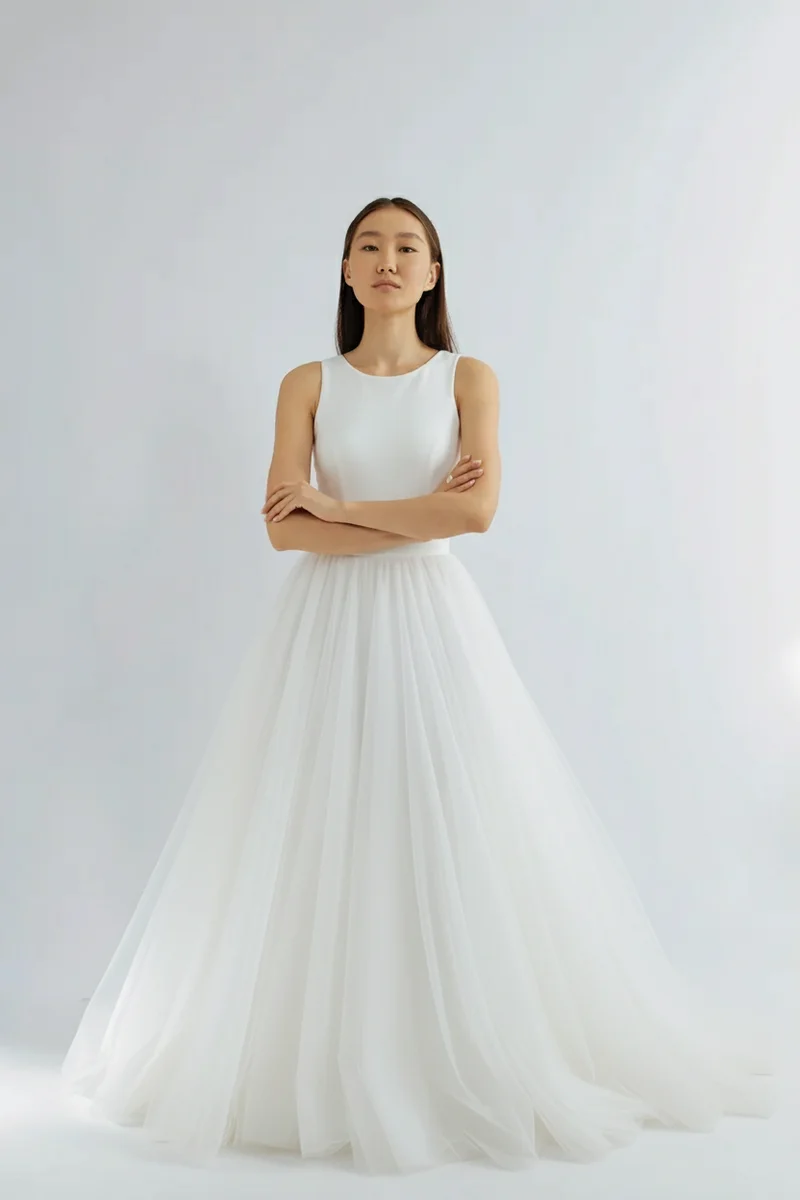
See this dress on you, before the boutique
Upload one photo and preview this style on yourself in seconds. No appointment, no pressure.
 Her photo
What Is a Wedding Veil and Why Does It Matter?
A wedding veil is a sheer fabric headpiece worn by brides, traditionally symbolizing purity, modesty, and the transition into marriage. Modern brides choose veils for their ethereal beauty and the way they frame the face, add movement to photographs, and create that unmistakable bridal silhouette. Your veil should complement your dress, flatter your features, and make you feel confident on your wedding day.
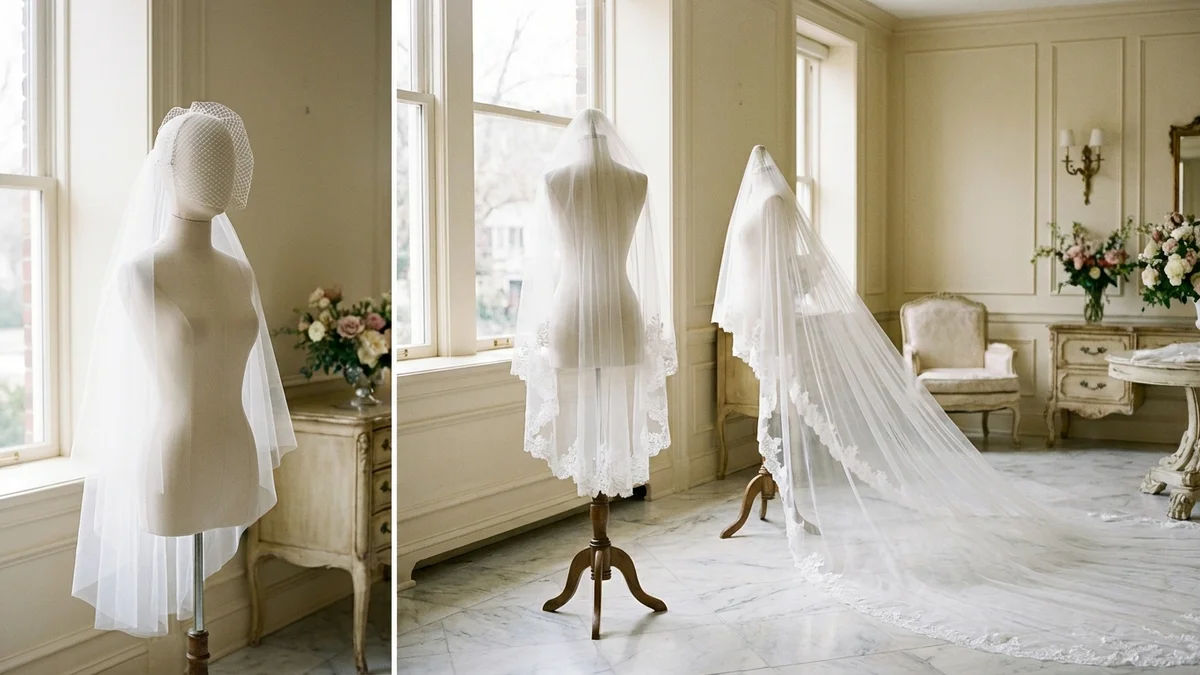
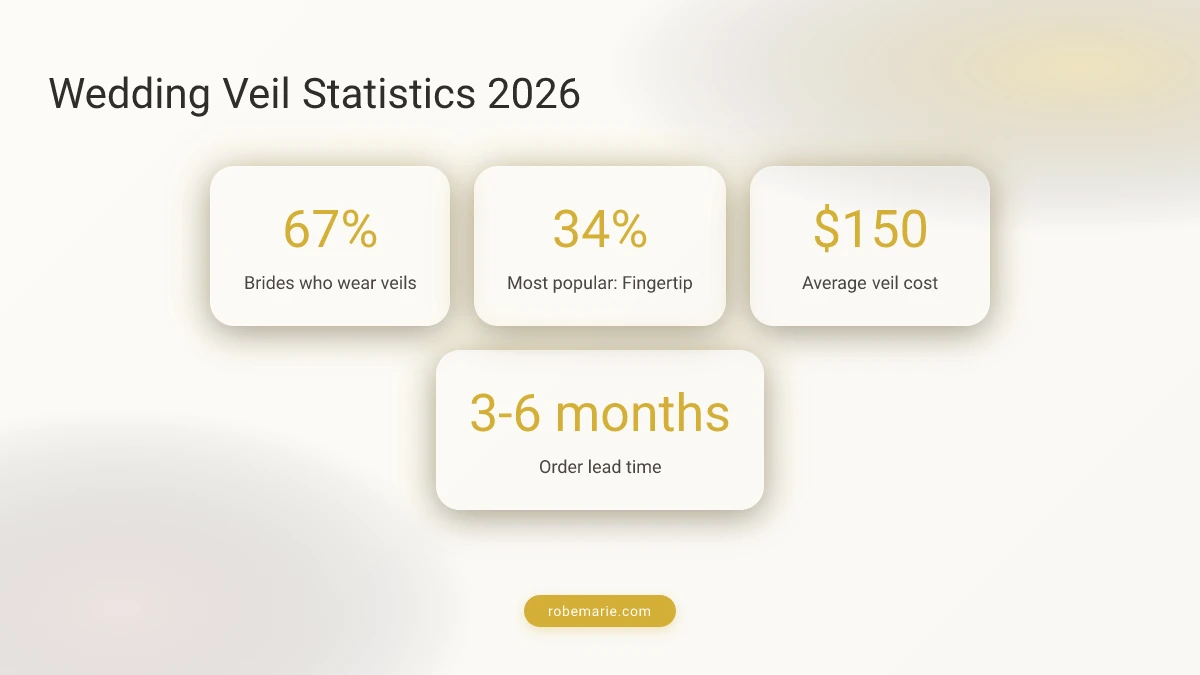
According to The Knot's 2025 Real Weddings Study, 67% of brides choose to wear a veil, with fingertip and cathedral lengths being the most popular choices.
Key Takeaway: Your wedding veil is more than tradition, it's a statement piece that can dramatically enhance your overall bridal look and create stunning photographs.
Wedding Veil Types by Length
Understanding veil lengths is essential for choosing one that complements your dress and venue. Here's a complete breakdown of every wedding veil length available:
| Veil Length | Measurement | Best For | Formality |
|---|---|---|---|
| Birdcage | 6-9 inches | Vintage looks, intimate weddings | Casual to Semi-formal |
| Blusher | 20-25 inches | Walking down the aisle, traditional ceremonies | All formalities |
| Shoulder | 20-22 inches | Simple dresses, casual venues | Casual to Semi-formal |
| Elbow | 25-30 inches | Informal weddings, easy movement | Casual to Semi-formal |
| Fingertip | 36-40 inches | Most dress styles, versatile option | Semi-formal to Formal |
| Waltz/Ballerina | 54-60 inches | Ballroom venues, dramatic photos | Formal |
| Floor/Sweep | 60-72 inches | Elegant ceremonies, grand venues | Formal |
| Chapel | 80-90 inches | Traditional weddings, church ceremonies | Formal |
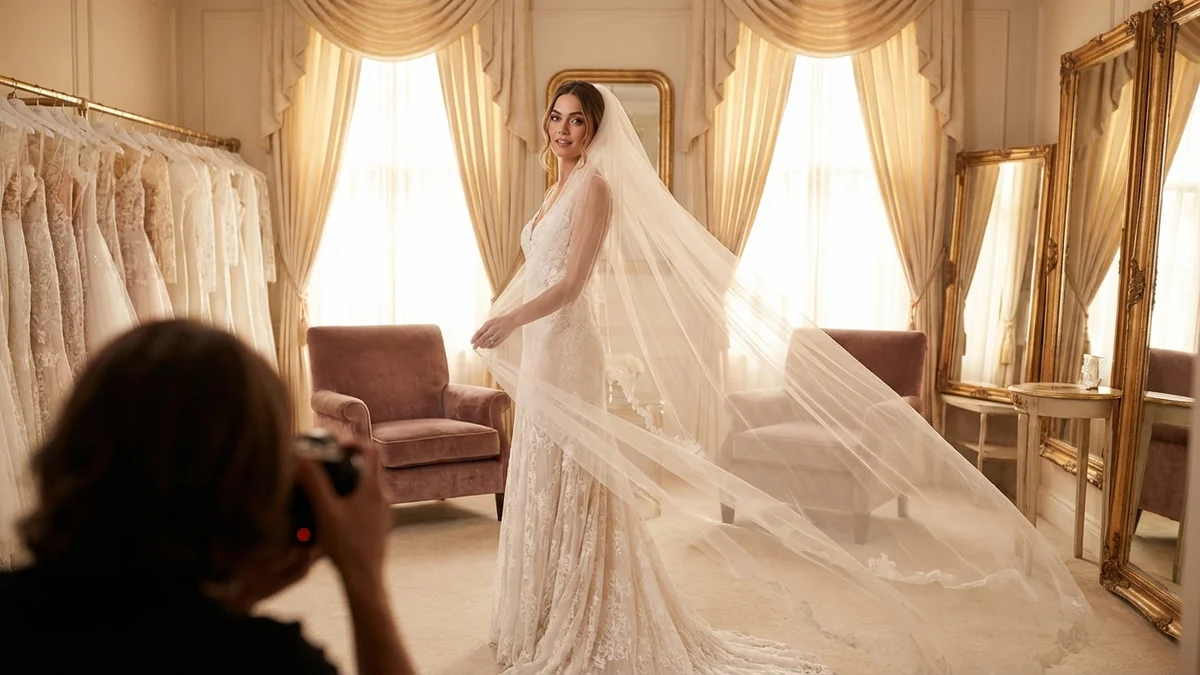
| Cathedral | 108-120 inches | Grand cathedrals, formal celebrations | Very Formal |
| Royal/Monarch | 144+ inches | Royal-inspired weddings, statement pieces | Ultra Formal |
Birdcage Veil (6-9 inches)
The birdcage veil offers a chic, vintage aesthetic perfect for modern brides who want subtle tradition. This short veil attaches with combs or clips and covers just the face, creating a retro Hollywood glamour. Birdcage veils work beautifully with tea-length dresses, fitted sheaths, and courthouse ceremonies. Our birdcage veil is the 1920s version, on a comb, one size.
Shoulder and Elbow Length (20-30 inches)
Shoulder and elbow-length veils provide elegance without the commitment of a longer train. These shorter options are ideal for outdoor weddings, destination celebrations, and brides who prioritize easy movement. They photograph beautifully without requiring assistance to manage.
Fingertip Veil (36-40 inches)
The fingertip veil remains the most popular choice among modern brides. This versatile length falls to your fingertips when arms are at your sides, offering graceful movement and beautiful photographs without overwhelming your dress. A fingertip veil flatters virtually every silhouette and works for both indoor and outdoor venues.
Chapel Veil (80-90 inches)
Chapel-length veils extend beyond the dress train, creating a formal, romantic look perfect for traditional church weddings. This length requires some assistance for management and is typically removed before the reception to allow for comfortable dancing.
Cathedral Veil (108+ inches)
The cathedral veil makes the ultimate bridal statement. Extending dramatically behind you, this show-stopping length creates breathtaking aisle photographs and suits grand venues with long aisles. Cathedral veils pair magnificently with ball gowns and formal celebrations.
Wedding Veil Styles Beyond Length
Beyond length, wedding veils come in distinct styles that can dramatically change your look:
| Veil Style | Characteristics | Best Dress Pairing |
|---|---|---|
| Mantilla | Circular lace with decorative edge | Romantic, lace gowns |
| Juliet Cap | Attached to fitted cap on head | Vintage, Art Deco styles |
| Drop Veil | Falls from a single point at crown | All dress styles |
| Cascade | Layers that fall at varying lengths | Ball gowns, formal dresses |
| Blusher | Short front layer over face | Traditional ceremonies |
Mantilla Veils
Originating from Spanish tradition, mantilla veils feature a circular or oval shape with decorative lace edging. They drape elegantly over the head without a comb, framing the face beautifully. Mantilla veils pair perfectly with lace wedding dresses and romantic, bohemian aesthetics. See the Spanish lace mantilla veil in our shop, or the pearl wedding veil if you want plain tulle with a little light in it.
Juliet Cap Veils
This vintage-inspired style features tulle attached to a small, decorated cap that sits on the crown of the head. Juliet cap veils evoke 1920s glamour and work beautifully with Art Deco-inspired gowns, beaded details, and vintage wedding themes.
Drop Veils
Drop veils gather at a single point on the back of the head, creating a dramatic waterfall effect. This style works with virtually any dress silhouette and allows for various placement options depending on your hairstyle.
How to Choose the Right Veil for Your Wedding Dress
Selecting a veil that complements your wedding dress requires considering silhouette, fabric, and details. Here's how to create a harmonious bridal look:
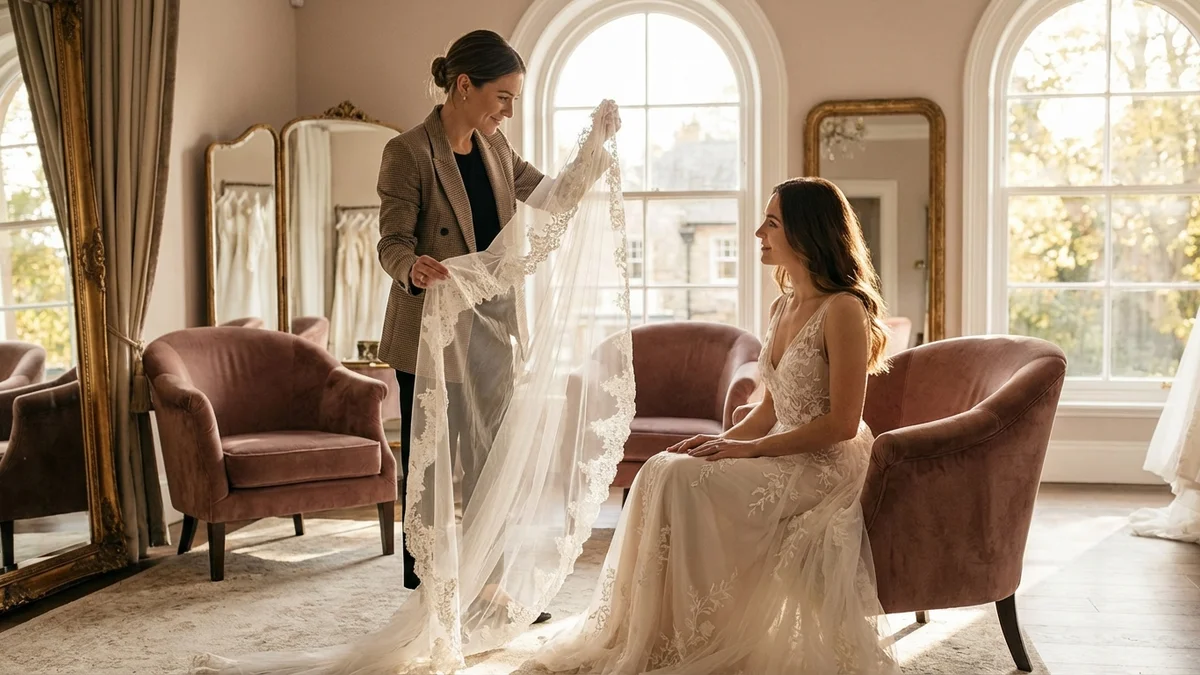
Match Veil to Dress Silhouette
| Dress Silhouette | Recommended Veil Lengths | Why It Works |
|---|---|---|
| A-Line | Fingertip, Chapel, Cathedral | Balances the gradual flare |
| Ball Gown | Chapel, Cathedral, Royal | Matches the drama of full skirt |
| Mermaid/Trumpet | Fingertip, Cathedral | Doesn't compete with fitted silhouette |
| Sheath/Column | Shoulder, Elbow, Fingertip | Maintains sleek, modern lines |
| Tea-Length | Birdcage, Shoulder | Proportional to shorter hemline |
Balance Details Between Dress and Veil
If your dress is heavily embellished: Choose a simple, plain tulle veil to let your gown shine. Ornate beading, lace appliques, or heavy embroidery on your dress call for a clean veil that won't compete for attention.
If your dress is minimal and clean: Feel free to add drama with a lace-trimmed, pearl-scattered, or embroidered veil. Simple, sleek gowns provide the perfect canvas for statement veils.
Consider Your Venue
Your wedding venue should influence your veil choice:
- Cathedral or church: Longer veils (chapel or cathedral) enhance the grandeur
- Outdoor or garden: Fingertip or shorter to avoid tangling in grass or wind
- Beach: Lightweight, shorter veils that won't blow excessively
- Intimate venue: Shoulder or elbow length for proportional elegance
- Ballroom: Waltz or floor-length for sophisticated drama
Visualize Before You Buy
Finding the perfect veil and dress combination can feel overwhelming when shopping in person. Before visiting boutiques, use RobeMarie's virtual try-on technology to see how different wedding dress silhouettes look on you. This helps you narrow down your style preferences and understand which veil lengths might complement your chosen dress shape.
2026 Wedding Veil Trends
This year's bridal veil trends embrace personalization, modern materials, and artistic details:
| Trend | Description | Best For |
|---|---|---|
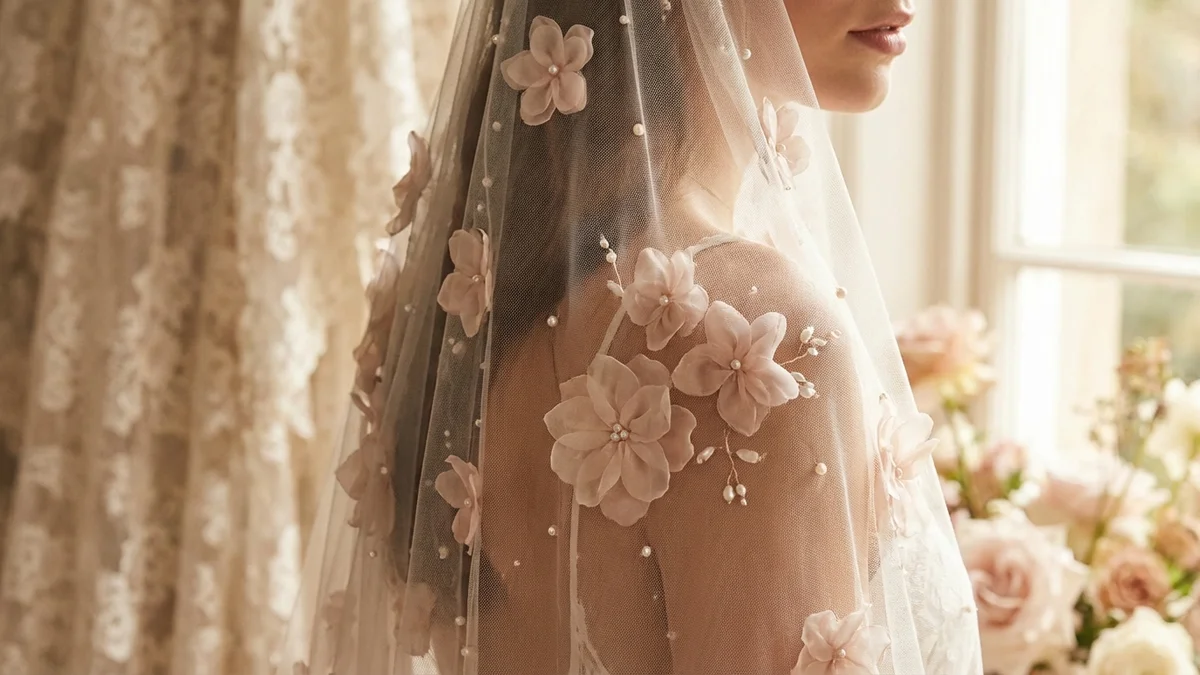
| 3D Floral Appliques | Hand-sewn dimensional flowers | Romantic, garden weddings |
| Personalized Veils | Embroidered initials, dates, phrases | Sentimental brides |
| Pearl-Scattered | Delicate pearls across tulle | Minimalist dresses |
| Colored Veils | Champagne, blush, even black | Modern, non-traditional brides |
| Cape Veils | Shoulder-draping alternative | Contemporary, fashion-forward looks |
Short and Playful Veils
Shorter veils including fingertip, elbow, and shoulder lengths are gaining popularity for their modern, flirty aesthetic. These work exceptionally well for city weddings, contemporary gowns, and brides who want easy movement throughout their celebration.
3D Floral Embellishments
According to designer Anastasia Nikiforova, "3D flowers made from tulle or lace bring a fresh, romantic vibe with their texture. They create soft shadows that make people want to take a closer look." This trend adds dimension and artistry to classic veils.
Personalized and Custom Veils
Customization leads 2026 trends, with brides adding embroidered initials, wedding dates, meaningful phrases, or floral motifs to their veils. These personalized touches create lasting keepsakes and add sentimental value beyond the wedding day.
Veil Alternatives
Modern "anti-veil" options are growing in popularity. Capes, embellished tulle jackets, and removable Watteau trains offer contemporary alternatives for brides seeking unique bridal accessories.
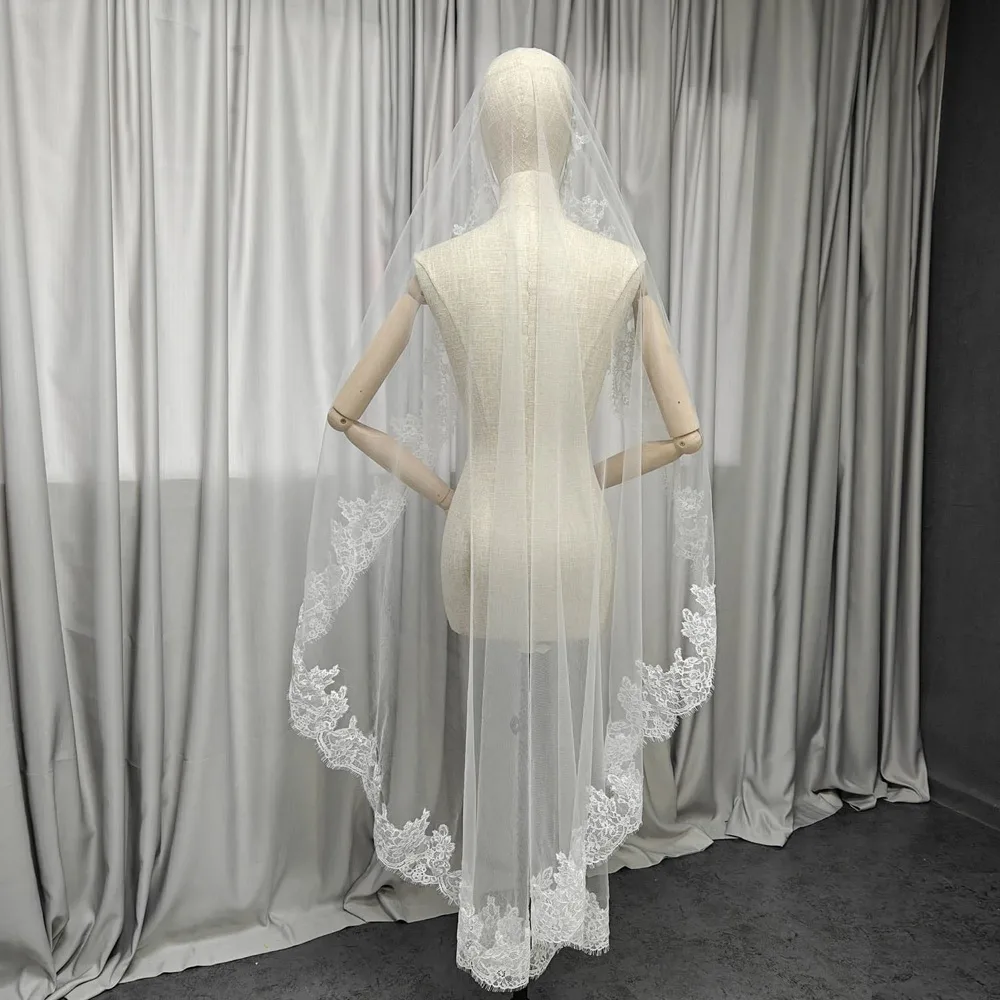
How to Wear and Secure Your Wedding Veil
Properly wearing your veil ensures comfort and security throughout your wedding day:
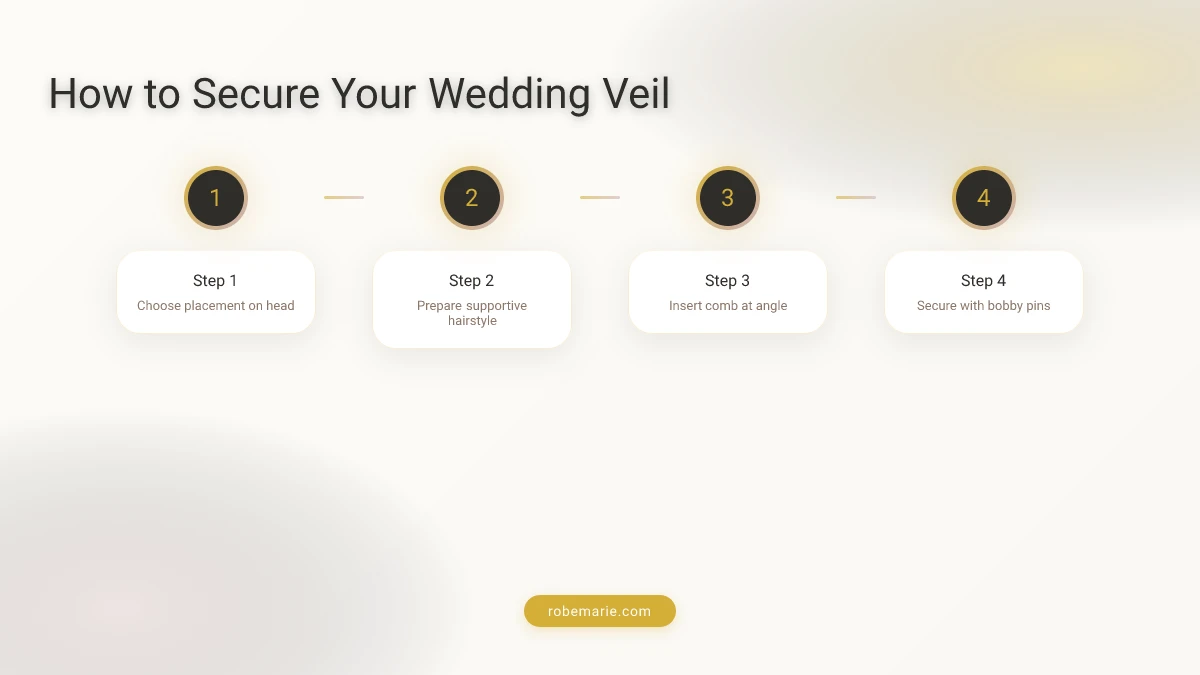
Step 1: Choose Your Placement
Decide where on your head you want the veil positioned:
- High on crown: Creates drama and height
- Mid-head: Most common, versatile placement
- Low at nape: Romantic, understated look
Step 2: Prepare Your Hairstyle
Your hairstyle must support your veil's weight and attachment:
- For heavy veils: Secure updos, bridal buns, or structured half-up styles
- For lighter veils: Can work with hair down, but use a single-tier veil
- For all veils: Create a teased section or use a small hidden bun for comb grip
Step 3: Secure the Comb
Most veils attach via a comb sewn to the gathering:
- Position the comb's curved side following your head's shape
- Insert teeth into your hair at an angle
- Add bobby pins through comb teeth for extra security
- Cross pins in an X pattern for maximum hold
Step 4: Test Before the Wedding
Practice wearing your veil before the big day:
- Walk, sit, and turn to test movement
- Check comb security after movement
- Ensure you can lift a blusher smoothly
- Confirm comfortable weight for extended wear
Key Takeaway: Book a veil trial with your hairstylist to perfect placement and ensure your veil feels secure and comfortable with your chosen hairstyle.
Wedding Veil Etiquette: When to Wear and Remove
Modern veil etiquette offers flexibility while honoring tradition:
When to Put On Your Veil
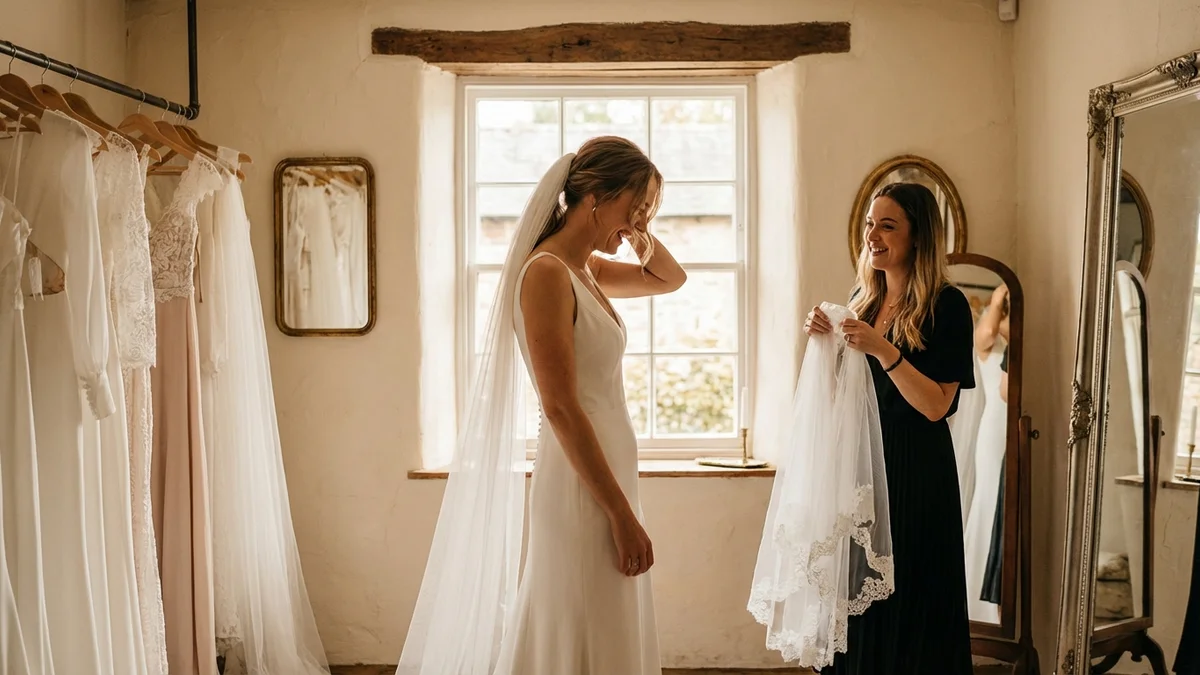
Brides typically put their veil on as one of the final steps while getting ready, just before wedding portraits begin. Many photographers capture the meaningful moment of a mother, sister, or bridesmaid placing the veil.
When to Lift the Blusher
If wearing a blusher (the short front layer over the face):
- Traditional: Father lifts it when giving you away at the altar
- Modern option: Groom lifts it before the first kiss
- Personal choice: Bride can flip it back herself anytime
- Skip entirely: Many brides wear the blusher back from the start
When to Remove Your Veil
There's no strict rule, but common choices include:
- After ceremony portraits: Most popular timing
- Before the reception: Allows freedom for dancing
- Keep it on: Works well with shorter, lighter veils
- After first dance: Capture key moments with veil, then remove for comfort
Ensure someone in your bridal party knows how to properly remove your veil without disturbing your hairstyle.
Common Wedding Veil Mistakes to Avoid
Avoid these pitfalls when selecting and wearing your wedding veil:
- Choosing a veil before your dress. Always select your gown first, then find a veil that complements its style, fabric, and details.
- Ignoring color matching. Veils should harmonize with your dress color. Choose ivory or off-white rather than pure white, which can photograph blue from sky reflection.
- Forgetting venue practicality. A cathedral veil at a beach wedding will cause frustration. Match veil length to your setting.
- Overlooking hairstyle compatibility. Heavy veils need structured updos. Confirm your hairstylist can accommodate your veil before purchasing.
- Ordering too late. Order your veil 3-6 months before your wedding. Custom veils require 8-12 weeks for production.
- Not practicing wearing it. Test your veil before the wedding day to avoid surprises with weight, placement, or movement.
- Competing with dress details. If your gown has elaborate embellishments, keep your veil simple. Let one element take center stage.
Frequently Asked Questions
How much does a wedding veil typically cost?
Wedding veils range from $50 to $500+ depending on length, fabric quality, and embellishments. Basic fingertip-length tulle veils start around $50-100, while designer cathedral veils with hand-sewn lace can exceed $500. Budget-conscious brides can find beautiful options under $100, while custom or heavily embellished veils command premium prices.
Should my wedding veil match my dress exactly?
Your wedding veil doesn't need to match your dress exactly, what matters is that the tones harmonize and complement each other. A helpful guideline is choosing a veil one shade lighter than your gown for a soft, ethereal effect. Avoid pure white veils, which can appear blue in outdoor photographs due to sky reflection.
Can I wear a veil with my hair down?
Wearing a veil with hair down is beautiful and popular among modern brides. Choose a single-tier veil rather than two-tier, and position it at the crown of your head for the most flattering look. The veil sits on top of your hair, allowing your styled locks to flow freely underneath. Our guide to wedding hairstyles with a veil covers exactly where the comb has to sit for loose hair, half-up styles and updos.
When should I order my wedding veil?
Order your wedding veil 3-6 months before your wedding to allow time for production and any adjustments. Custom veils require 8-12 weeks for creation. Always order after selecting your dress so you can coordinate style, length, and color perfectly. Rush orders may be available but typically incur additional fees.
Who traditionally lifts the bride's veil?
There is no strict rule about who lifts the veil. Some brides have their father lift it after walking down the aisle, while others prefer the groom to lift it before the first kiss. Many modern brides skip the face-covering entirely or flip it back themselves. Choose whatever feels meaningful to you.
How do I store my wedding veil before and after the wedding?
Before the wedding, hang your veil in a cool, dark closet away from direct sunlight to prevent discoloration. Use a padded hanger and cover with a breathable garment bag. After the wedding, have it professionally cleaned if needed, then store in acid-free tissue paper inside a preservation box to prevent yellowing. The same rules apply to the gown itself, covered in detail in our guide to storing a wedding dress.
What veil length works best for outdoor weddings?
Fingertip-length veils or shorter work best for outdoor weddings. Longer veils can catch on grass, sand, or uneven terrain and may blow excessively in wind. If you love the look of a cathedral veil, consider a detachable option, wear the longer layer for portraits, then remove it for the ceremony and reception.
Are wedding veils going out of style in 2026?
Wedding veils remain popular in 2026, with 67% of brides choosing to wear one. However, modern trends embrace alternatives like veil capes, embellished tulle jackets, and removable Watteau trains. The key is personal choice, wear what makes you feel beautiful, whether that's a traditional cathedral veil or a contemporary cape.
Conclusion
Choosing your perfect wedding veil is an exciting part of bridal planning that deserves thoughtful consideration. From understanding veil lengths and styles to matching your dress and venue, this guide provides everything you need to make a confident decision. Remember that your veil should complement your dress, flatter your features, and reflect your personal style.
Before you start boutique shopping, explore your options with RobeMarie's virtual try-on. See how different wedding dress silhouettes look on you, which helps you understand what veil lengths and styles might work best for your bridal vision. With the right preparation, you'll find a veil that makes you feel absolutely radiant on your wedding day.
Sources: