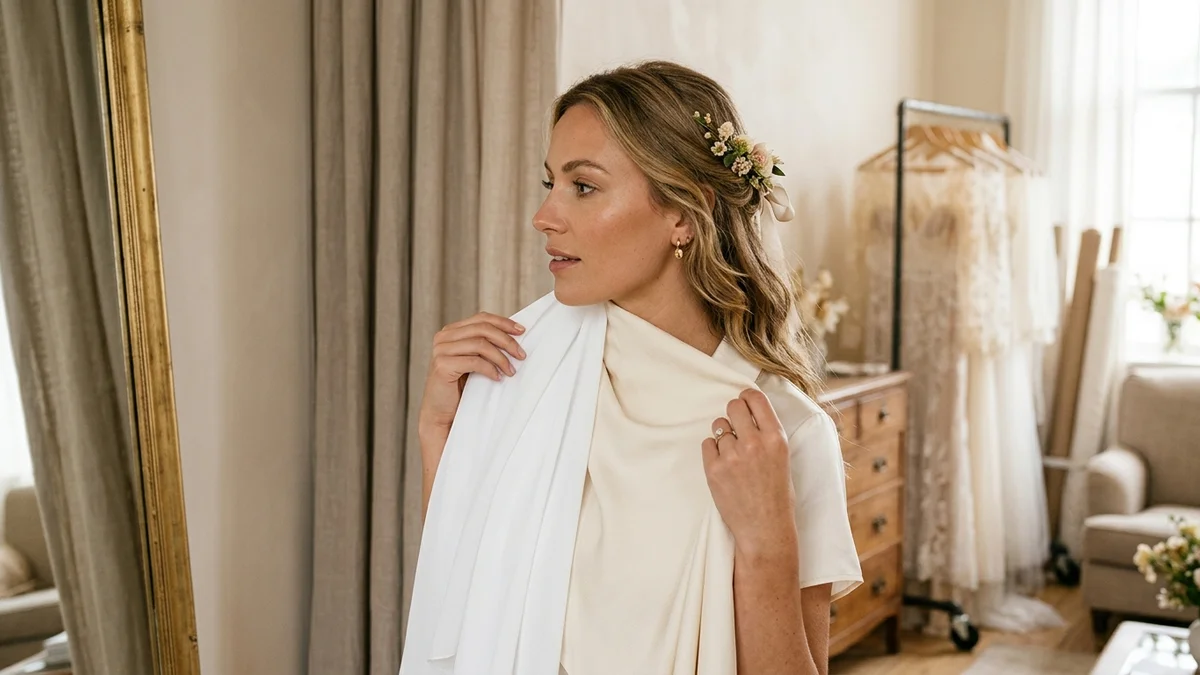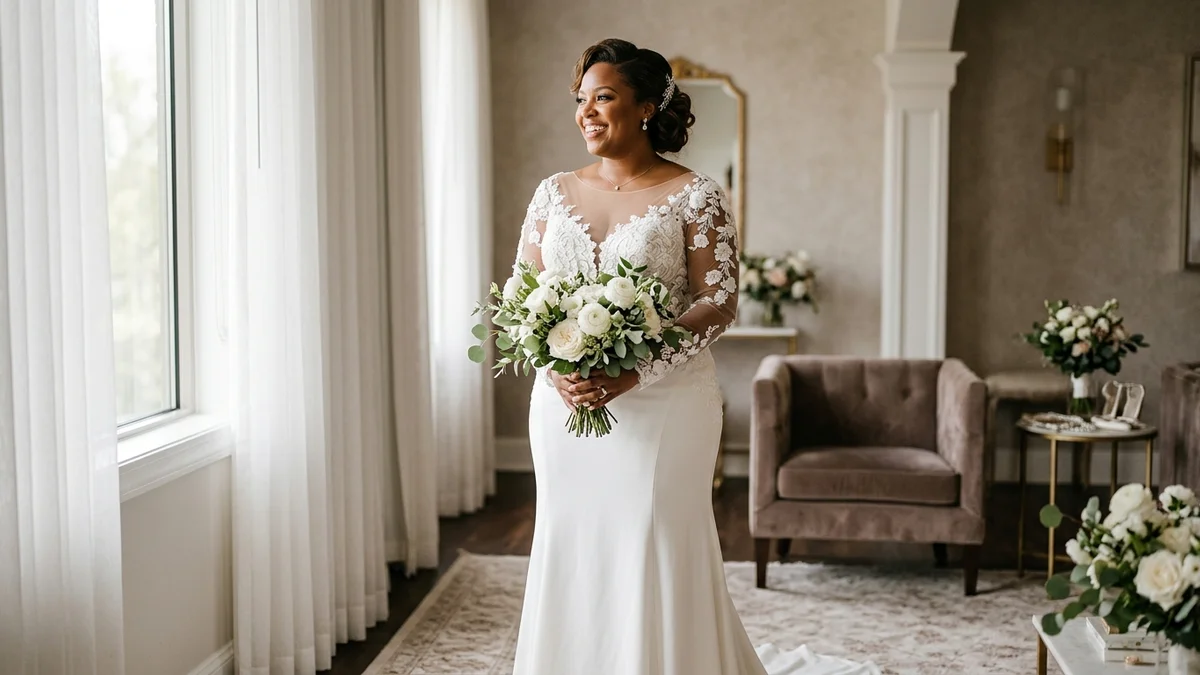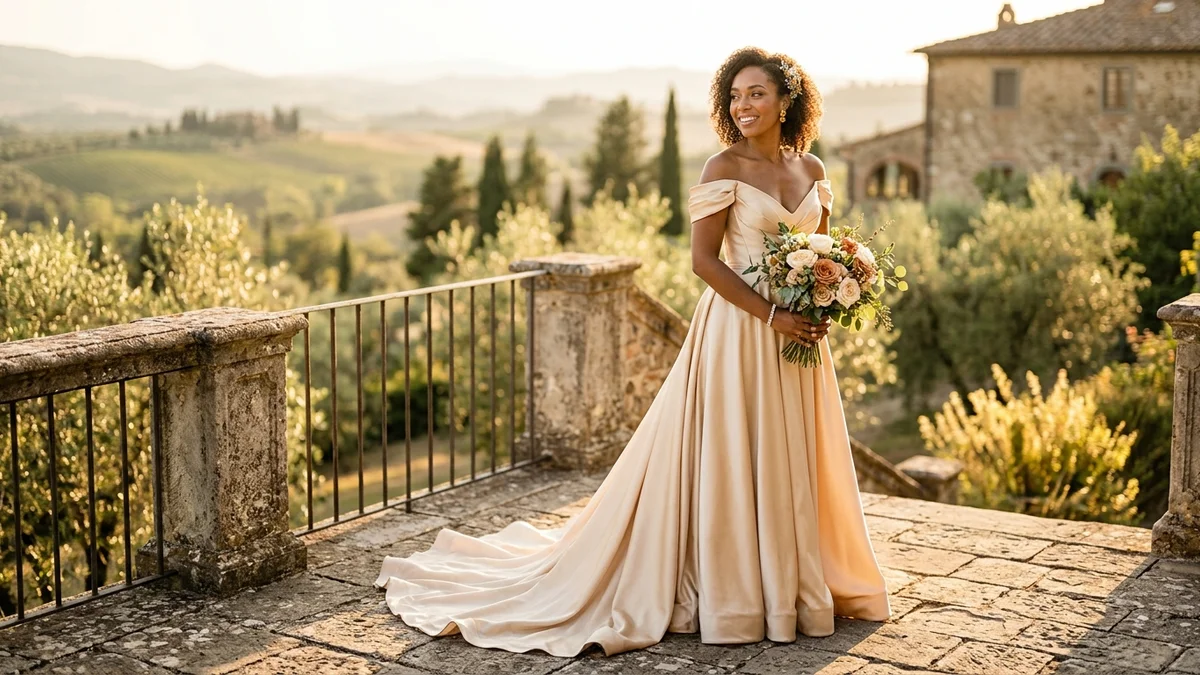
You saved the champagne wedding dress months ago and you still open the photo every few days. Then someone glanced over your shoulder and asked, completely sincerely, whether the dress was meant to look that beige. Now you are caught between a gown you genuinely love and a worry you cannot shake: will champagne read as warm and expensive in your photos, or will it just look like white that went wrong? Updated in July 2026, this guide answers that directly, and it spends most of its time on the part other guides skip, which is everything standing next to your dress.
Key Takeaway: A champagne wedding dress is a gown with warm gold or beige undertones, sitting between ivory and light gold. It suits most skin tones and photographs with a soft glow in warm light. Whether it reads as intentional or as dirty white depends less on the dress than on the veil, florals and whites you place beside it.
See this dress on you, before the boutique
Upload one photo and preview this style on yourself in seconds. No appointment, no pressure.
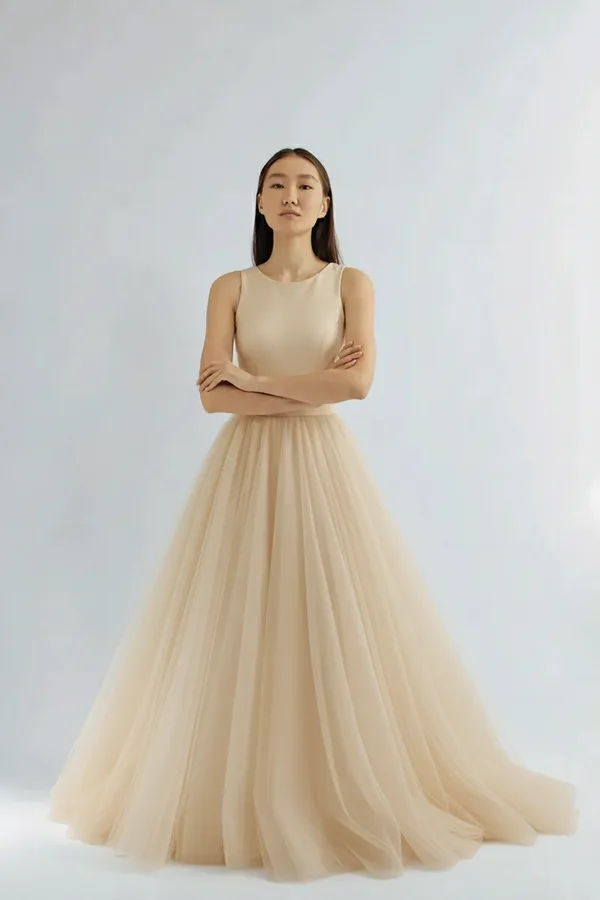
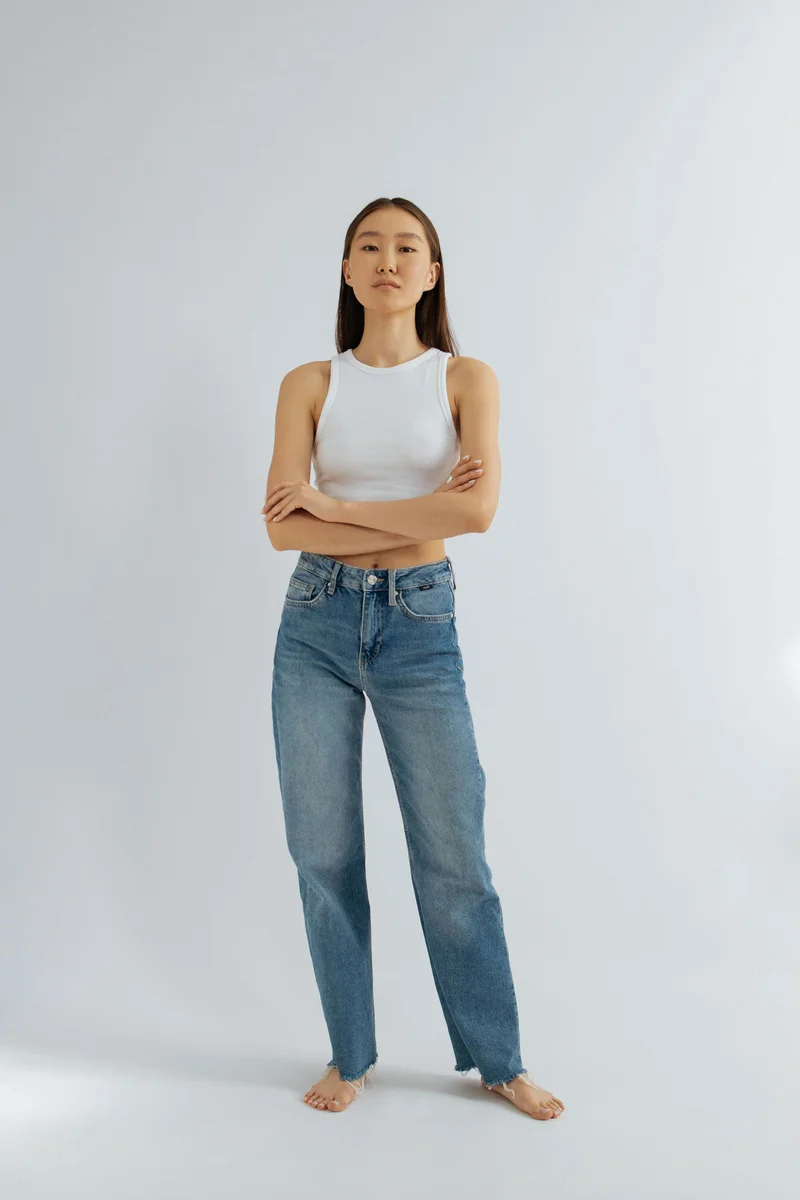 Her photo
What Is a Champagne Wedding Dress?
A champagne wedding dress is a bridal gown in a warm, golden off-white, named after the drink it resembles. It sits between ivory and pale gold on the spectrum, carrying clear yellow or beige undertones. Unlike blush gowns, which lean pink, champagne leans gold, which is what gives it a candlelit warmth in photographs.
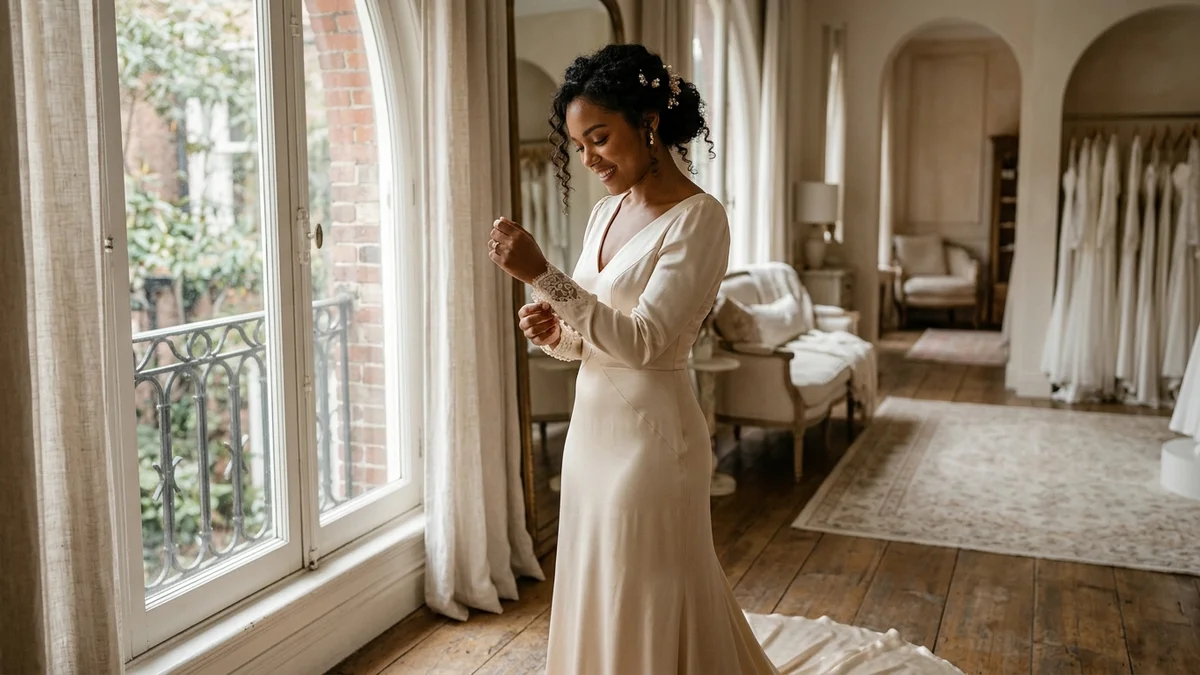
The confusion starts because the bridal industry uses at least five words for shades that sit within a few steps of each other, and no two designers use them identically. Here is how the family actually separates:
| Shade | Undertone | Reads As | Best For | Main Risk |
|---|---|---|---|---|
| Pure white | Cool, slightly blue | Crisp, modern, formal | Deeper skin tones, ballrooms | Washes out fair, cool skin |
| Ivory | Warm cream, very soft | Traditional, softened white | Almost everyone | Can look plain in flat light |
| Champagne | Gold, beige | Warm, glowing, vintage | Warm and neutral undertones | Can read beige next to true white |
| Blush | Pink | Romantic, soft, modern | Cool and pink undertones | Reads more "colored" than champagne |
| Nude / Latte | Brown, tan | Fashion-forward, editorial | Bold, modern brides | Rarely reads as bridal at a glance |
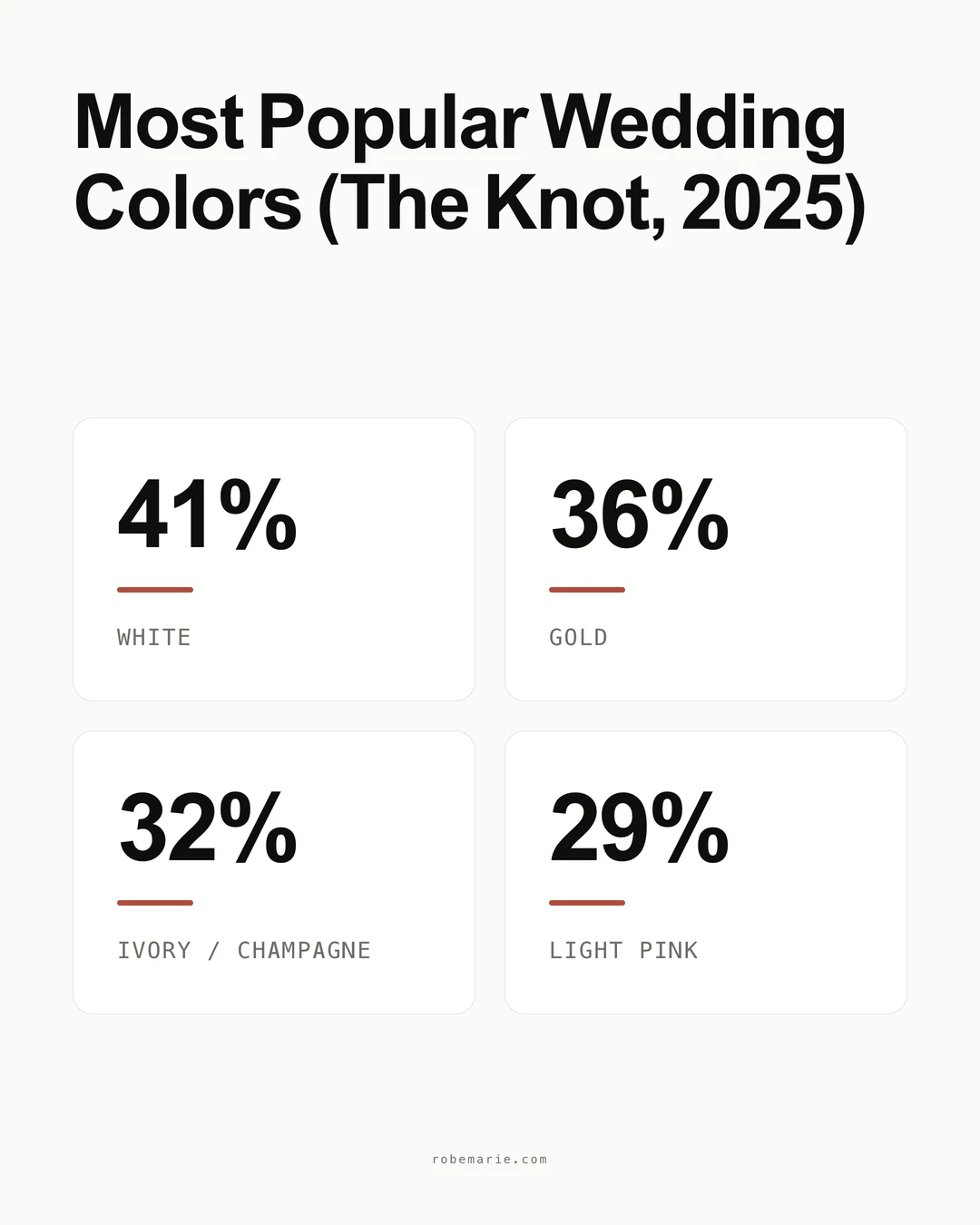
Champagne is not a fringe choice, and the data backs that up. According to The Knot's 2025 Real Weddings Study, which aggregated data from nearly 17,000 newlyweds, ivory and champagne rank fourth among wedding colors overall, used by 32% of US couples, just behind gold at 36%. The same study found 80% of couples were deliberate about targeting specific wedding colors, rising to 84% among Gen Z.
So the palette is already common at weddings. The question is what happens when you put it on the bride.
Why Champagne Is Not Really One Color
Here is the thing almost no bridal guide will tell you: champagne is not a paint chip, it is a construction. The shade you see is the result of a layer sitting on top of a lining, and changing either one changes the dress entirely. The same word on two tags can produce two gowns that look nothing alike.
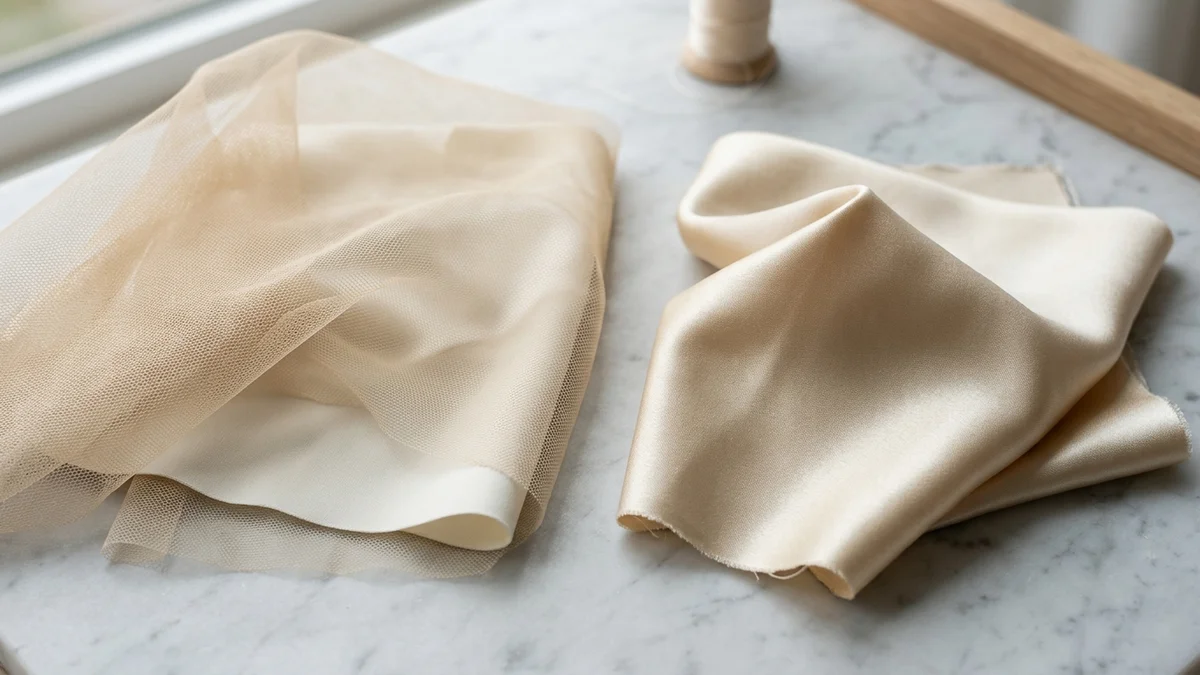
Three constructions dominate, and they behave completely differently:
- Champagne over ivory. A champagne tulle or lace layer over an ivory lining. This is the softest version, closest to a warm ivory, and the one most likely to satisfy relatives who wanted white.
- Solid champagne satin or crepe. No layering, full saturation. This is the boldest version, unmistakably golden, and the most dramatic in candlelight.
- Ivory lace over champagne. The lace pattern reads ivory while the gold glows through the gaps. This is the version that photographs with the most depth and the one people describe as looking expensive.
This is exactly why ordering champagne online is risky in a way ordering white is not. A product photo shot under warm studio lights on a model whose skin is nothing like yours tells you almost nothing about which of these three you are buying. Two dresses labelled champagne can arrive a full shade apart.
Bridal Consultant Tip: When a boutique or a website says champagne, ask one question: what is the lining? If the answer is ivory, expect a soft, near-ivory gown. If the answer is champagne throughout, expect real gold. That single question prevents most disappointment on delivery day.
Which Champagne Shade Suits Your Skin Tone?
The most flattering champagne depends on your undertone, not your skin's depth. Warm undertones glow in golden champagne, cool undertones need a pink-leaning champagne to avoid a sallow cast, and neutral undertones can wear the full range. Test in daylight, never under boutique spotlights.
Now the part the industry gets wrong. You will read everywhere that champagne is universally flattering. That is a sales line, not a fact. Champagne is widely flattering, which is a different claim. A bride with cool, pink undertones in a strongly golden champagne will look faintly tired in photographs, and no amount of makeup fully fixes a color fighting her skin.
| Your Undertone | How to Check | Best Champagne | Avoid |
|---|---|---|---|
| Warm (golden, olive) | Veins look green, gold jewelry flatters | Golden or classic champagne | Pink champagne, stark white |
| Cool (pink, red) | Veins look blue, silver jewelry flatters | Pink or rose champagne | Deep gold, honey champagne |
| Neutral | Veins look blue-green, both metals work | Any champagne shade | Nothing, you have full range |
| Deep complexions | Both metals flatter, high contrast | Rich gold or dark champagne | Very pale champagne, low contrast |
We break the full champagne shade family down in more detail in our champagne bridesmaid dresses guide, and the shade logic there applies to a gown just as well. Rather than repeat it here, use this test instead, which takes two minutes and works better than any chart.
Hold the fabric under your chin, in daylight, next to a sheet of printer paper. The paper is your reference white. If your skin looks brighter and warmer than it did against the paper, that champagne is working. If your skin looks yellow or grey next to it, move one step toward pink champagne or one step toward ivory.
What Goes Next to a Champagne Gown? The Part Nobody Warns You About
This is the section that decides whether your dress looks intentional or accidental, and it is missing from nearly every guide on this topic. Your gown is never seen alone. It is seen next to a veil, a bouquet, a groom's shirt, table linens and a row of bridesmaids, and the human eye judges any warm shade against the coolest white in the frame.
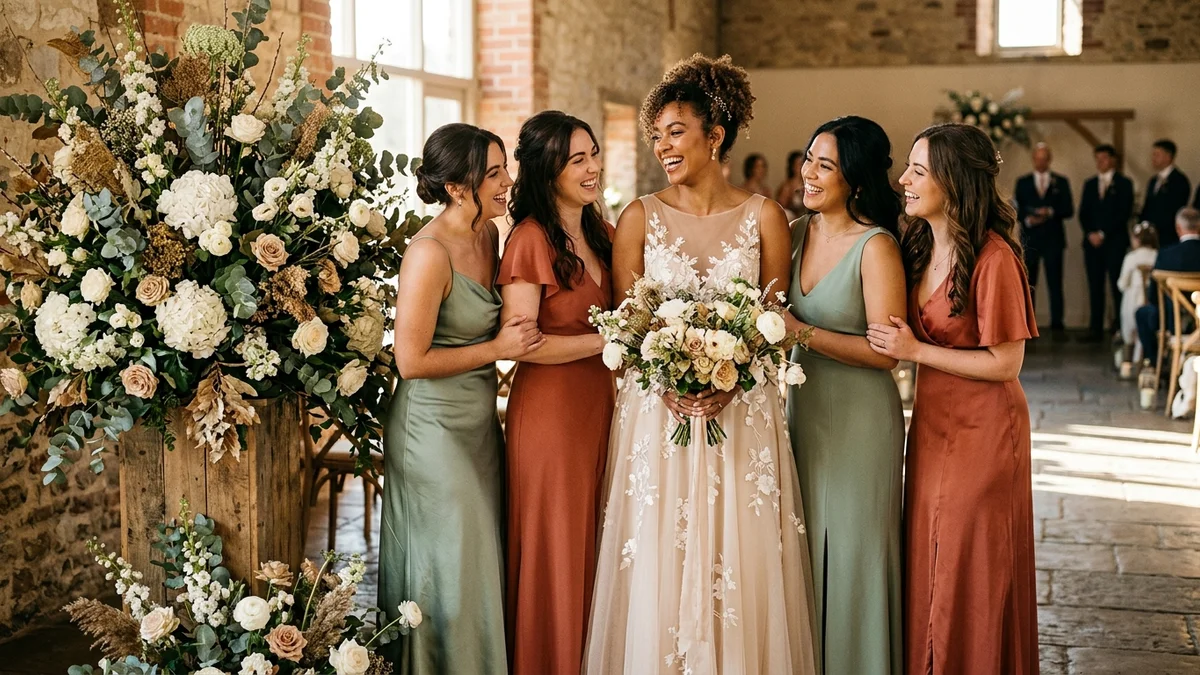
Put a bright optical-white veil over a champagne dress and the dress does not look golden anymore. It looks dirty. Not because anything is wrong with the dress, but because you gave the eye a cleaner white to compare it to. Fix the surroundings and the same gown reads as luxurious.
| Element | Match It To Champagne By | Avoid |
|---|---|---|
| Veil | Ivory or champagne tulle, ideally the same dye lot | Bright optical white, heavy bleached tulle |
| Bouquet | Cream, ivory, blush, dusty greens, dried textures | Stark white roses, bright white baby's breath |
| Groom's shirt | Ivory or soft cream shirt | Crisp bright white shirt directly beside you |
| Bridesmaids | Deeper neutrals, sage, terracotta, dusty blue | Anything within one shade of your champagne |
| Table linens | Ivory, oat, natural linen | Optical white polyester linen |
| Jewelry | Gold, rose gold, warm pearl, champagne crystal | Bright silver against golden champagne |
The veil is the single biggest offender because it sits directly against the dress. Our wedding veil guide covers lengths and styles, but for a champagne gown the rule is simpler than style: buy the veil from the same designer as the dress when you can, or bring the dress swatch to the veil fitting. Matching from memory is how brides end up with a veil that quietly ruins the color story.
In the video above, a wedding stylist walks through which colors sit well beside a champagne gown and which ones fight it. With RobeMarie's virtual try-on, you can test those pairings on your own photo instead of imagining them, and the RobeMarie editor lets you compare shades side by side before anything is ordered.
Will a Champagne Dress Look Yellow in Your Photos?
Champagne photographs well in warm light and can look slightly yellow under cool or fluorescent light. Golden hour, candlelight and warm indoor bulbs all amplify its glow. Overcast daylight and cool LED venue lighting flatten it toward beige. Your venue's lighting matters more than the fabric itself.
The mechanism is white balance. Your photographer sets the camera's idea of "white" based on the scene, and champagne shifts with it. In a room lit by warm tungsten, champagne turns rich and honeyed. Under cool white LEDs, it drains toward grey-beige. This is not a flaw in the dress, it is physics, and it is manageable if you plan for it.
Three things you can actually do:
- Ask your photographer one question at the venue walkthrough: what is the color temperature of the reception lighting? A good photographer will already know, and will shoot a custom white balance rather than relying on auto.
- Take a phone photo in the venue, at the same hour as your ceremony, holding the fabric swatch. That single test tells you more than any online gallery.
- Check the getting-ready room. Bathrooms and hotel suites often have the coolest, harshest light in the building, which is where brides first panic about their dress looking off. It usually looks completely different once you step outside.
Bridal Consultant Tip: If your reception runs after dark under warm lighting, champagne is one of the best colors you can choose. It picks up candlelight in a way pure white never does, and white can actually blow out to a flat glare in flash photography while champagne holds its detail.
See Your Champagne Gown Before You Commit
The hardest part of choosing champagne is not finding a dress you like. It is trusting that a shade you have only seen on a model will do the same thing on your skin. A flat product photo cannot answer that, and boutique appointments cost you weekends before you even know which direction you are heading.
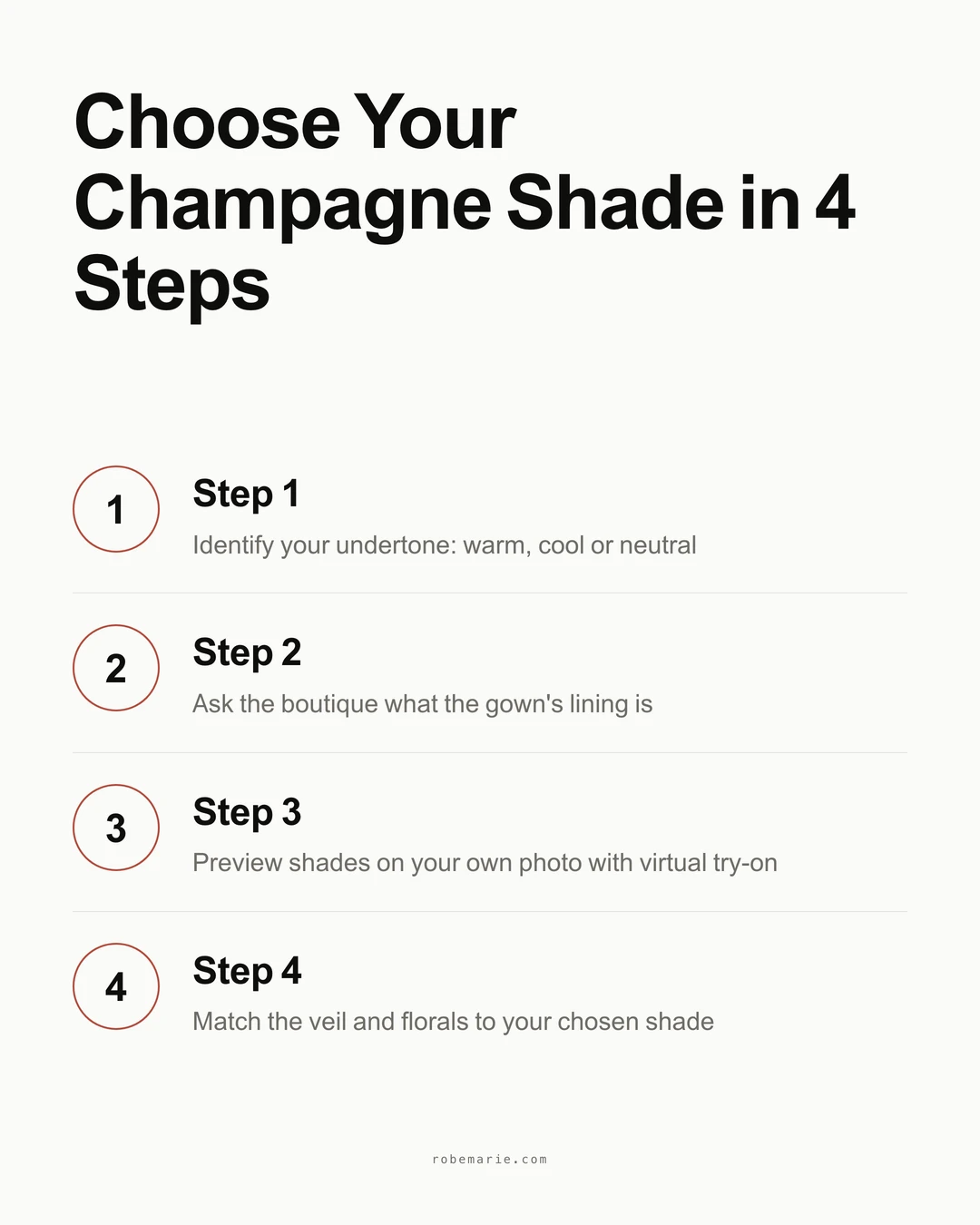
This is where virtual try-on changes the order of operations. You upload one photo, pick a silhouette and a shade, and see the gown on your own body in seconds. Instead of guessing whether golden champagne or a softer ivory-lined champagne suits you, you put them side by side on the same photo of yourself and simply look. Brides who do this walk into their first boutique appointment already knowing the answer, which turns a whole day of appointments into one focused visit.
RobeMarie Insight: Among brides exploring non-white gowns on RobeMarie, the warm neutral family (champagne, ivory and blush) is previewed far more often than bold colors, and brides who try it rarely stop at a single shade. Comparing two or three warm neutrals on their own body, rather than on a model, is what settles the decision.
The broader shift here is real. The Knot Worldwide's 2026 Real Weddings Study, published in February 2026, found AI adoption among couples nearly doubled to 36% in 2025, with attire among the areas couples turn to it for. Previewing a dress before you travel to see it is quickly becoming the normal first step, not a novelty.
When Your Mom Says "That's Not a Wedding Dress"
You show her the screenshot, expecting delight. Instead there is a pause, and then: "It's pretty, but it's not really white, is it?" Suddenly a color you loved for months feels like something you have to defend, and you start wondering whether you picked it because you love it or because you wanted to be different.
Here is the plan that actually works. First, stop arguing about the color in the abstract, because a screenshot on a phone is the worst possible evidence. Champagne on a backlit screen looks far more beige than champagne on a body in daylight. Second, show her the dress on you, not on a model, using virtual try-on. The objection is almost never really about gold undertones, it is about not being able to picture her daughter in it. Give her the picture and the objection usually dissolves in one sitting. Third, if she is still uneasy, offer the champagne-over-ivory construction as the meeting point. It reads warm and soft rather than boldly golden, and it satisfies a traditional eye without giving up the color.
And if she still prefers white after all that, you have lost nothing. You will simply have chosen your dress on purpose rather than by default, which is the only thing that matters when you look back at the album. Brides facing the same conversation about a bolder color will find the same approach in our blue wedding dress guide.
Frequently Asked Questions
What is a champagne wedding dress?
A champagne wedding dress is a bridal gown in a warm golden off-white, sitting between ivory and pale gold. It carries yellow or beige undertones rather than the pink undertones of blush. The shade is named after the drink and photographs with a soft, candlelit warmth.
What is the difference between champagne and ivory wedding dresses?
Ivory is a soft cream white with a gentle warm tint, while champagne goes further and carries a visible gold or beige undertone. Ivory reads as a traditional gown to almost everyone. Champagne is clearly a color choice, warmer and more vintage in feel.
Can a bride wear a champagne wedding dress?
Yes. There is no rule requiring white, and champagne remains firmly within the bridal palette rather than reading as a colored gown. It is popular with brides who find pure white harsh against their skin or who want a warmer, vintage-leaning look for a candlelit evening wedding.
Does a champagne wedding dress look yellow in photos?
Champagne looks warm and golden under candlelight, tungsten bulbs and golden hour sun. Under cool LED or fluorescent venue lighting it can flatten toward beige. Ask your photographer to set a custom white balance rather than relying on the camera's automatic setting, which handles warm neutrals poorly.
What color veil goes with a champagne wedding dress?
Choose an ivory or champagne veil, ideally from the same designer as your gown. A bright optical-white veil sits directly against the dress and makes the champagne read as dirty by comparison. Always bring your dress swatch to the veil fitting rather than matching from memory.
What color bridesmaid dresses go with a champagne wedding dress?
Pick shades at least two steps away from your gown so nobody blends into you: sage, terracotta, dusty blue, deep green or charcoal all work. Avoid ivory, blush and pale gold on your bridal party, since anything within one shade of champagne creates a muddled photograph.
Is champagne the same as nude or latte?
No. Champagne has gold undertones and still reads as a bridal off-white. Nude and latte lean brown and tan, sitting closer to skin tone, which makes them read as fashion gowns rather than traditional bridal wear. Champagne is the most conservative of the three.
What jewelry goes with a champagne wedding dress?
Gold, rose gold, warm pearl and champagne crystal all sit naturally with the gown's undertone. Bright silver and platinum create a cool contrast that can make the dress look yellower by comparison. If you are set on silver, choose a softer brushed finish rather than a high polish.
Your Color, Chosen on Purpose
A champagne wedding dress is one of the easiest non-white choices to get right and one of the easiest to get wrong, and the difference almost never comes down to the dress itself. It comes down to the veil you put over it, the whites you stand beside, and the lighting you say your vows in. Get those three right and champagne looks like the most expensive thing in the room.
So do the two-minute daylight test, ask the boutique what the lining is, and see the shade on your own body before you spend anything. Try your champagne wedding dress with RobeMarie's virtual try-on and find out whether golden or soft is your version. Then walk into the boutique already knowing, and spend the appointment enjoying it instead of guessing. Not sure a warm neutral is your direction at all? Start from the wedding dress styles guide and work back to color, or see how the same logic plays out on a simple wedding dress.