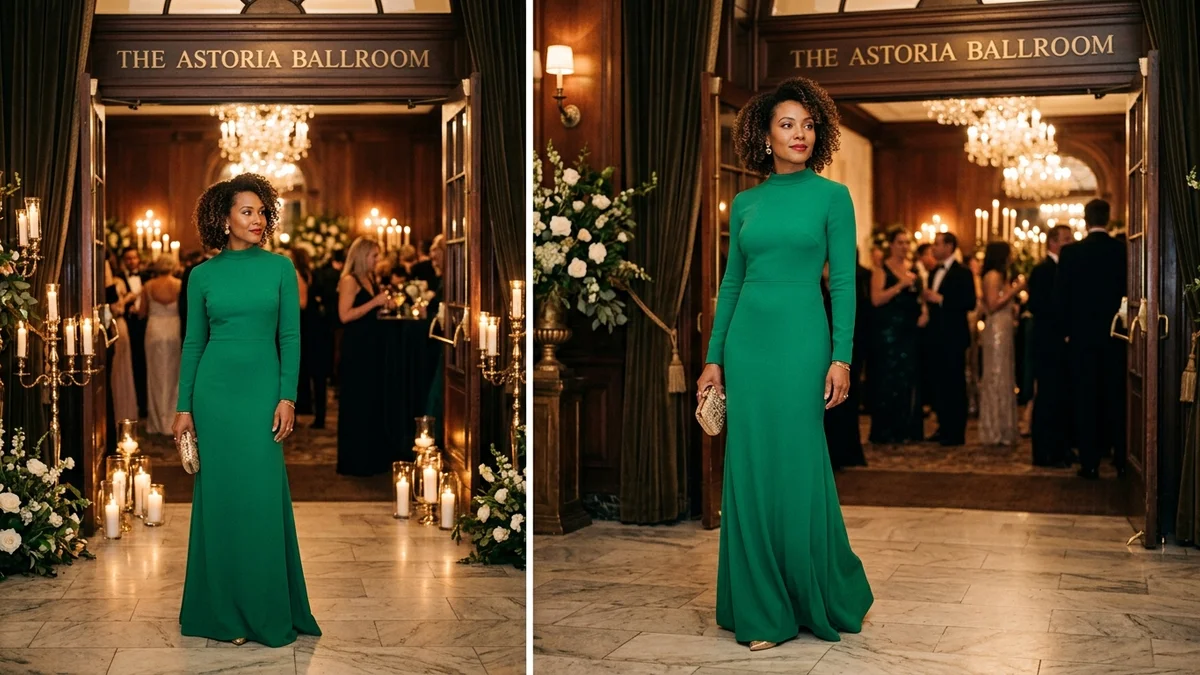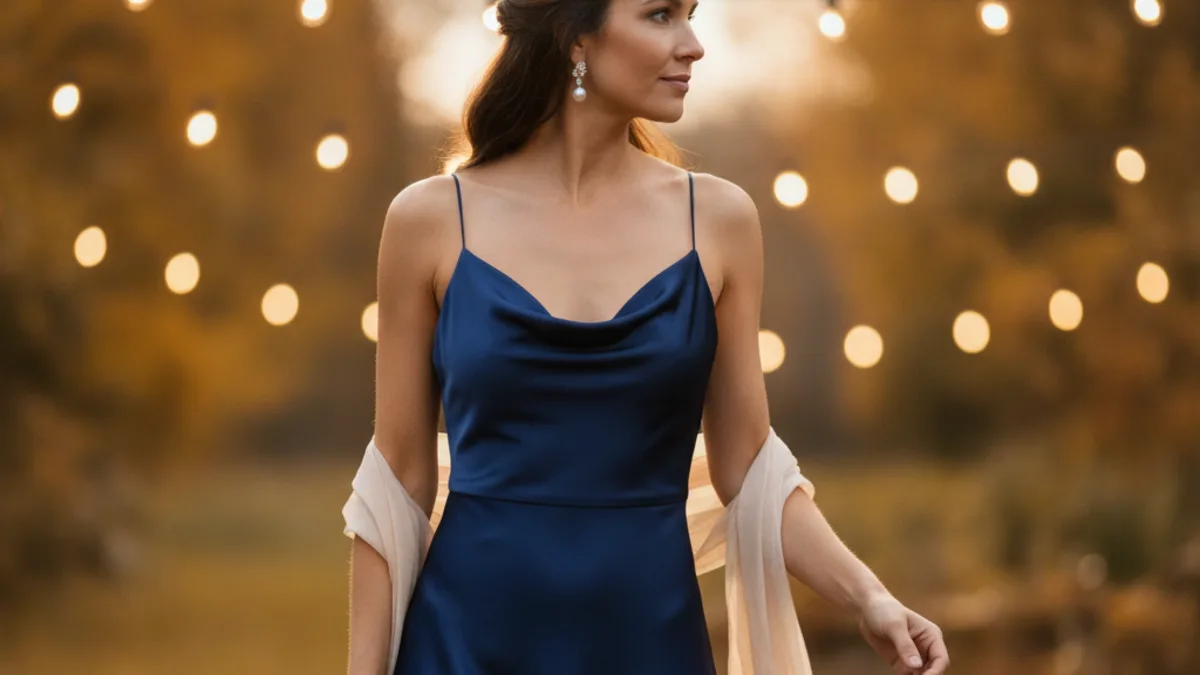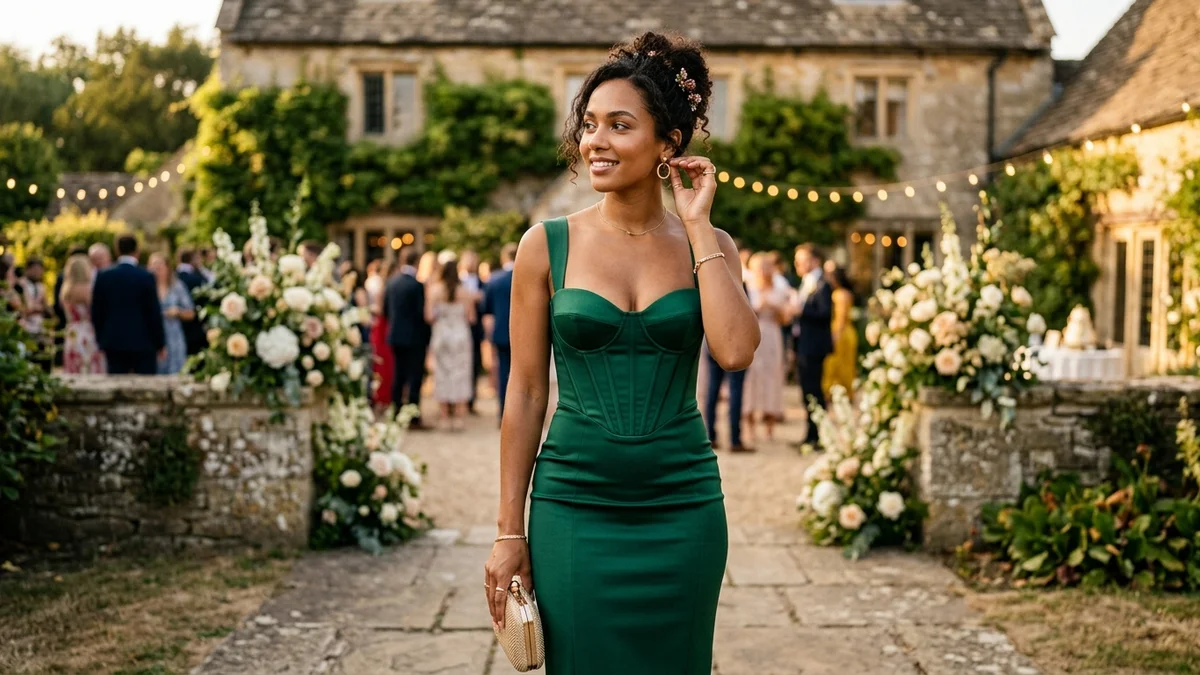
The dress is in your cart. Structured bodice, boned waist, that neckline that somehow makes everything sit right. And then the doubt lands: is a corset dress too much for someone else's wedding?
That hesitation is the reason you are here, so let us answer it before anything else. Yes, a corset dress is appropriate for a wedding guest, and it has been one of the most-worn guest silhouettes of the past two seasons. Whether it reads elegant or inappropriate has almost nothing to do with the corset itself. It comes down to three things: the coverage of the neckline, the length of the skirt, and whether the bodice actually fits your ribcage.
Updated in August 2026, this guide covers what makes a corset dress wedding appropriate, how to match it to each dress code, and the fit trap that ruins more of these dresses than any styling mistake.
Key Takeaway: A corset dress is appropriate wedding guest attire when the neckline is moderate, the skirt reaches midi or floor length, and the boned bodice is fitted to your ribcage rather than sized down. Corset construction is judged by proportion and coverage, not by the boning itself. Avoid white, ivory, and champagne in any silhouette.
See this dress on you, before the boutique
Upload one photo and preview this style on yourself in seconds. No appointment, no pressure.
 Her photo
Can You Wear a Corset Dress as a Wedding Guest?
Yes. A corset dress is appropriate for a wedding guest at almost every dress code except casual and beach ceremonies. The deciding factors are coverage and proportion, not the boning. A corset bodice paired with a midi or floor-length skirt, a moderate neckline, and a non-bridal color reads as formalwear rather than nightlife.
The confusion comes from language. "Corset" still carries a lingerie association, but the structured bodice on a modern guest dress is a construction method, not a statement. Vertical boning is sewn into channels through the torso to stop the fabric rolling, hold the waist seam in place, and support the bust without a bra. It is the same engineering used inside formal gowns that nobody calls provocative.
A corset bodice is a construction method rather than a style statement, which is why the same boning reads as elegant in satin at floor length and as clubwear in a stretch mini.
What actually gets a guest noticed for the wrong reasons is a very low neckline, a mini hemline at a formal wedding, or a shade close to white. None of those problems are caused by the corset.
What Separates an Elegant Corset Dress From an Inappropriate One
The line is easier to see when you stop thinking about the dress as a whole and look at four features independently. Every one of them can be adjusted without abandoning the silhouette.
| Feature | Reads elegant | Reads inappropriate |
|---|---|---|
| Boning | Covered by fabric, or a clean visible seam line | Exposed hardware, lingerie-style hooks |
| Neckline | Sweetheart, straight, square, off-shoulder | Deep plunge, extreme sweetheart dip |
| Skirt length | Midi, tea, or floor length | Mini at formal or religious venues |
| Fabric | Satin, mikado, crepe, taffeta, jacquard | Stretch jersey, glossy PU, mesh panels |
| Back | Solid panel, lace-up over lined fabric | Open lace-up over bare skin |
Two of these carry more weight than the rest. Skirt length sets the formality of the whole outfit, and fabric decides whether the structure looks tailored or cheap. A corset bodice in stiff satin at midi length is safe at nearly any wedding. The identical bodice in stretch jersey at mini length is not.
Bridal Consultant Tip: Look at the back of the dress before the front. A lace-up back over bare skin is what pushes a corset dress from formal to going-out, and it is the detail guests forget to check because they only ever see themselves from the front in a mirror.
Corset Dress Wedding Guest Styles by Dress Code
Dress code is where most guests actually get stuck. The corset works across the board, but the skirt and fabric have to move with the formality. If you are unsure what a given dress code demands, The Knot's wedding guest attire cheat sheet is a reliable reference, and our complete wedding guest dresses guide breaks down each code in depth.
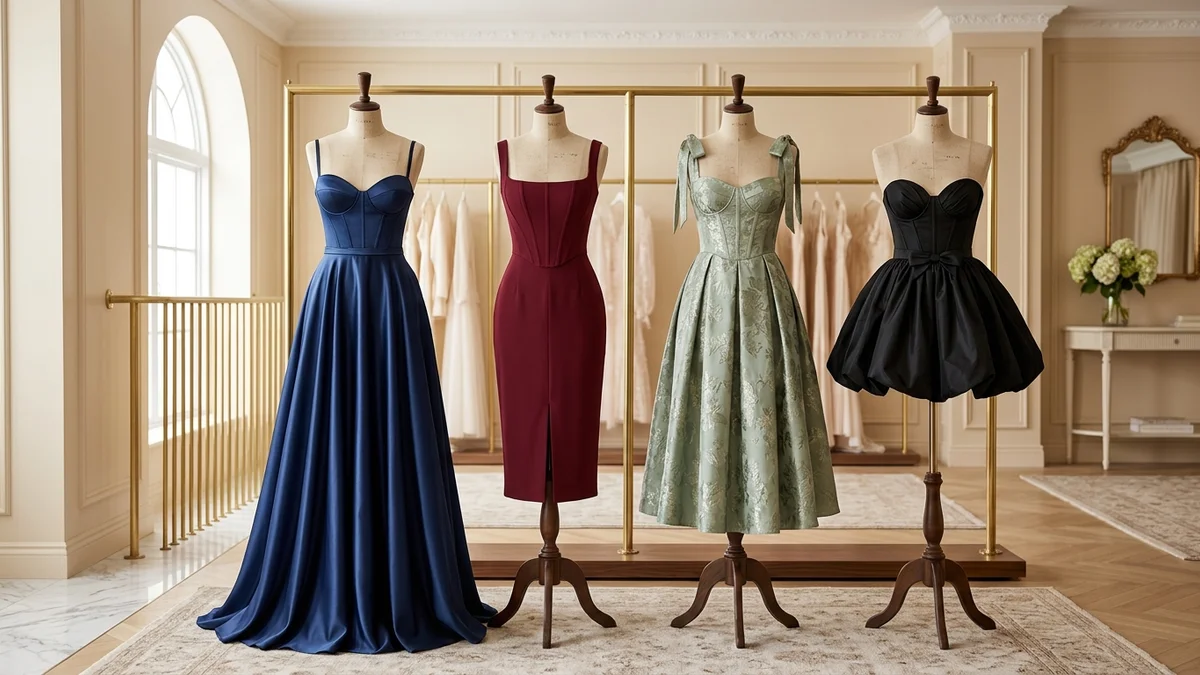
| Dress code | Corset dress that works | Length | Avoid |
|---|---|---|---|
| Black tie | Corset bodice gown in satin or mikado | Floor | Anything above the ankle |
| Black tie optional | Corset gown or structured midi | Floor or midi | Visible boning hardware |
| Cocktail | Corset midi in crepe or jacquard | Midi or tea | Mini, heavy beading |
| Semi-formal | Corset midi, softer fabric | Midi | Stiff formal taffeta |
| Dressy casual | Corset bodice with flowing skirt | Midi | Structured full skirts |
| Beach / casual | Generally skip it | - | Boned bodices entirely |
Beach weddings are the honest exception. A boned bodice fights the relaxed, flowing aesthetic those venues call for, and heat plus rigid construction is a miserable combination for a four-hour outdoor reception. For a black tie wedding, the opposite is true: a corset gown is one of the strongest options available, because the structure holds a formal silhouette all evening without a single adjustment.
For anything landing in the middle, our formal wedding guest dresses guide and wedding cocktail dresses guide cover where the boundaries actually sit.
The Fit Trap: Why Corset Dresses Fail When You Buy Them Online
This is the part almost no guide mentions, and it is where the money gets lost.
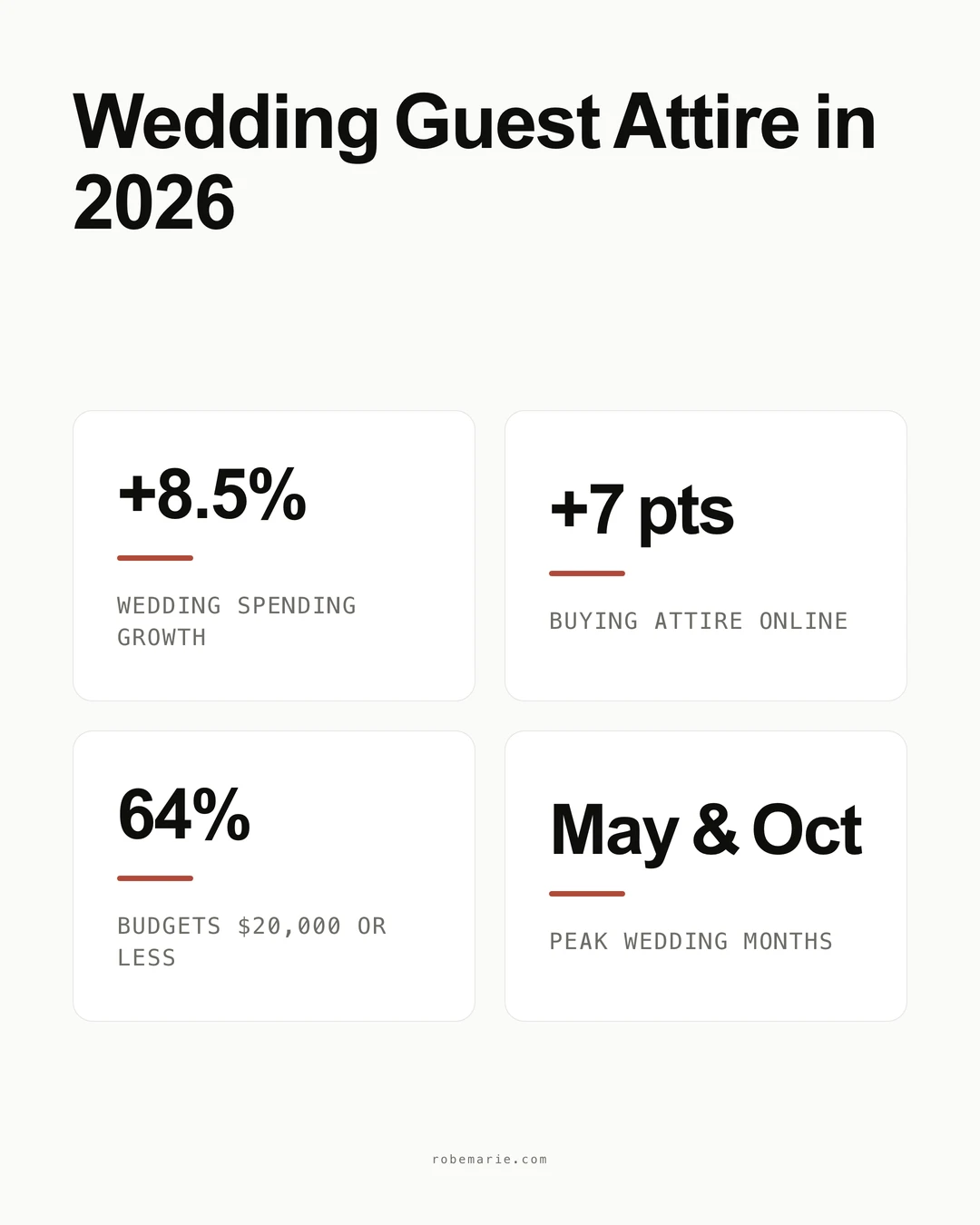
Guest attire buying has moved online fast. According to CivicScience research published on 3 June 2026, the share of people buying or renting wedding attire from department stores and online retailers each rose by seven percentage points since 2024, while local boutiques and custom options declined. More guests than ever are committing to a dress they have never had on their body.
A structured bodice is the single worst garment to buy blind. A jersey wrap dress forgives a two-inch error. A boned bodice does not forgive anything, because the boning holds a fixed shape that your ribcage either matches or does not.
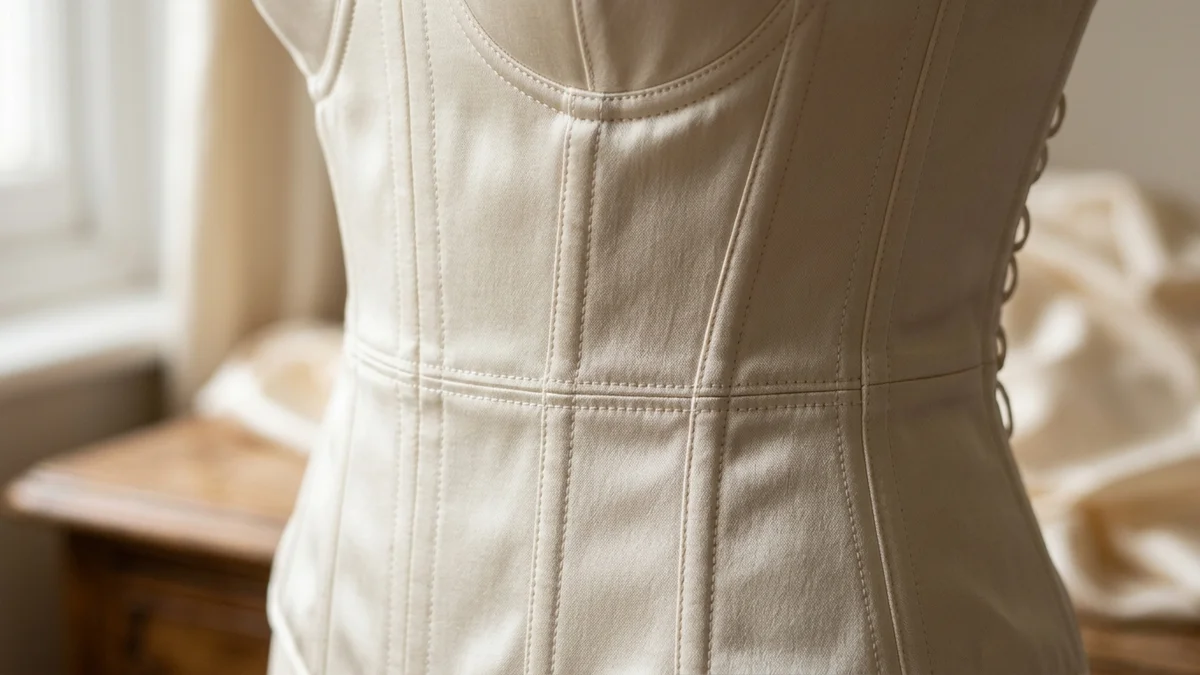
Three fit rules matter more than your usual dress size:
- Size to your ribcage, not your waist. The boning sits on the underbust and ribs. That measurement, not your natural waist, decides whether the bodice closes comfortably.
- Size up when you are between sizes. Structured bodice sizing frequently runs smaller than standard dress sizing, and sizing down to get a tighter look distorts the silhouette instead of improving it.
- The waist seam must hit your natural waist. If it sits high or low on your torso, no alteration to the boning will fix the proportion. That is a different dress.
Structured bodice dresses must be sized to the ribcage rather than the natural waist, because vertical boning holds a fixed shape that alterations cannot meaningfully reshape.
There is also a quieter economic reason this matters. The Bank of America Institute report Economy Weddings: Putting a price on love, published 30 June 2026, found that wedding-related spending grew 8.5% year over year in 2026, but noted a shift in attire behavior: while the share of consumers spending more on formal attire has risen, fewer consumers are making those purchases at all, likely because they want to cut back on one-time wear.
That is exactly the anxiety a corset dress triggers. It looks like a single-occasion piece. In practice, it is one of the easier formal silhouettes to re-wear, because the structured bodice reads completely differently once the styling changes. The same dress works at a wedding with heels and gold jewelry, and at a birthday dinner with a leather jacket and boots.
See the Silhouette on Your Own Body Before You Commit
The gap between a product photo and reality is widest on structured dresses. A corset bodice on a size-two model tells you almost nothing about how the boning will sit on your ribcage or where the waist seam will land on your torso.
This is what RobeMarie's virtual try-on was built for. You upload one photo and see the dress on your own body, in your own proportions, in a few seconds. Comparing a corset midi against a corset gown side by side on yourself answers the length question immediately, and it costs nothing to test both.
RobeMarie Insight: The two questions guests cannot answer from a product photo are where the waist seam lands on their torso and how much coverage the neckline actually gives. Both are visible instantly in a virtual try-on, which is why we recommend testing the silhouette before the dress code, not after.
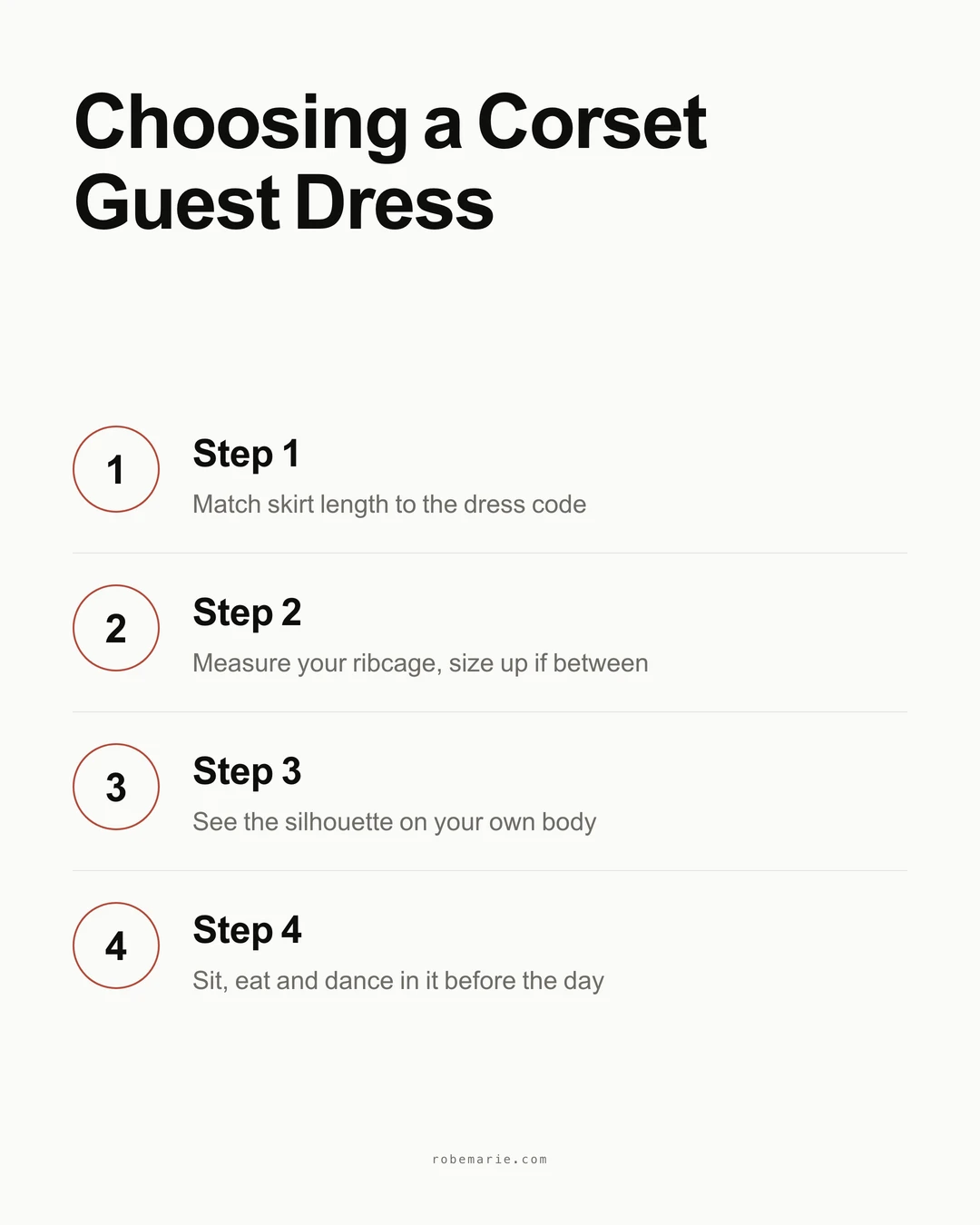
The Eight-Hour Test Every Corset Dress Should Pass
A wedding is not a photo. It is a ceremony, a cocktail hour, a seated dinner, and several hours of dancing. Structured dresses that look perfect standing still can become unwearable by the reception.
Run this at home, in the dress, before the wedding. It takes ten minutes and it is the most useful thing you can do.
- Sit down for five full minutes. The boning should not dig into your hip crease or ride up your ribs. If it does at minute five, it will be worse at hour four.
- Raise both arms overhead. The bodice should stay put. If the neckline drops, it will drop on the dance floor.
- Eat something. Seriously. A boned bodice fitted to an empty stomach is a different garment after dinner.
- Walk up stairs. This catches skirts that are technically the right length but not walkable in heels.
- Check the mirror from the side. Look for flesh spilling at the top edge of the bodice, which is the most common corset fit issue and completely invisible from the front.
Bridal Consultant Tip: Bring a small roll of fashion tape and a pair of scissors to the wedding in your clutch. Nine times out of ten, a corset dress emergency is a neckline that has shifted, and fashion tape solves it in thirty seconds in a bathroom.
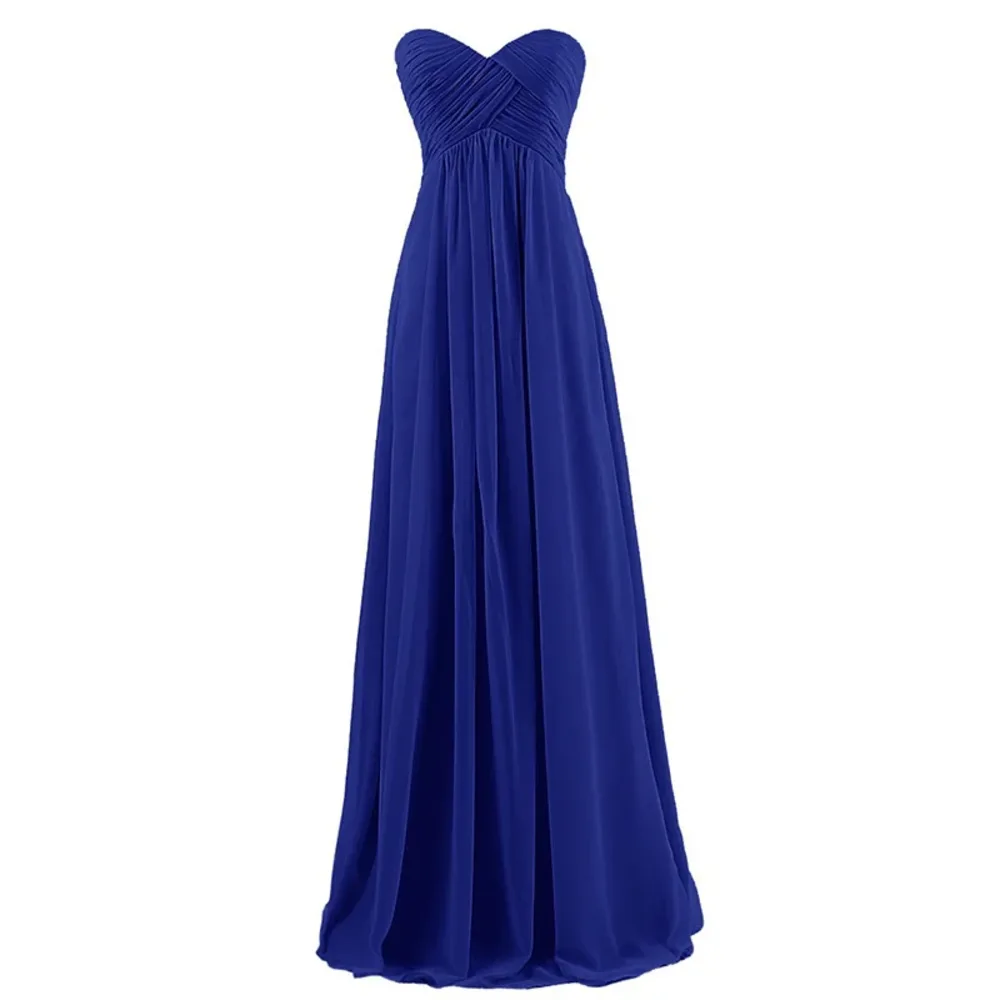
Colors and Fabrics That Keep a Corset Dress Elegant
The color rules for a corset dress are the same rules as any guest dress, with one amplifier: structure draws the eye, so a risky color is riskier in a corset.
Skip white, ivory, cream, and champagne without exception. Structured bodices photograph pale under flash, and a champagne corset dress can read bridal in pictures even when it clearly is not in person. Our guide to colors you can wear to a wedding covers the borderline shades in detail.
| Color | Verdict | Why |
|---|---|---|
| Black | Safe at evening and formal weddings | Structure reads tailored, not funereal |
| Emerald, navy, burgundy | Safest overall | Rich tones flatter structured satin |
| Dusty rose, sage, lilac | Excellent for daytime | Softens the structure |
| Red, hot pink | Fine unless the couple asked otherwise | Attention-drawing in a fitted bodice |
| White, ivory, champagne | Never | Reads bridal, especially in photos |
On fabric, weight is what sells the structure. Satin, mikado, crepe, taffeta, and jacquard all hold a boned bodice cleanly. Stretch jersey and thin mesh collapse around the boning and produce visible ripples that make an expensive dress look cheap.
A black corset wedding guest dress deserves a specific note, since it is the most searched color in this category. Black is entirely appropriate at evening and formal weddings and has been for years. At a daytime garden wedding it can feel heavy, and a jewel tone will serve you better.
The video above walks through choosing and styling a wedding guest dress once the invitation lands, including how dress code and venue narrow the options. With RobeMarie's virtual try-on, you can take those same styling decisions and see them on your own body before you order anything.
Corset Dresses by Body Profile
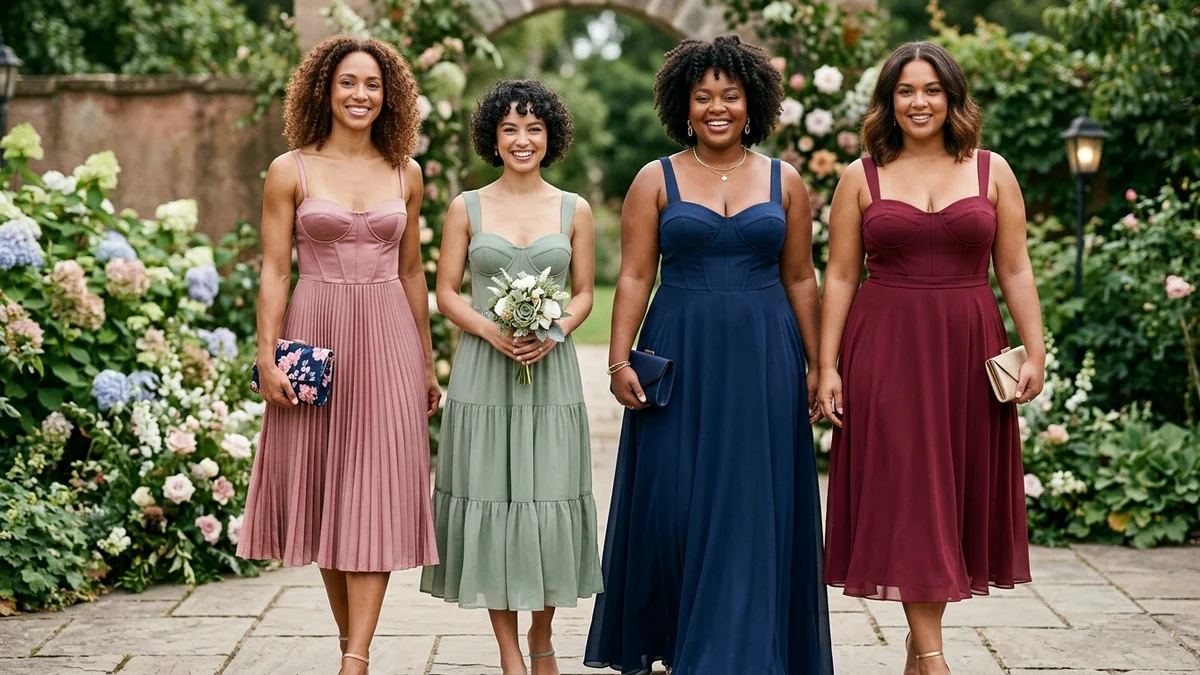
Structured bodices are among the most adaptable formal silhouettes, but the right version differs by proportion.
| Profile | What to look for | What to skip |
|---|---|---|
| Fuller bust | Wider straps, sweetheart or square neckline, firm boning | Strapless with thin boning |
| Plus size | Quality boning, full-length lining, A-line skirt | Compression-style bodices that pinch |
| Petite | Corset midi, bodice and skirt in one color | Contrasting bodice, heavy full skirts |
| Straight or athletic | Defined waist seam, fuller skirt | Column skirts that flatten the shape |
| Pear shape | Off-shoulder or bardot neckline, A-line skirt | Narrow skirts that cling at the hip |
For fuller busts, the strapless corset is the most common regret. The boning has to do all the work, and after four hours it will have slipped. A wider strap or a cap sleeve solves it without changing the look. Our plus size formal dresses guide goes deeper on structure and support.
Real Guest Scenario: The Dress Fits Everywhere Except the Bust
The wedding is in three weeks. The dress arrived, the waist is perfect, the length is perfect, and the bust gapes by an inch. You are now deciding between wearing something you feel exposed in and starting over.
Start over on the dress only as a last resort. This is the most fixable corset problem there is.
What to do, in order:
- Take it to a tailor this week, not next. Taking in a bodice at the side seams is routine work, usually a few days' turnaround. Most guests wait until the final week and lose the option.
- Ask specifically for the side seams, not the back. Altering the back on a laced or zippered corset disturbs the boning channels and costs more.
- If a tailor is not possible, add a strap. A detachable strap or a cap sleeve removes the gape by changing where the bodice is anchored.
- Use a longline bra or fashion tape as a stopgap only. These work for an evening. They do not fix a structural gape.
- Cover strategically. A wrap or shawl across the shoulders through the ceremony buys you time and looks deliberate rather than corrective.
The thing to avoid is sizing down the whole dress to fix the bust. You will trade a gape for a bodice you cannot sit down in.
Corset Guest Dress vs Corset Wedding Dress
Worth clarifying, because the search terms overlap constantly. A corset guest dress and a corset wedding dress use the same construction and completely different rules. Bridal corsets are usually laced for adjustability across a long day and built for a dress worn once. Guest versions are typically zippered, lighter, and designed for re-wear. If you are the bride, our dedicated corset bridal guide covers lacing, fittings, and structure in full.
Frequently Asked Questions
Can I wear a corset to a wedding as a guest?
Yes. A corset dress is appropriate guest attire at black tie, cocktail, semi-formal, and dressy casual weddings. Keep the neckline moderate, the skirt at midi or floor length, and the color away from white, ivory, and champagne. Skip boned bodices at beach and casual ceremonies.
Is a corset dress appropriate for a black tie wedding?
A corset gown is an excellent black tie option. Choose a floor-length skirt in satin, mikado, or another substantial fabric, with covered boning and a moderate neckline. Avoid visible corset hardware, mini or midi lengths, and open lace-up backs over bare skin at this level of formality.
What do you wear under a corset dress?
Usually nothing on top. Most corset dresses have built-in structure that supports the bust without a bra. Choose seamless underwear that sits below the bodice edge. If you need extra support, a longline bra or fashion tape works better than a strapless bra, which fights the boning.
Do corset dresses run small?
Often, yes. Structured bodice sizing frequently runs smaller than standard dress sizing because the boning holds a fixed shape. Size up when between sizes, and measure your ribcage rather than your natural waist. Sizing down to look slimmer distorts the silhouette and makes the dress uncomfortable to sit in.
What length should a corset wedding guest dress be?
Midi is the safest all-round length and works at cocktail, semi-formal, and dressy casual weddings. Floor length is required for black tie and best for black tie optional. Mini lengths are risky at any formal or religious ceremony, regardless of how elegant the bodice looks.
Can you wear a black corset dress to a wedding?
Yes. Black is fully appropriate at evening, formal, and black tie weddings, and a structured black bodice reads tailored rather than severe. At a daytime garden or outdoor wedding, black can feel heavy, so emerald, navy, or burgundy will usually photograph better.
Are corset dresses comfortable for a full wedding day?
They can be, if fitted correctly. A bodice sized to your ribcage is comfortable for eight hours. One sized down is not. Test it at home first by sitting for five minutes, raising your arms, and eating a meal in it before the wedding day.
Is a corset dress too sexy for a wedding?
Not on its own. What reads as too revealing is a deep neckline, a mini hemline, or an open lace-up back over bare skin. A corset bodice with a sweetheart or square neckline, a midi or floor-length skirt, and a solid back panel is straightforwardly formal.
The Short Version
A corset dress is not a risky choice for a wedding guest. It is one of the most reliable formal silhouettes available, and the objections people raise about it are almost always objections to a neckline, a hemline, or a color that would be a problem in any dress.
Get three things right and the rest follows: fit the bodice to your ribcage, keep the skirt at midi or longer, and stay away from anything in the white family. Then run the eight-hour test at home so the wedding is not where you find out how the dress behaves when you sit down.
Before you order anything, see the silhouette on your own body with RobeMarie. Comparing a corset midi against a corset gown on yourself takes under a minute and answers the length question that no product photo ever will.