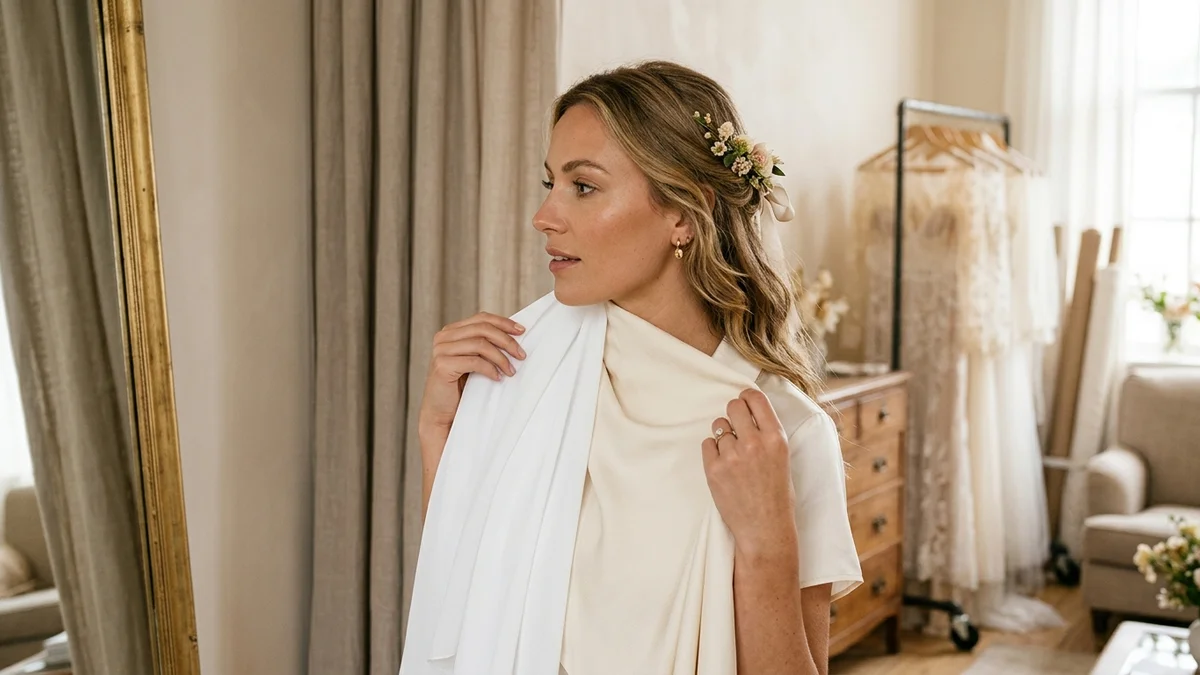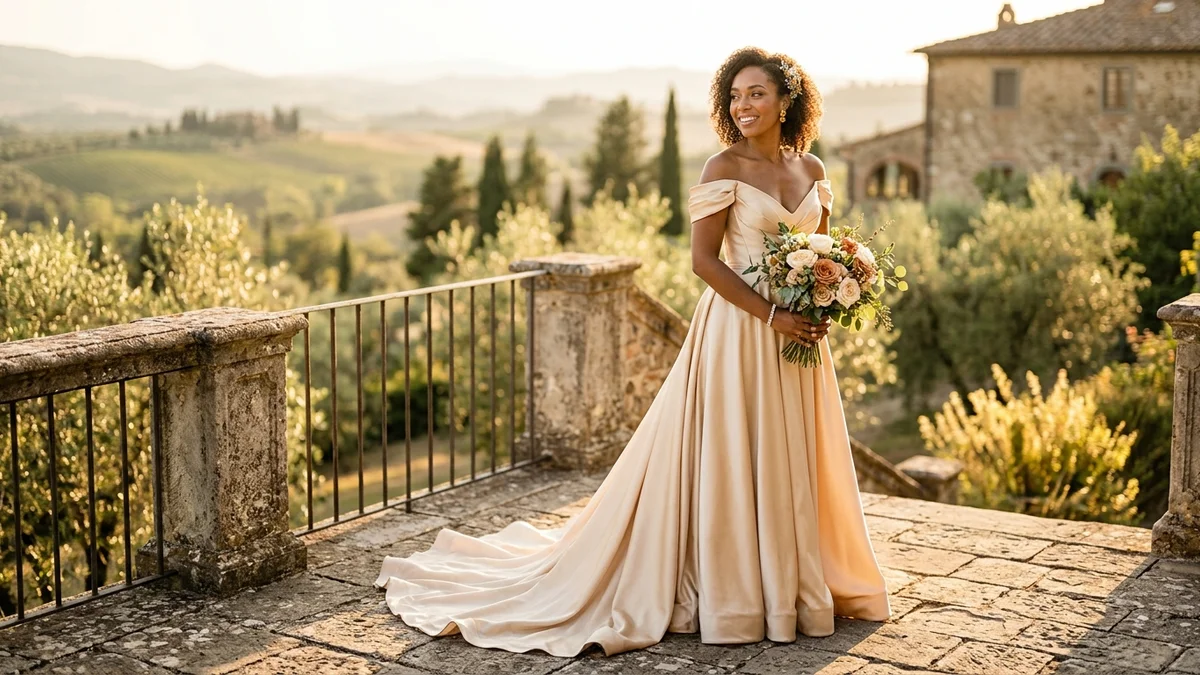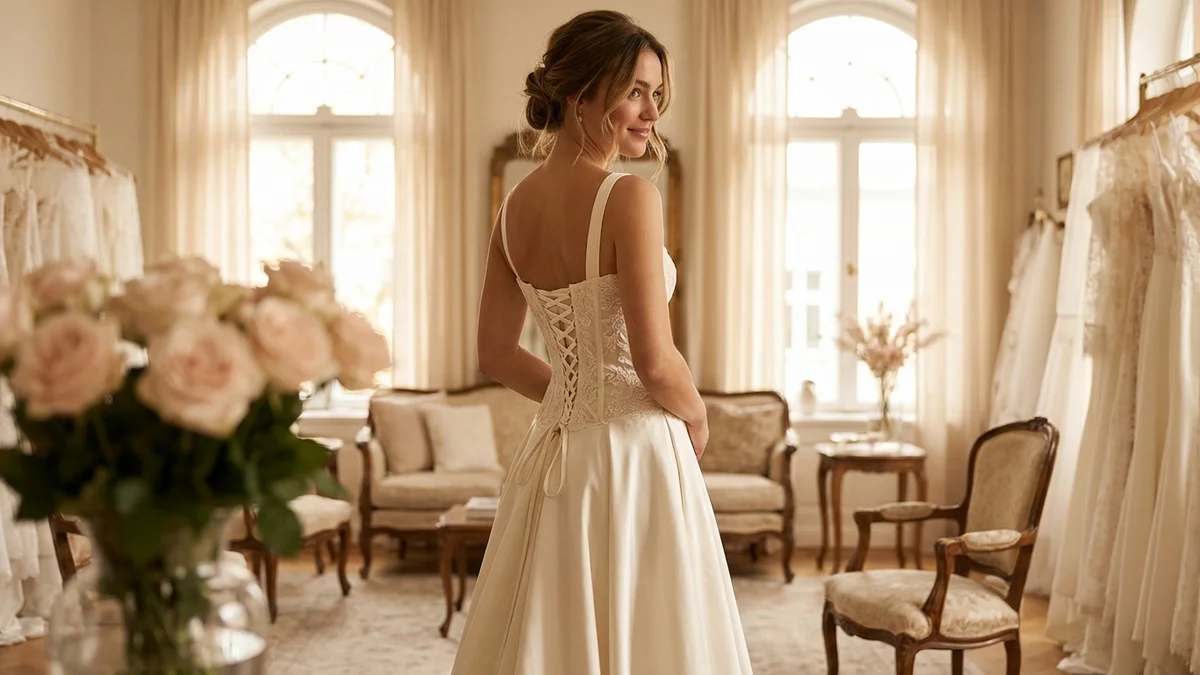
A corset wedding dress features a structured bodice with boning that cinches the waist, enhances curves, and creates a timeless bridal silhouette. Whether you prefer a dramatic lace-up back or subtle internal corsetry, these gowns offer both breathtaking beauty and a customizable fit that flatters every body type. In this guide, we cover everything from corset styles and body type recommendations to lacing techniques and accessory pairing.
See this dress on you, before the boutique
Upload one photo and preview this style on yourself in seconds. No appointment, no pressure.
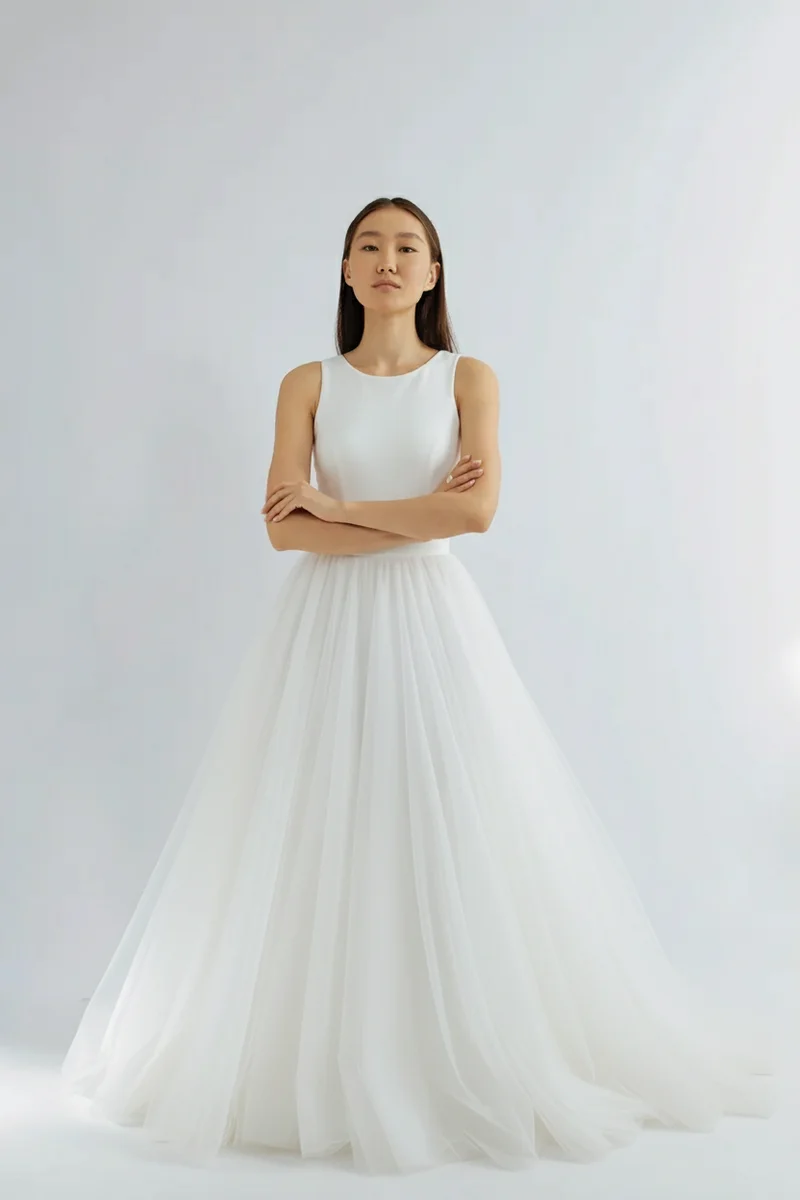
 Her photo
What Is a Corset Wedding Dress?
A corset wedding dress is a bridal gown built around a structured bodice reinforced with boning, typically featuring a lace-up ribbon closure at the back. Unlike standard zip-up dresses, the corset bodice gently shapes and supports the torso, defining the waistline while providing a secure, adjustable fit. Modern corset wedding dresses range from romantic vintage-inspired designs to sleek contemporary silhouettes with exposed boning details.
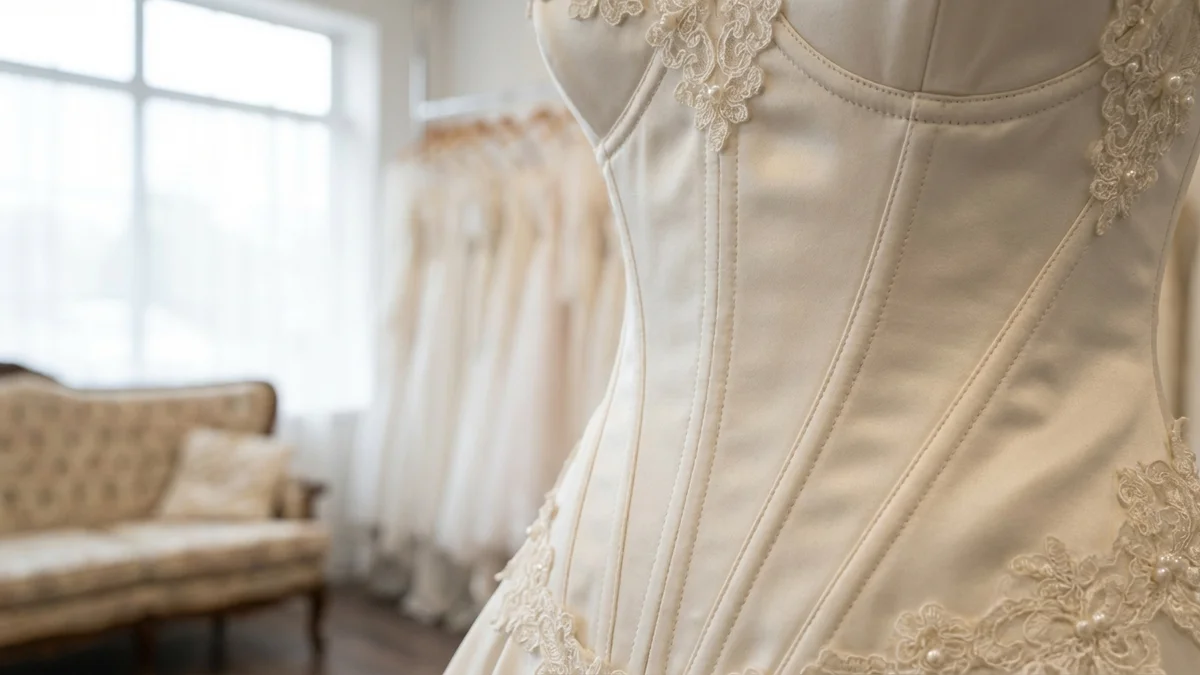
The defining elements of a corset wedding dress include:
- Boning: Vertical supports (steel or plastic) sewn into the bodice for structure
- Lace-up back: Ribbon or cord threaded through eyelets for an adjustable closure
- Structured bodice: A fitted upper section that cinches the waist and supports the bust
- Basque waist: A V-shaped waistline that elongates the torso, common in corset designs
According to The Knot's 2024 Real Weddings Study, structured bodice styles rank among the top three most-requested design features at bridal boutiques nationwide.
Key Takeaway: A corset wedding dress combines historical elegance with modern engineering, offering a secure, customizable fit that eliminates the need for multiple fittings.
Types of Corset Wedding Dresses
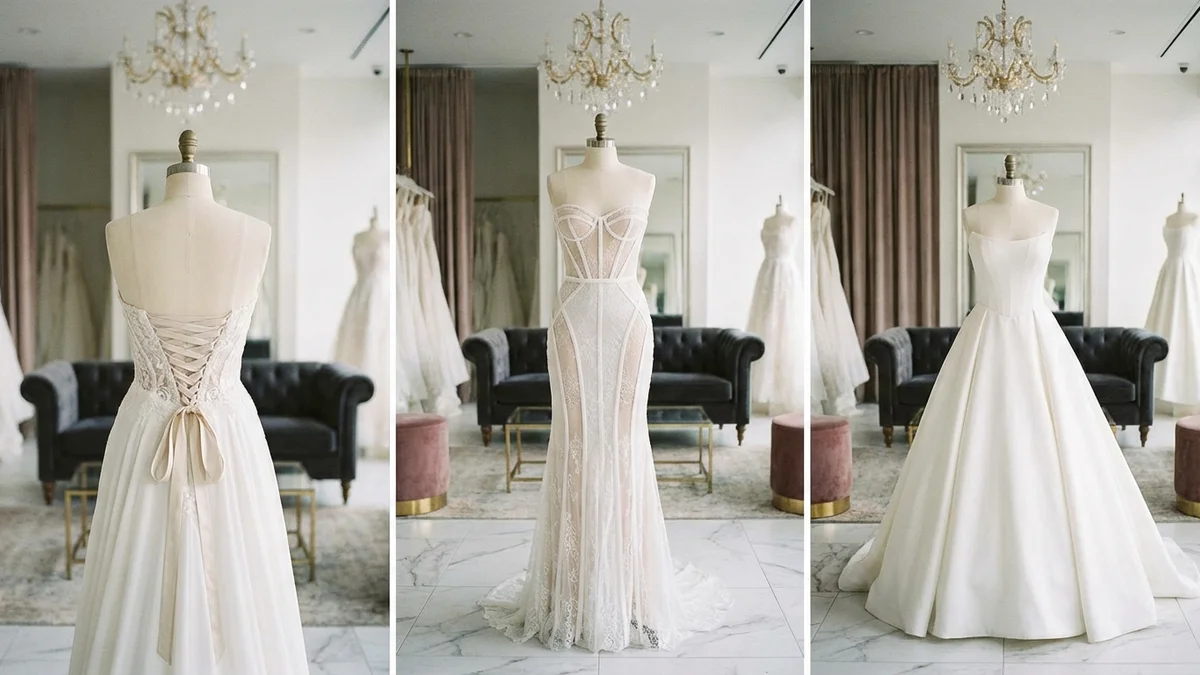
Not all corset wedding dresses are created equal. Understanding the different construction styles helps you choose the right look for your wedding day.
| Corset Type | Description | Best For | Visual Effect |
|---|---|---|---|
| Classic Lace-Up | Visible ribbon lacing up the back | Brides wanting a romantic, adjustable look | Dramatic back detail, Victorian charm |
| Exposed Boning | Visible bone channels on the bodice exterior | Fashion-forward brides | Modern, editorial, lingerie-inspired |
| Internal Corsetry | Hidden boning with zip-up closure | Brides who want shaping without visible lacing | Smooth, seamless silhouette |
| Under-Bust Corset | Structured support below the bustline only | Brides wanting subtle structure | Natural bust shape with defined waist |
| Over-Bust Corset | Full torso coverage from bust to hips | Maximum support and shaping | Hourglass figure, full support |
Classic Lace-Up Corset
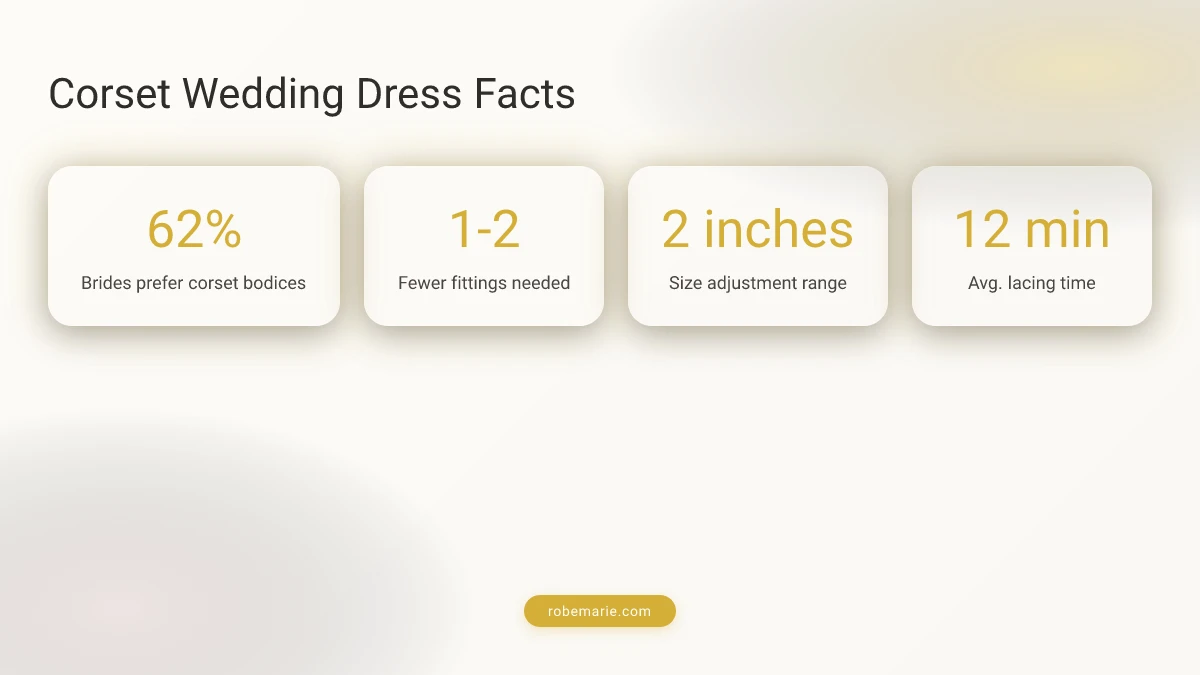
The most recognizable style features a ribbon threaded through eyelets or loops along the back. This design allows for up to two inches of size adjustment, making it perfect for brides whose weight may fluctuate between the final fitting and the wedding day.
Exposed Boning
A contemporary trend influenced by designers like Vera Wang and Berta, exposed boning places the structural elements on display. The visible channels create an architectural, fashion-forward look that works beautifully with minimalist fabrics like crepe and mikado.
Internal Corsetry with Zipper
For brides who love the shaping benefits of a corset but prefer a clean back, internal corsetry provides invisible support. The boning is hidden between fabric layers, and the dress closes with a traditional zipper or buttons.
What Body Types Look Best in Corset Wedding Dresses?
Corset wedding dresses flatter virtually every body type because the structured bodice can be adjusted to enhance natural proportions. The boning provides support where needed, while the lace-up closure allows precise fit customization at the bust, waist, and hips.
| Body Type | Best Corset Style | Recommended Silhouette | Styling Tip |
|---|---|---|---|
| Hourglass | Any corset style | Mermaid, fit-and-flare | Highlight natural curves with a basque waist |
| Pear-Shaped | Over-bust corset | A-line, ball gown | Balance proportions with a structured bodice and full skirt |
| Apple-Shaped | Under-bust corset | Empire waist, A-line | Define the waist without compressing the midsection |
| Rectangle | Classic lace-up | Ball gown, A-line | Create curves with a cinched waist and voluminous skirt |
| Petite | Internal corsetry | Sheath, fit-and-flare | Avoid overwhelming volume; choose a sleek silhouette |
| Plus-Size | Over-bust with wide boning | A-line, ball gown | Wide boning distributes support comfortably across the torso |
After helping hundreds of brides find their perfect dress through our virtual try-on platform, we have noticed that corset bodices consistently rank as the most confidence-boosting design feature across all body types. (RobeMarie Team)
Key Takeaway: There is no wrong body type for a corset wedding dress. The adjustable structure makes it one of the most universally flattering bridal design features available.
How Do You Lace Up a Corset Back Wedding Dress?
Lacing up a corset back wedding dress requires a helper and takes about ten to fifteen minutes when done properly. Start from the top and work downward, keeping tension even on both sides to achieve a smooth, symmetrical fit. The key is to tighten gradually rather than pulling everything tight at once.
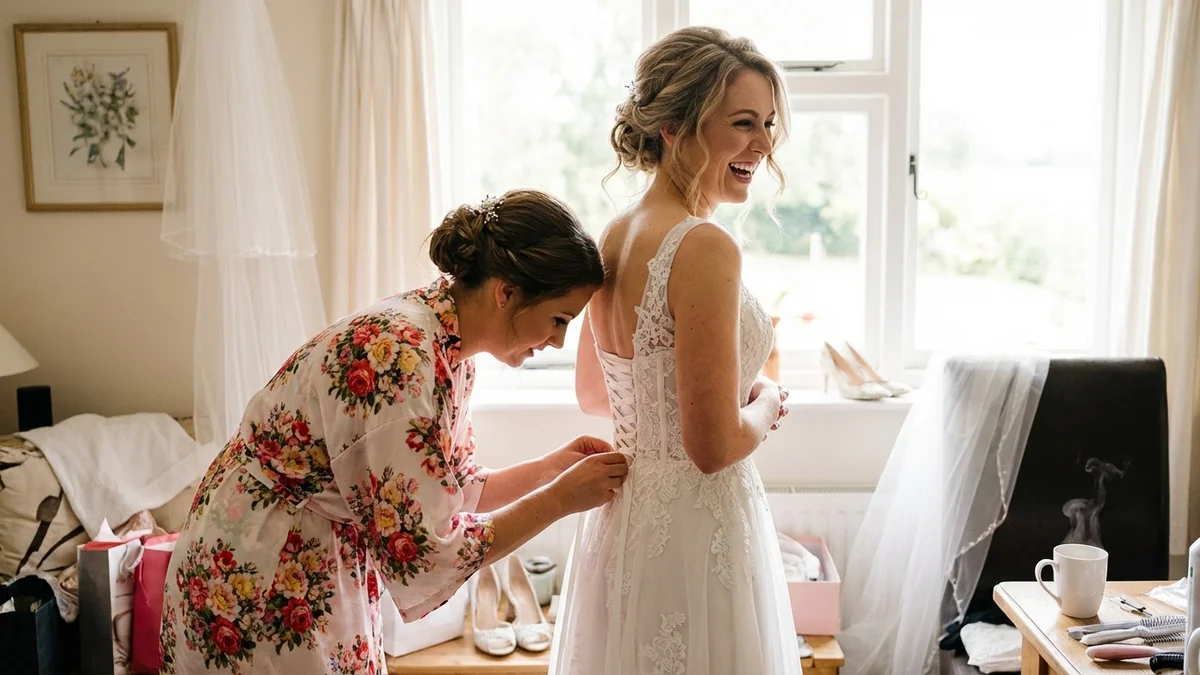
Step-by-Step Lacing Guide
- Position the dress: Have the bride step into the gown and hold it at the natural waist
- Thread the lace: Begin at the top eyelets, ensuring both ends are equal length
- Lace downward: Cross the ribbon through each pair of eyelets in an X-pattern
- Tighten the bust area first: Pull gently at the top to secure the bust support
- Cinch the waist: Pull firmly at the waist eyelets for maximum definition
- Leave hip room: Keep the bottom slightly looser for comfort when sitting
- Tie the bow: Secure with a flat bow below the waist, tucking excess ribbon
Common Lacing Mistakes to Avoid
- Lacing too tight: You should be able to fit two fingers between the corset and your skin
- Uneven tension: Always pull both sides simultaneously to prevent the dress from shifting
- Rushing the process: Allow fifteen minutes minimum for proper lacing
- No practice run: Always do a full lacing rehearsal before the wedding day
Corset Back vs. Zipper Back: Which Should You Choose?
The choice between a corset back and a zipper back depends on your priorities regarding adjustability, aesthetics, and convenience. Both closures have distinct advantages that suit different bridal needs and preferences.
| Feature | Corset Back | Zipper Back |
|---|---|---|
| Adjustability | Up to 2" size range | Fixed size |
| Getting dressed time | 10-15 minutes | 2-3 minutes |
| Visual impact | Dramatic back detail | Clean, seamless |
| Fittings needed | Fewer (adjustable) | More (exact sizing) |
| Comfort | Adjustable throughout day | Consistent fit |
| Weight fluctuation | Accommodates changes | Requires alterations |
| Helper needed | Yes, always | Optional |
| Cost | Slightly higher | Standard |
Styling Tips for Corset Wedding Dresses
The structured bodice of a corset wedding dress is a statement feature on its own. The goal with accessories and styling is to complement rather than compete with this focal point.
Hair and Veil
Wear your hair in an updo or side-swept style to showcase the corset back detail. A cathedral-length veil pairs beautifully with lace-up corsets, drawing the eye down the back of the gown. Avoid heavy hair accessories that compete with the bodice.
Jewelry
Keep jewelry minimal. A pair of drop earrings or a delicate pendant necklace complements the structured bodice without overwhelming it. Skip chunky statement necklaces that compete with the neckline.
Fabrics That Work Best
| Fabric | Why It Works | Best Corset Style |
|---|---|---|
| Satin | Holds structure, polished sheen | Classic lace-up, internal corsetry |
| Tulle | Balances structured top with softness | Over-bust with ball gown skirt |
| Lace | Adds romantic texture to boning lines | Exposed boning, vintage styles |
| Mikado | Architectural, holds shape perfectly | Modern minimalist corsets |
| Crepe | Sleek drape, contemporary feel | Under-bust, sheath silhouettes |
Visualize Your Corset Wedding Dress with RobeMarie
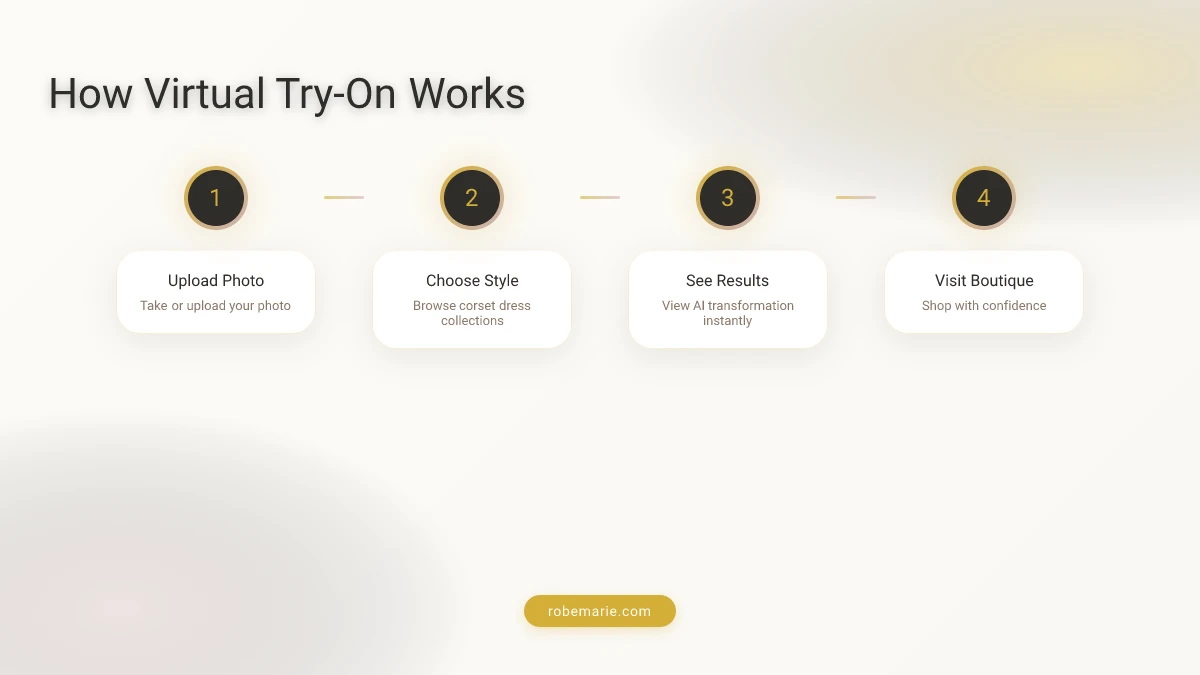
Choosing the right corset style can feel overwhelming with so many options available. Before committing to boutique appointments, use RobeMarie's AI virtual try-on to see how different corset wedding dress silhouettes look on your body.
Upload your photo and explore lace-up ball gowns, exposed-boning mermaid dresses, and sleek internal corsetry styles in seconds. This approach helps you narrow down your preferred silhouette and neckline before stepping foot in a bridal salon, saving you hours of in-store browsing.
Try RobeMarie's Virtual Dress Try-On
Frequently Asked Questions
Are corset wedding dresses comfortable?
Yes, modern corset wedding dresses are designed with comfort in mind. Unlike historical corsets that used rigid steel boning, today's bridal corsets use flexible plastic boning and breathable fabrics. The lace-up back allows you to adjust the tightness throughout your wedding day, loosening slightly for dinner and dancing. Most brides report that a properly fitted corset feels supportive rather than restrictive.
What is the difference between a corset back and a zipper back wedding dress?
A corset back uses ribbon lacing through eyelets for an adjustable closure that accommodates up to two inches of size variation. A zipper back provides a fixed, seamless closure that requires exact sizing. Corset backs offer more flexibility and a romantic visual detail, while zipper backs are faster to put on and provide a smoother back profile.
Can you add a corset back to any wedding dress?
Most wedding dresses can be altered to include a corset back. A skilled seamstress removes the existing zipper closure, adds boning panels, and installs eyelets for lacing. The alteration typically costs between $150 and $400 depending on the dress construction. Consult your bridal tailor at least three months before your wedding to allow time for this modification.
How tight should a corset wedding dress be?
A corset wedding dress should be snug enough to stay in place without shifting but loose enough to allow comfortable breathing and movement. You should be able to fit two fingers between the corset and your ribcage. If you cannot take a full deep breath or feel numbness, the corset is too tight. Practice wearing it for a few hours before the wedding to find your ideal tension.
Are corset wedding dresses in style for 2026?
Absolutely. Corset wedding dresses are one of the strongest bridal trends for 2026, with exposed boning and structured bodices appearing in collections from Pronovias, Maggie Sottero, and Vera Wang. The trend draws influence from both historical fashion revivals and modern editorial bridal aesthetics.
Can you wear a corset under a wedding dress?
Yes, wearing a separate bridal corset underneath your wedding dress provides extra support and shaping without altering the dress design. This works well for dresses with simpler bodice construction. Choose a smooth, seamless corset in nude or white that sits flat under the fabric. Many brides use under-dress corsets with strapless or low-back gowns for added security.
How many fittings do you need for a corset wedding dress?
Most brides need two to three fittings for a corset wedding dress, which is one fewer than the average for zip-up gowns. The adjustable lace-up back accommodates minor size changes between fittings, reducing the need for extensive alterations. Schedule your final fitting two weeks before the wedding day.
What neckline works best with a corset bodice?
Sweetheart and strapless necklines are the most popular choices for corset wedding dresses because they showcase the structured bodice shape. However, corset bodices also pair beautifully with off-the-shoulder sleeves, illusion necklines, and plunging V-necks depending on your personal style and comfort level.
Final Thoughts on Corset Wedding Dresses
A corset wedding dress delivers both visual drama and practical benefits that few other bridal design features can match. The structured bodice flatters your figure, the adjustable fit reduces fitting stress, and the romantic lace-up back creates a stunning detail that photographs beautifully from every angle.
Whether you choose a classic lace-up ball gown or a modern exposed-boning sheath, the corset silhouette remains one of the most timeless choices in bridal fashion. Start by exploring corset styles virtually with RobeMarie to discover which silhouette makes you feel most like yourself on your wedding day.
For more wedding dress inspiration, explore our complete guide to wedding dress styles, our guide to simple wedding dresses, or browse affordable wedding dress options.