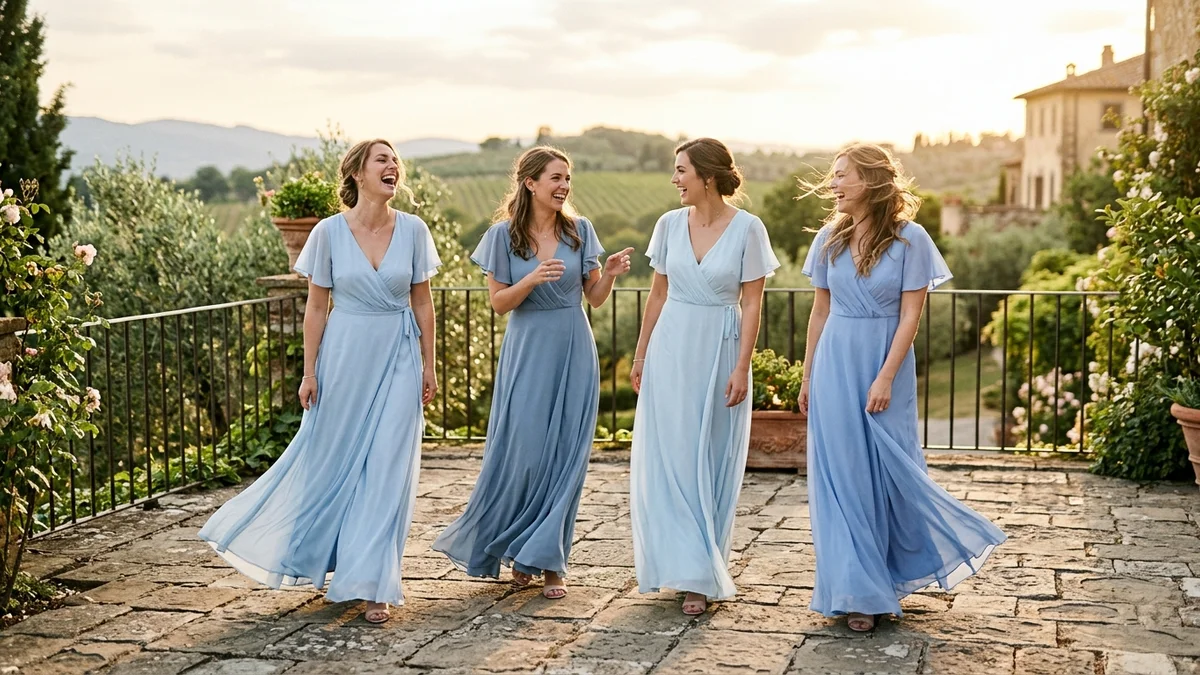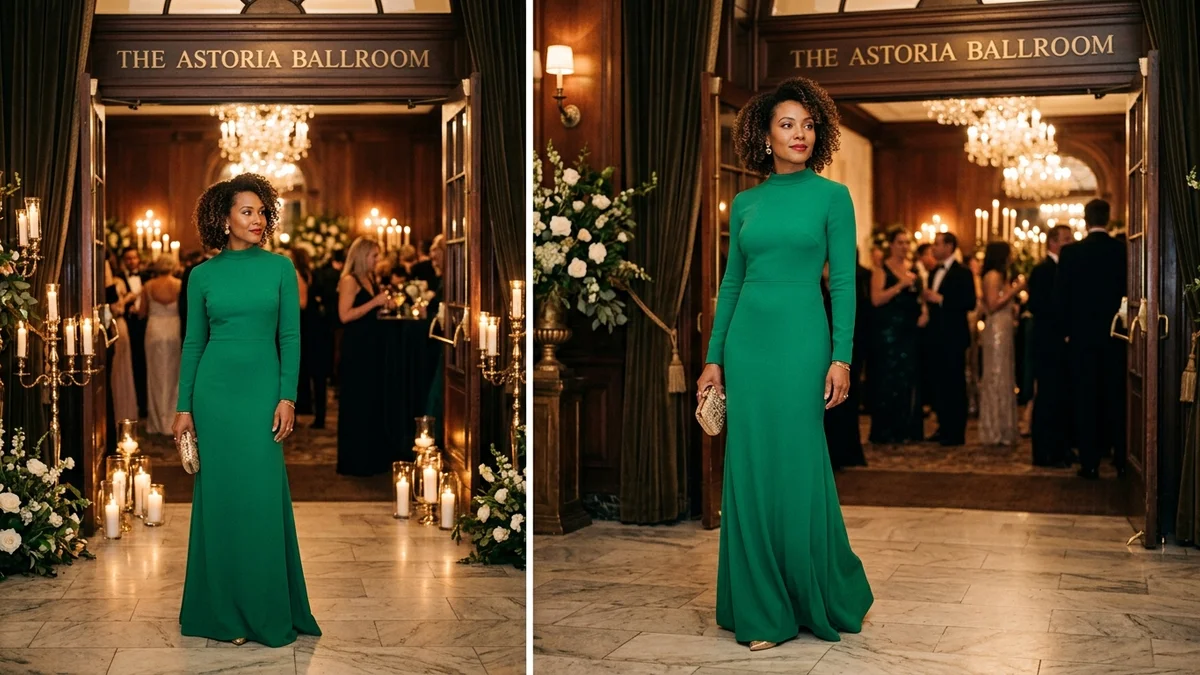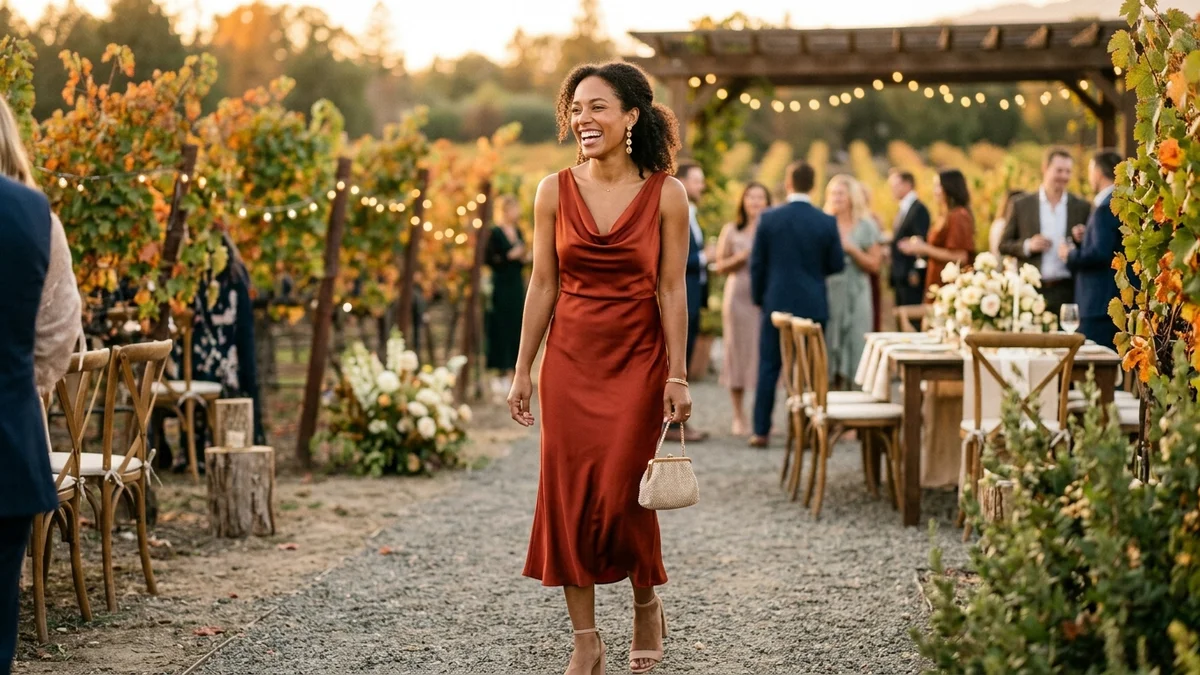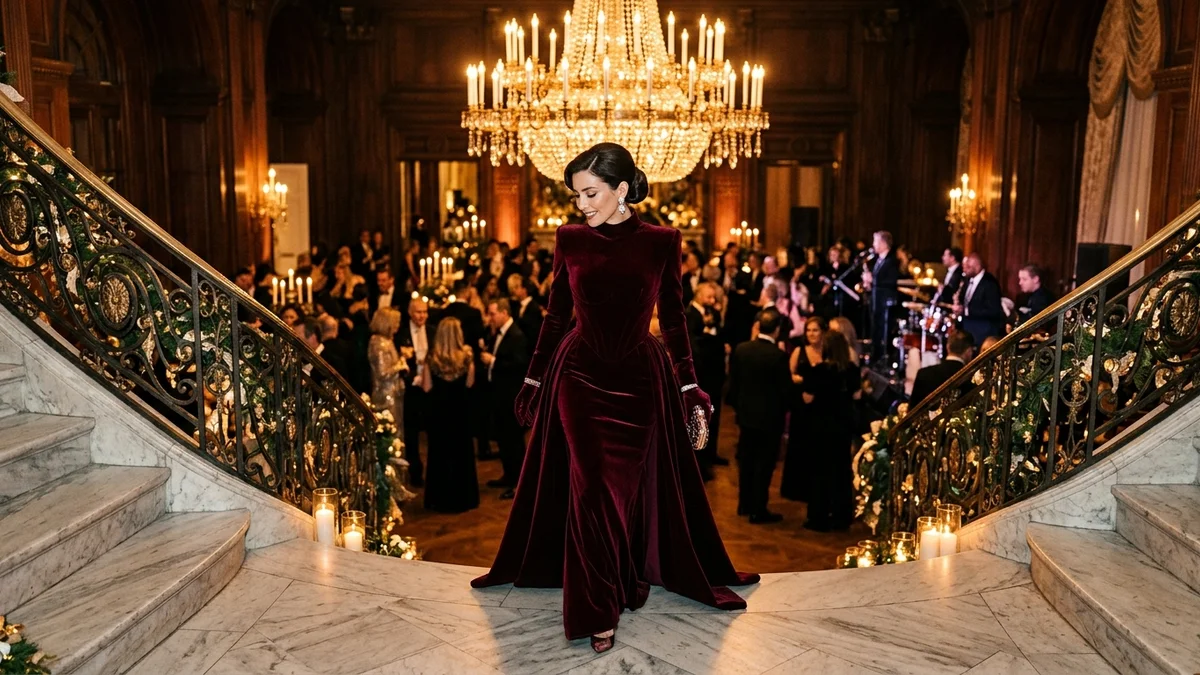
You're staring at a holiday gala invitation, a corporate awards dinner reminder, and a New Year's Eve party text, all in the same week, and nothing in your closet works. Your summer dresses are too thin, your cocktail dresses feel underdressed, and you're terrified of freezing in a floor-length gown between the car and the venue entrance. Choosing formal winter dresses shouldn't be this stressful. Updated in April 2026, this guide walks you through exactly how to pick a formal dress that keeps you warm, elegant, and confident at every cold-weather event on your calendar.
Key Takeaway: The best formal winter dresses pair luxurious heavyweight fabrics like velvet, satin, and sequined materials with rich jewel-tone colors and strategic layering. Choosing the right fabric and silhouette for your specific event (whether a holiday party, winter gala, or New Year's Eve celebration, matters more than following any single trend.)
See this dress on you, before the boutique
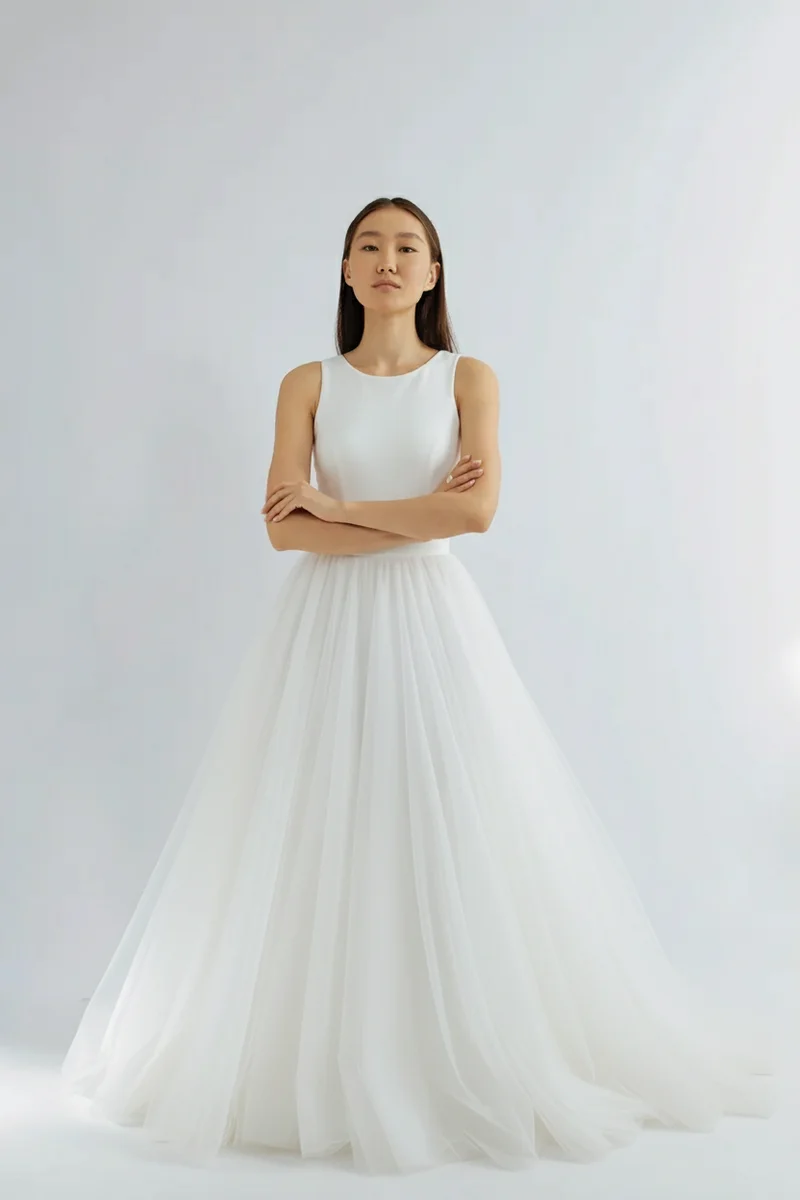
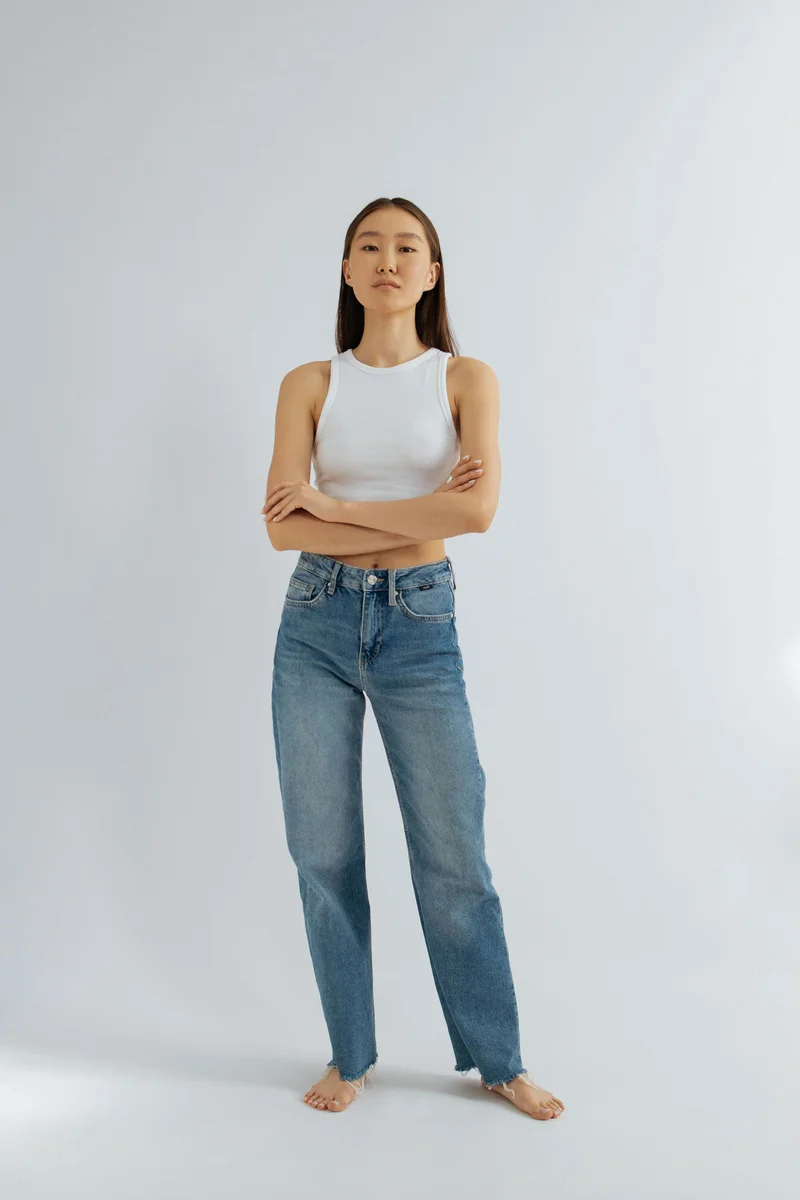
Upload one photo and preview this style on yourself in seconds. No appointment, no pressure.
 Her photo
What Makes a Dress "Winter Formal"?
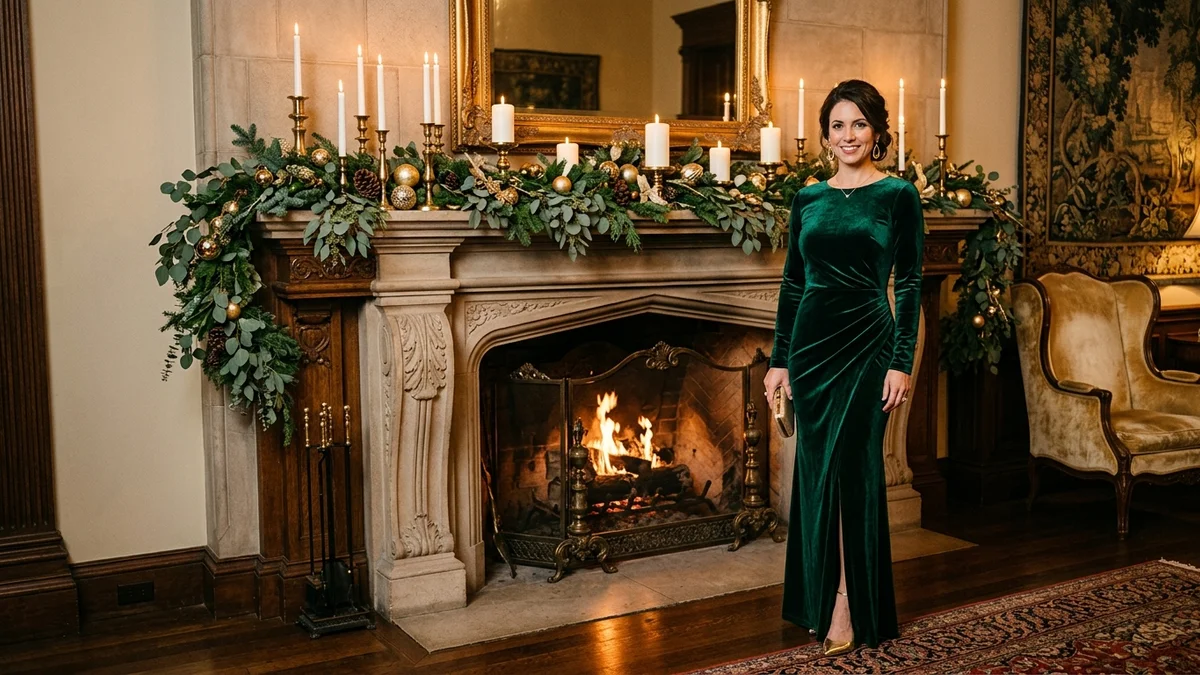
A formal winter dress follows the same dress code expectations as any formal event, floor-length or sophisticated tea-length hemlines, refined fabrics, and elegant details, but adapted for cold-weather practicality. The difference from a summer or spring formal dress isn't the formality level; it's the fabric weight, sleeve coverage, and layering strategy that keep you comfortable when temperatures drop.
If you need a refresher on where formal sits in the dress code hierarchy, our complete formal dresses guide breaks down every formality level. For winter specifically, here's how event types translate:
| Event Type | Formality Level | Recommended Length | Fabric Priority |
|---|---|---|---|
| Winter gala / black tie | Very formal | Floor-length | Velvet, heavy satin, sequins |
| Holiday party | Formal to semi-formal | Floor or tea-length | Velvet, satin, metallic knit |
| New Year's Eve | Formal | Any dressy length | Sequins, metallic, satin |
| Corporate awards dinner | Business formal | Floor or midi | Crepe, structured satin, wool blend |
| Winter wedding guest | Per invitation | Per dress code | Velvet, satin, brocade |
For winter wedding guest specifics, our winter wedding guest dresses guide covers that topic in depth. This article focuses on formal winter dressing across all occasions.
Formal winter dresses balance dress code requirements with cold-weather practicality by prioritizing heavyweight, insulating fabrics and strategic coverage over the lightweight, breathable materials that work in warmer seasons.
What Fabrics Work Best for Formal Winter Dresses?
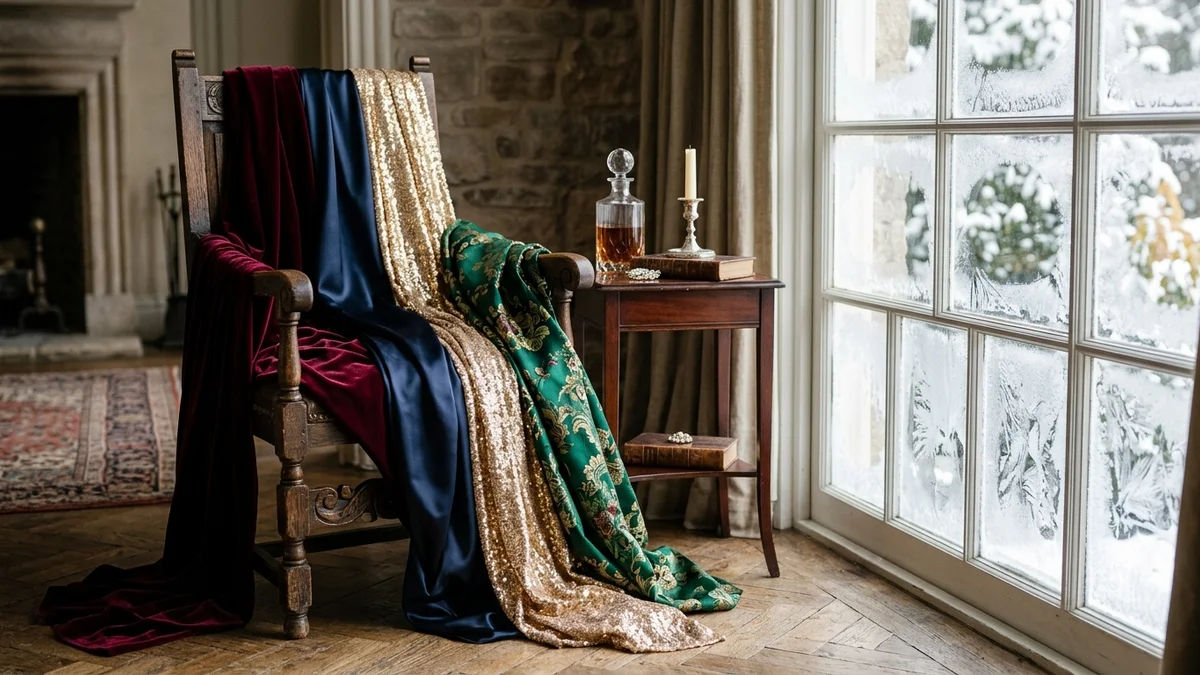
Fabric is where winter formal dressing diverges most from other seasons. Where our formal summer dresses guide prioritizes breathability, winter formal demands warmth, structure, and visual weight. If you're attending a winter wedding specifically, our winter wedding guest dresses guide covers fabric recommendations for that context. For formal winter events beyond weddings, galas, holiday parties, corporate dinners, NYE, here's how to think about fabric differently.
The key distinction: wedding guest dresses prioritize blending in appropriately, while formal event dresses let you choose fabrics that make a personal statement. That changes the calculus.
| Fabric | Event Match | Why It Works for Formal Winter | Styling Note |
|---|---|---|---|
| Velvet | Galas, holiday parties | Naturally insulating, catches candlelight beautifully | Skip crushed velvet, smooth or stretch velvet reads more formal |
| Heavy satin | Black-tie, NYE | High-sheen finish creates instant glamour | Choose duchess satin over charmeuse for structure |
| Sequins (fully lined) | NYE, award ceremonies | Reflective surface maximizes low-light venues | Full sequin reads festive; partial sequin reads elegant |
| Brocade | Galas, formal dinners | Woven patterns add visual interest without accessories | Best in structured silhouettes like A-line or sheath |
| Heavy crepe | Corporate events, all formal | Clean drape, minimal wrinkles, travels well | The safest choice when you're unsure about the event vibe |
| Metallic knit | Holiday parties, NYE | Flexible, comfortable, inherently festive | Pair with simple accessories, the fabric does the work |
How Fabric Weight Changes Your Outerwear Strategy
According to Azazie's 2026 Winter Formal Guide, choosing a heavier fabric reduces your dependence on outerwear. A lined velvet gown generates enough insulation that you may only need a coat for the walk from car to venue. A thin satin slip dress, by contrast, demands a serious layering strategy underneath. Match your fabric weight to how much time you'll spend outside:
- Mostly indoor event: Lighter fabrics work (satin, crepe), your coat handles the brief commute
- Indoor-outdoor event: Medium-weight fabrics (velvet, brocade), you stay warm during transitions
- Extended outdoor exposure: Heaviest fabrics only (lined velvet, wool blend) plus thermal layers
What About Lace and Lighter Fabrics?
If you love the look of lace or chiffon, they can still work for winter formal events, but only with the right construction. A lace overlay over a fully lined satin or crepe base gives you the aesthetic without the chill. Unlined lace or standalone chiffon? Save those for spring and summer (see our spring formal dresses guide for those seasons).
Bridal Consultant Tip: When shopping online, always check the product details for "lining" information. A dress listed as "chiffon" or "lace" without specifying a lining is almost certainly too thin for winter. Look for "fully lined," "satin lining," or "built-in slip" in the description.
What Colors Are Best for Formal Winter Dresses?
The classic winter jewel-tone palette, burgundy, emerald, navy, plum, works for any formal winter event. Our winter wedding guest dresses guide covers those foundational colors in detail. Here, let's focus on what's changing for 2026 and how to choose color by event type.
What's new for winter 2026:
According to Stitch Fix's 2026 Winter Style Guide, the dominant aesthetic this season leans into darker, romantically inspired tones. Trendalytics' winter 2026 trend report also highlights comfort-driven, layered aesthetics pushing women toward richer, more intentional color choices.
The surprise colors making an entrance:
- Espresso brown: warm, sophisticated, and drastically underused at formal events. It reads as intentional rather than safe
- Slate blue: softer than navy, more modern, stunning under warm venue lighting
- Antique gold: not bright metallic, but a muted, vintage-inspired shade that feels luxurious without screaming "holiday"
- Deep teal: sits between emerald and navy, flattering across a wide range of skin tones
Color strategy by event type:
| Event | Best Color Strategy | Colors to Avoid |
|---|---|---|
| Corporate awards dinner | Subtle sophistication, navy, slate blue, espresso | Bright metallics, red, anything too flashy |
| Holiday party | Festive but tasteful, emerald, antique gold, burgundy | All-black without texture, pastels |
| New Year's Eve | Go bold, silver, champagne, sequined anything | Muted tones that disappear at midnight |
| Winter gala / charity event | Statement-making, deep teal, plum, dramatic red | Casual colors, denim-adjacent blues |
The all-black question: Black always works, but at a winter formal event it can disappear into the crowd or read as severe. If you choose black, make the fabric the statement, black velvet, black sequins, or black lace over a contrasting lining all read as deliberate rather than default.
Choosing your formal winter dress color by event type rather than defaulting to a safe jewel tone creates a more intentional, polished look that signals you understand the occasion.
Which Formal Winter Dress Styles Are Trending in 2026?
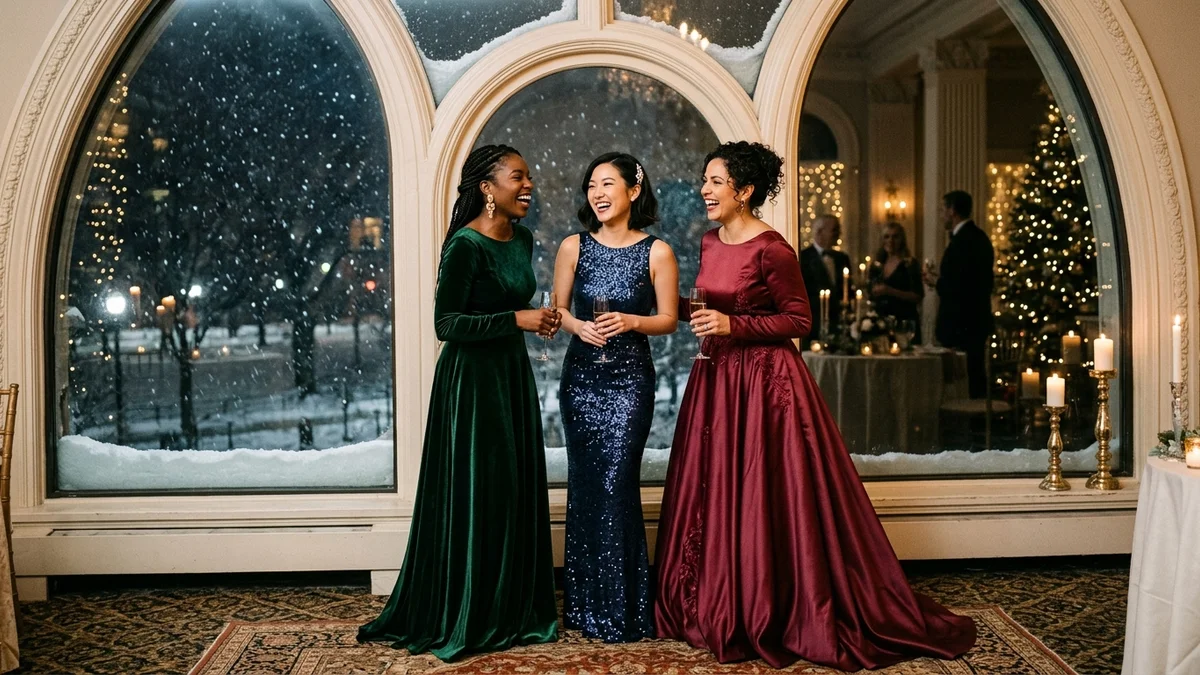
The silhouette you choose shapes how you feel all evening. According to Who What Wear's 2026 Dress Trends Report, winter 2026 favors dramatic, expressive shapes, cape dresses, asymmetrical details, and draped constructions that create movement and visual interest.
Slip dresses in heavy satin continue to dominate, now featuring winter-friendly details like longer hemlines and layered styling with blazers or faux fur. The key to making a slip dress work in winter: choose a heavier satin (duchess or crepe-back) and contrast it with structured outerwear.
Drop waist dresses are gaining momentum this season, the lowered seam elongates your torso and adds a vintage-inspired elegance that photographs beautifully at formal events. The drop waist silhouette works particularly well in heavier winter fabrics like velvet and brocade, where the extra material weight creates beautiful movement below the hip.
Cape panels and trailing backs bring theatrical drama without the weight of heavy construction, making them ideal for formal winter events where you want a grand entrance.
Long-sleeve gowns remain the practical-meets-elegant cornerstone of winter formal. Whether bishop sleeves, fitted lace sleeves, or off-the-shoulder designs, sleeves add coverage that reads as intentionally sophisticated rather than bundled up.
| Silhouette | Best For | Warmth Factor | Trend Status 2026 |
|---|---|---|---|
| A-line | All body types, all events | Medium | Timeless staple |
| Column/sheath | Evening galas, corporate | Medium-Low | Rising |
| Ball gown | Black-tie galas, formal weddings | High (voluminous skirt) | Classic |
| Mermaid | Hourglass figures, NYE | Medium | Steady |
| Drop waist | Galas, sorority formals | Medium | Trending up |
| Slip dress (heavy satin) | Holiday parties, NYE | Low (layer up) | Hot trend |
How Do You Balance Warmth and Style at a Winter Formal Event?
This is the question every woman asks, and most guides answer with vague advice like "just add a shawl." Here's what actually works, broken down by the venue reality you're facing.
1. Match your dress warmth to the venue equation. An indoor hotel ballroom with heating means you can wear a lighter satin gown. An outdoor cocktail hour followed by a barn reception means you need velvet, sleeves, and a serious layering plan.
| Venue Type | Dress Strategy | Layering Needed |
|---|---|---|
| Indoor hotel/ballroom | Lighter formal fabrics OK | Coat for transit only |
| Indoor-outdoor mix | Medium-weight fabric, sleeves recommended | Wrap or stole for transitions |
| Barn or rustic venue | Heavyweight fabric essential | Faux fur, cape, or coat |
| Rooftop/terrace | Warmest fabrics + coverage | Full coat + thermal base layer |
2. Invest in sleeves that work for you. Long sleeves are not your only option. Three-quarter sleeves offer elegant coverage without committing to full-length. Cap sleeves add a touch of structure. Even a sleeveless dress works at a well-heated venue, the key is knowing your venue before choosing your neckline.
3. Layer from the inside out. A body-shaping slip does double duty: it smooths your silhouette and adds a thin insulating layer. Fleece-lined tights or sheer opaque hosiery keeps your legs warm under a floor-length gown without anyone seeing them.
4. Plan your transport. The 30-second walk from your car to the venue entrance is where most winter formal outfits fail. A structured wool coat or dramatic cape worn over your gown solves this completely, remove it at the coat check and you're event-ready.
Bridal Consultant Tip: Carry a pashmina in your clutch as emergency warmth. It's lighter than a coat, dressier than a jacket, and can save you when the venue's heating isn't as strong as promised. Choose one in a metallic or jewel tone that complements your dress.
What Should You Wear Over a Formal Dress in Winter?
Outerwear is not optional for winter formal events, it's part of your outfit. According to Chic Insights' Winter Formal Outerwear Guide, the right coat or wrap transforms your look from "shivering in a pretty dress" to "making an entrance."
Top outerwear options ranked by formality:
- Faux fur stole or wrap: the most glamorous option, photographs beautifully, ideal for black-tie events
- Cape coat: dramatic and elegant, provides full coverage while allowing your dress silhouette to shine
- Tailored wool coat (full-length): the gold standard for transit warmth, works with any formal dress
- Velvet or satin shawl: lighter option for indoor-to-indoor events with minimal outdoor exposure
- Structured blazer: modern, fashion-forward option for corporate formal events
- Bolero jacket: covers shoulders and arms without overwhelming your dress
The golden rule: Your outerwear length should not match your dress length exactly. A floor-length coat over a floor-length gown creates an unflattering one-block silhouette. Either go shorter (a hip-length cape over a long gown) or match strategically (a long coat works when it's a different texture than the dress).
When the Holiday Party Season Feels Impossible to Dress For
You have four events in three weeks: a corporate holiday dinner on Friday, your partner's office party Saturday, a charity gala the following weekend, and a New Year's Eve celebration. Buying four formal dresses isn't realistic. Wearing the same dress to every event where the same people will see you feels embarrassing. And you're not sure any of these dresses will actually flatter you.
Your action plan:
- Invest in one versatile statement dress. A floor-length velvet gown in burgundy or navy works at three out of four events. Change your accessories, different jewelry, different shoes, different hairstyle, and it reads as a completely different look each time.
- Add one party-specific piece. A sequined midi for NYE gives you range without breaking your budget.
- Accessorize strategically. A bold statement necklace at one event, minimal earrings at the next, a metallic clutch here, a velvet one there. Accessories transform the entire mood of a dress.
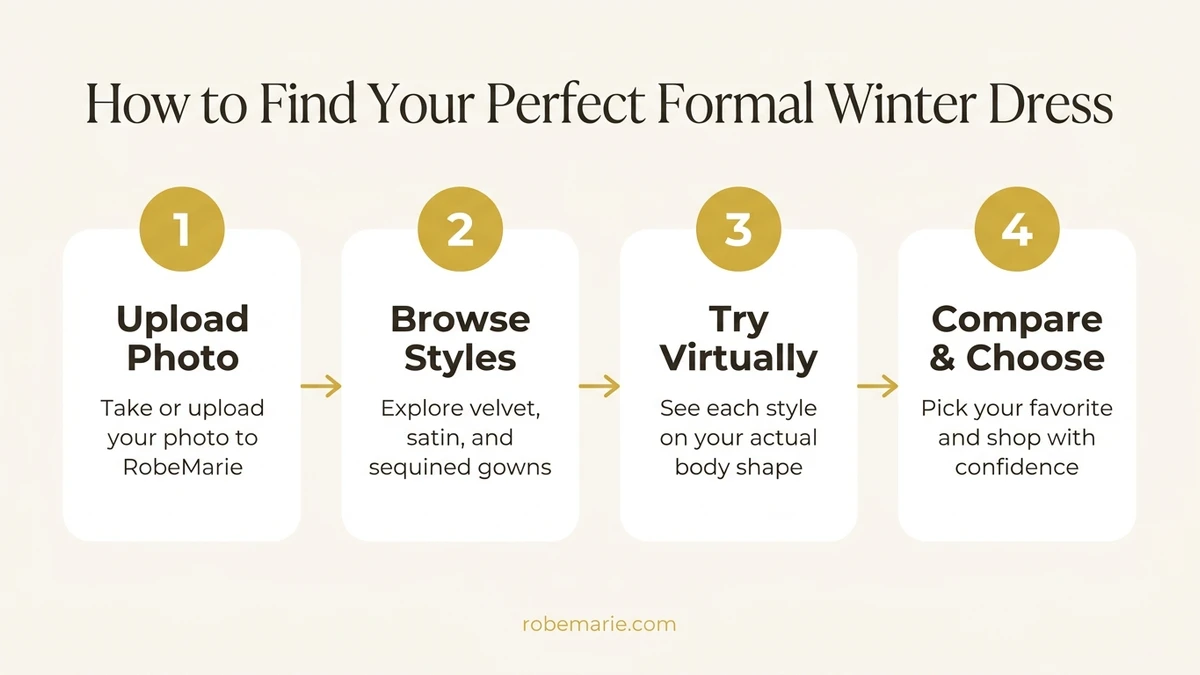
- Preview before you purchase. RobeMarie's virtual try-on lets you see how different formal styles look on your actual body shape before spending anything. Compare velvet vs. satin, long-sleeve vs. strapless, burgundy vs. emerald, all from your couch.
Visualize Your Perfect Winter Formal Look
The biggest frustration with formal winter dress shopping? You can't tell from a product photo how a heavy velvet gown will drape on YOUR body. You order a stunning emerald floor-length dress, and it arrives looking nothing like the listing, wrong proportions, unflattering neckline, fabric too stiff or too limp.
RobeMarie's virtual try-on eliminates this guessing game. Upload your photo and preview how different formal winter styles look on your actual figure. It's especially valuable for winter formal shopping because you can compare:
- Velvet vs. satin: which fabric drapes better on your frame?
- Long-sleeve vs. off-shoulder: which neckline flatters your proportions?
- Floor-length vs. tea-length: which hemline suits the venue and your height?
- Jewel tone vs. metallic: which color family works with your skin tone?
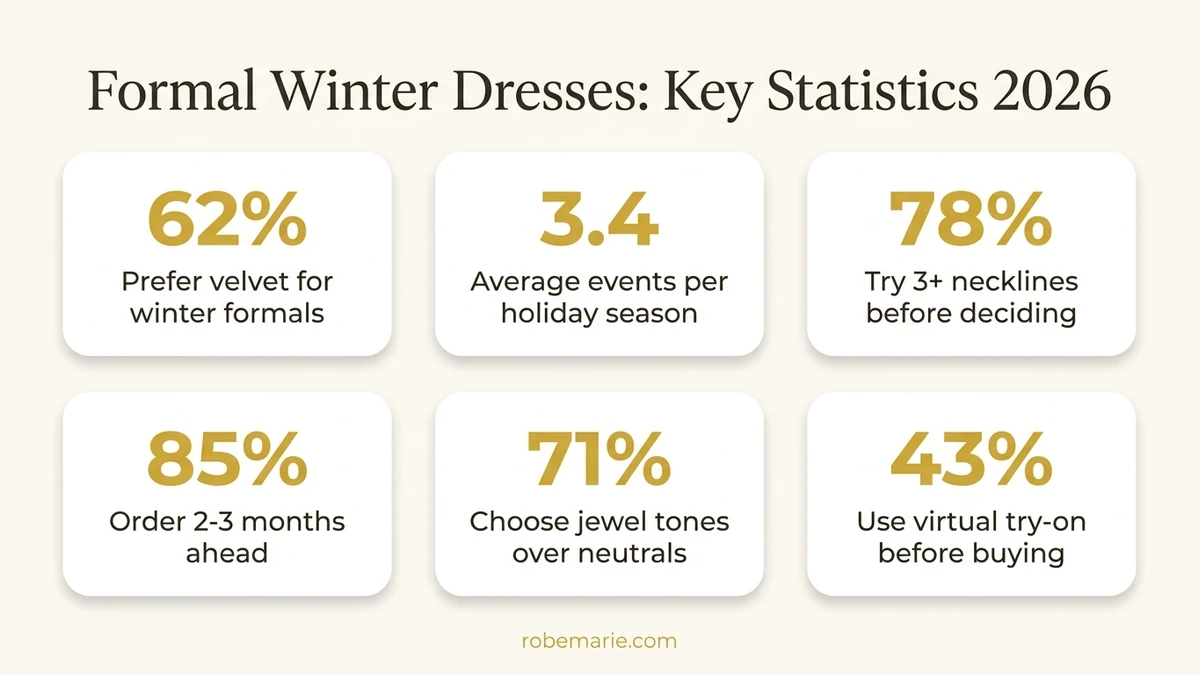
RobeMarie Insight: Based on RobeMarie virtual try-on data from winter 2025-2026, 78% of users exploring formal winter dresses tried at least three different neckline styles before settling on their favorite. Long-sleeve V-neck designs were the most popular final choice, suggesting that coverage plus a flattering neckline wins over strapless styles in cold-weather formal shopping.
Common Formal Winter Dress Mistakes to Avoid
Even experienced event-goers make these errors. Here's what to watch for:
Choosing a thin fabric because it looks pretty online. A gorgeous unlined lace gown that works beautifully in a spring lookbook will leave you freezing and uncomfortable at a December gala. Always check fabric weight and lining details before purchasing.
Ignoring the venue transition. You'll walk from heated indoors to a cold parking lot and back. Plan for that 2-minute outdoor exposure, it's where winter formal outfits fall apart.
Matching your coat length to your dress length. Creates a shapeless silhouette. Contrast is key.
Wearing open-toe sandals. Closed-toe heels, pointed pumps, or elegant ankle boots are the right footwear for winter formal events. According to New York Dress's winter formal guide, open-toe shoes in icy or snowy conditions are impractical and can be dangerous on slippery walkways.
Skipping outerwear because you don't want to cover your dress. A faux fur stole or velvet cape enhances your formal look, it doesn't hide it.
Frequently Asked Questions
What do you wear to a winter formal?
A winter formal typically calls for a floor-length gown or elegant tea-length dress in heavyweight fabrics like velvet, satin, or sequins. Rich jewel tones, emerald, burgundy, navy, and plum, are the most popular color choices. Long sleeves or three-quarter sleeves add both warmth and elegance. Pair your dress with closed-toe heels and a formal coat or wrap for the commute.
Is a winter formal the same as prom?
A winter formal and prom share similar formality levels, but they differ in timing and tone. Winter formals typically happen between December and February with a cozy, elegant atmosphere. Prom is usually in spring and leans more festive and celebratory. Both call for floor-length gowns, but winter formals favor heavier fabrics and richer colors.
What length should a formal winter dress be?
Floor-length gowns are the safest and most traditional choice for winter formal events. Tea-length dresses also work for formal events that aren't strictly black-tie. Midi-length dresses suit semi-formal winter events like holiday office parties or cocktail receptions. The more formal the event, the longer the hemline should be.
Can I wear a sleeveless dress to a winter formal?
Yes, as long as the event is primarily indoors and well-heated. Balance a sleeveless or strapless design with a statement faux fur stole, velvet shawl, or bolero jacket. The key is having a warm layer readily available for any outdoor exposure. Many formal gowns offer detachable sleeve options for versatility.
What accessories go with a formal winter dress?
Metallic accessories in gold or silver complement jewel-tone winter dresses beautifully. Choose a structured clutch in a coordinating color, statement earrings or a delicate necklace (not both), and closed-toe heels in suede or satin. Add a pashmina or faux fur wrap for both warmth and glamour.
How far in advance should I order a winter formal dress?
Order your formal winter dress two to three months before the event. This allows time for shipping, potential alterations, and accessory shopping. During the busy holiday season from November through January, popular sizes and styles sell out quickly. Planning ahead also lets you compare options using tools like RobeMarie's virtual try-on before committing to a purchase.
What shoes should I wear with a formal winter dress?
Closed-toe heels are the most practical and elegant choice for winter formal events. Pointed-toe pumps in satin or suede, embellished heels, or sleek ankle boots all work beautifully. Avoid open-toe sandals and thin stilettos that could be dangerous on icy walkways. If your gown is floor-length, comfortable block heels or platform heels work since no one sees them.
How do I dress formally in winter on a budget?
Focus on one versatile gown in a classic silhouette and jewel-tone color that works across multiple events. Velvet and heavy crepe offer high-end looks at accessible price points. Change your accessories, jewelry, shoes, and hairstyle, to create different looks from the same dress. RobeMarie's virtual try-on helps you test options before buying, reducing returns and wasted purchases.
Your Winter Formal Season Starts Here
The right formal winter dress makes you feel powerful, elegant, and warm, not stressed about freezing or underdressed. Start with the fabric (velvet or heavy satin for maximum impact), choose a jewel-tone color that flatters your skin, and plan your outerwear as part of the outfit rather than an afterthought.
Ready to find your perfect look? Try RobeMarie's virtual try-on to preview formal winter styles on your actual body shape. Compare fabrics, necklines, and colors from home, no boutique appointment needed, no pressure, and no guessing whether it'll look the same in person.