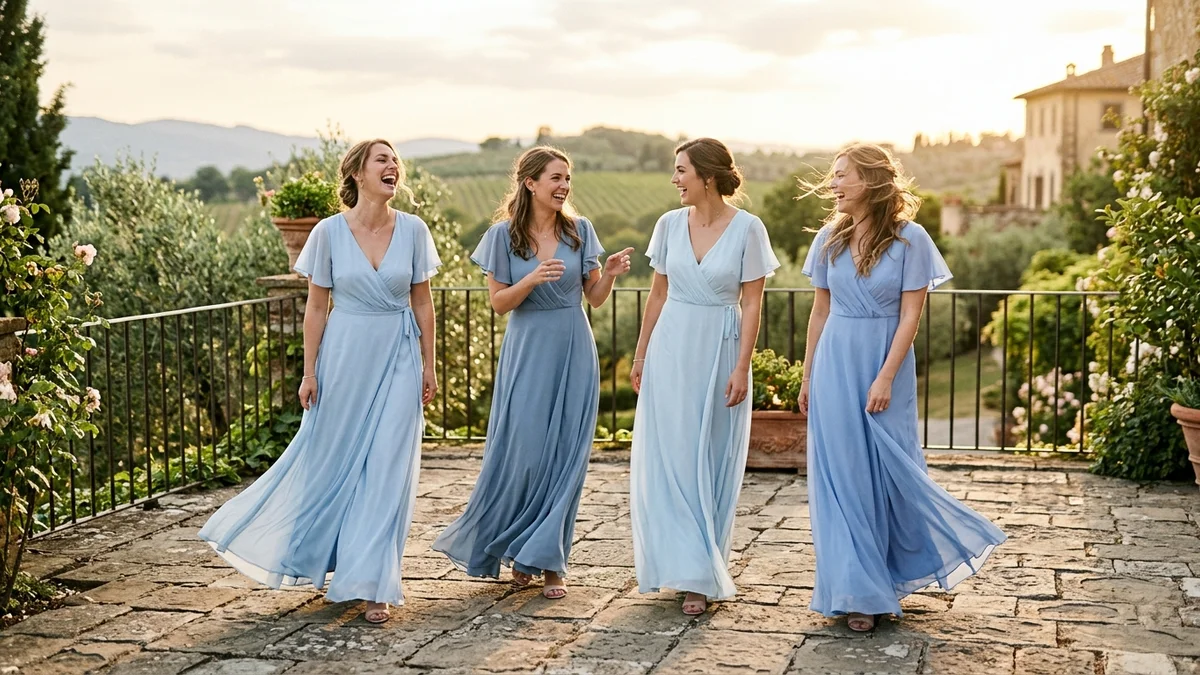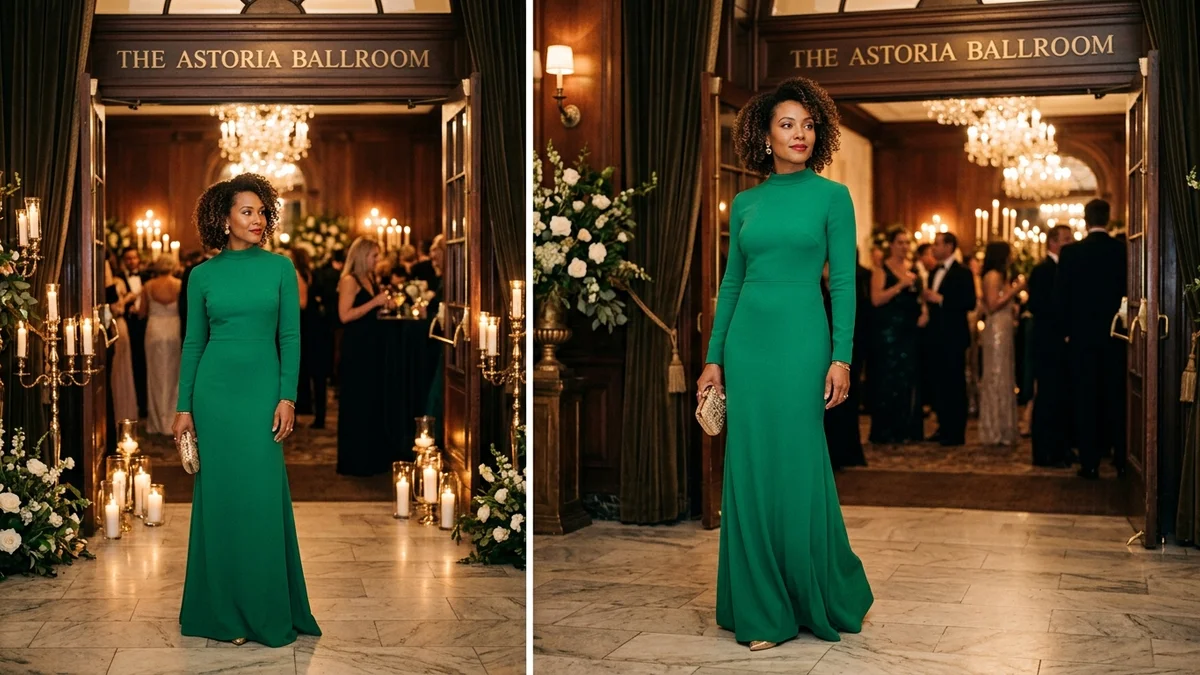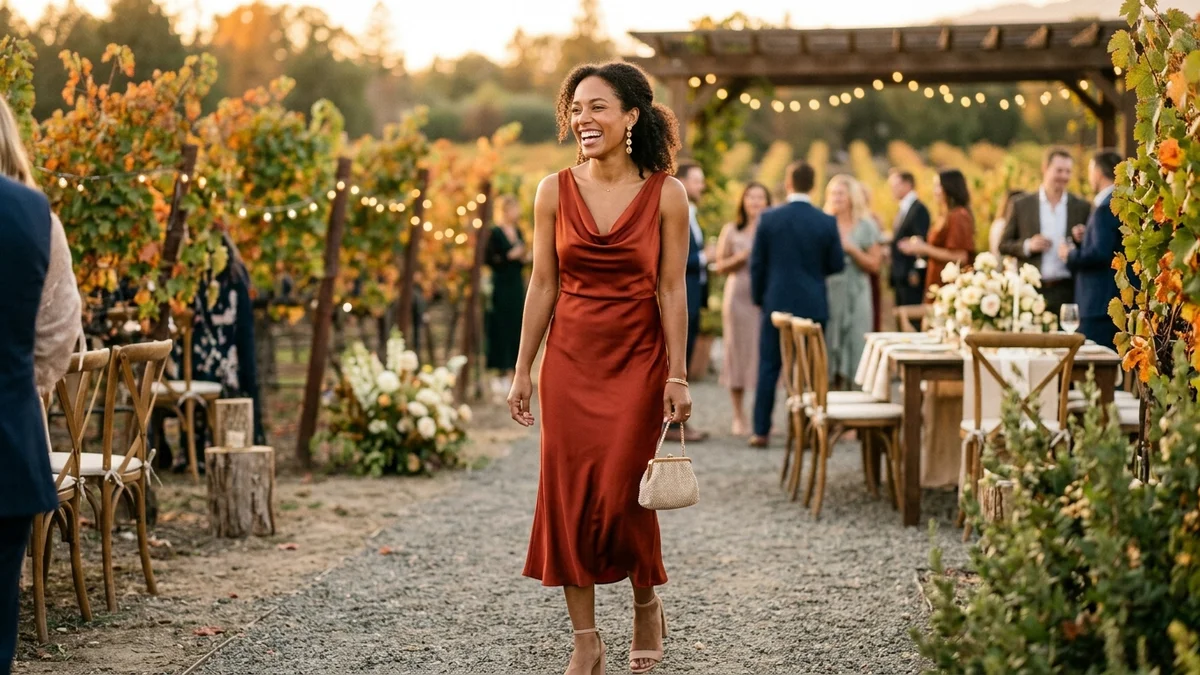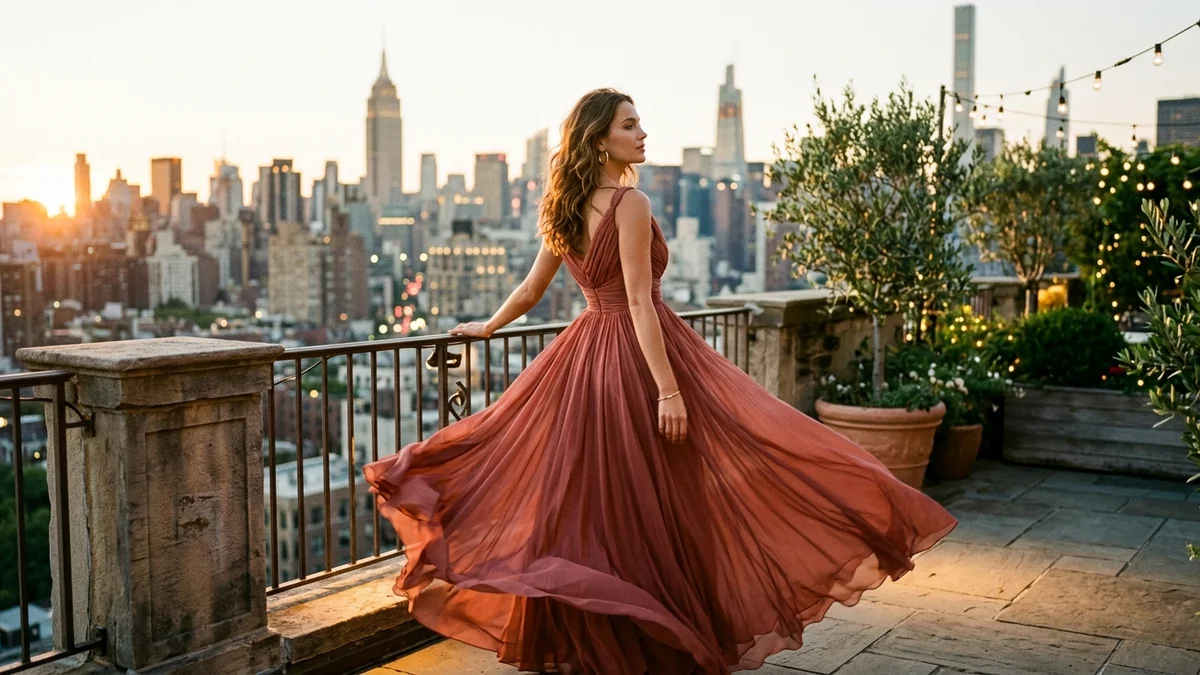
You have the invitation in hand, a formal summer wedding, a rooftop gala, a charity benefit on the hottest weekend of July, and you're already dreading the thought of standing in 90-degree heat wearing a floor-length gown. How do you look polished and elegant without melting? That's the question every woman faces when formal dress codes collide with summer weather. Updated in March 2026, this guide walks you through exactly how to choose a formal summer dress that keeps you cool, confident, and event-ready.
Key Takeaway: The best formal summer dresses combine lightweight, breathable fabrics like chiffon and silk with elegant silhouettes that allow airflow. Choosing the right fabric matters more than the style itself (a well-chosen material keeps you comfortable at outdoor weddings and evening galas while meeting every dress code requirement.)
See this dress on you, before the boutique
Upload one photo and preview this style on yourself in seconds. No appointment, no pressure.
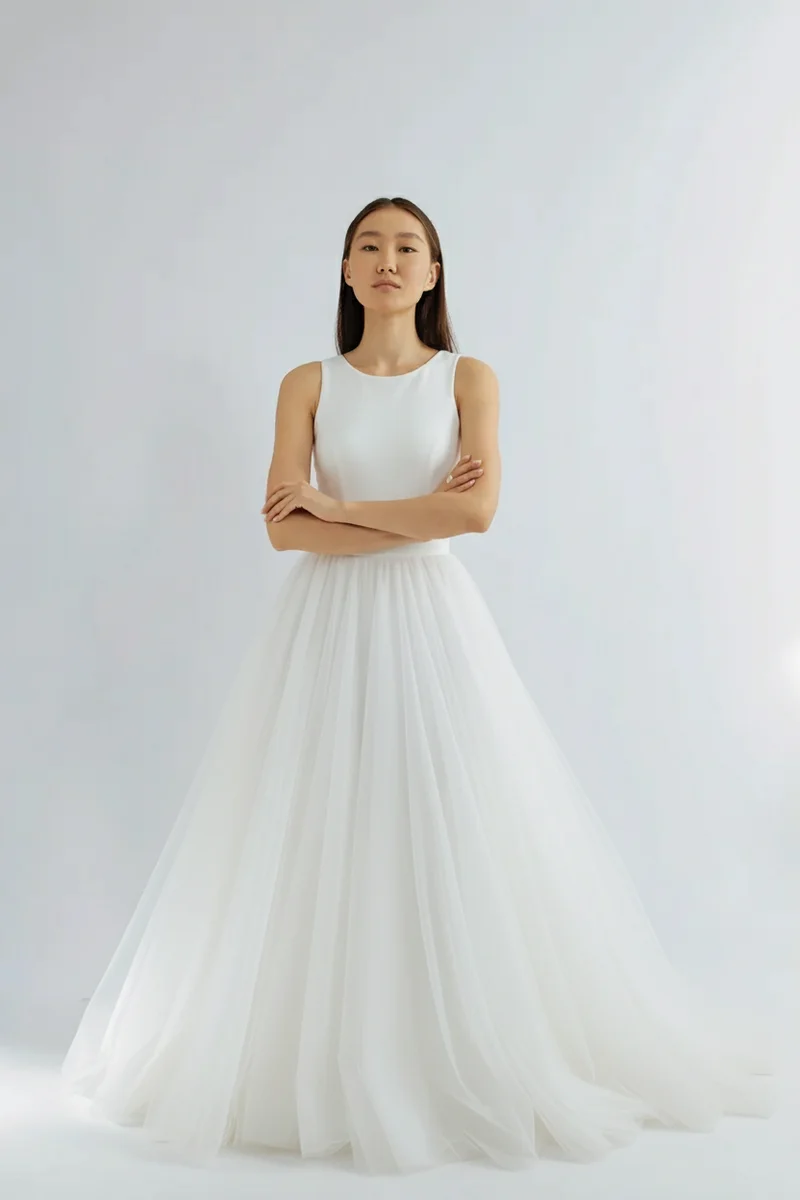
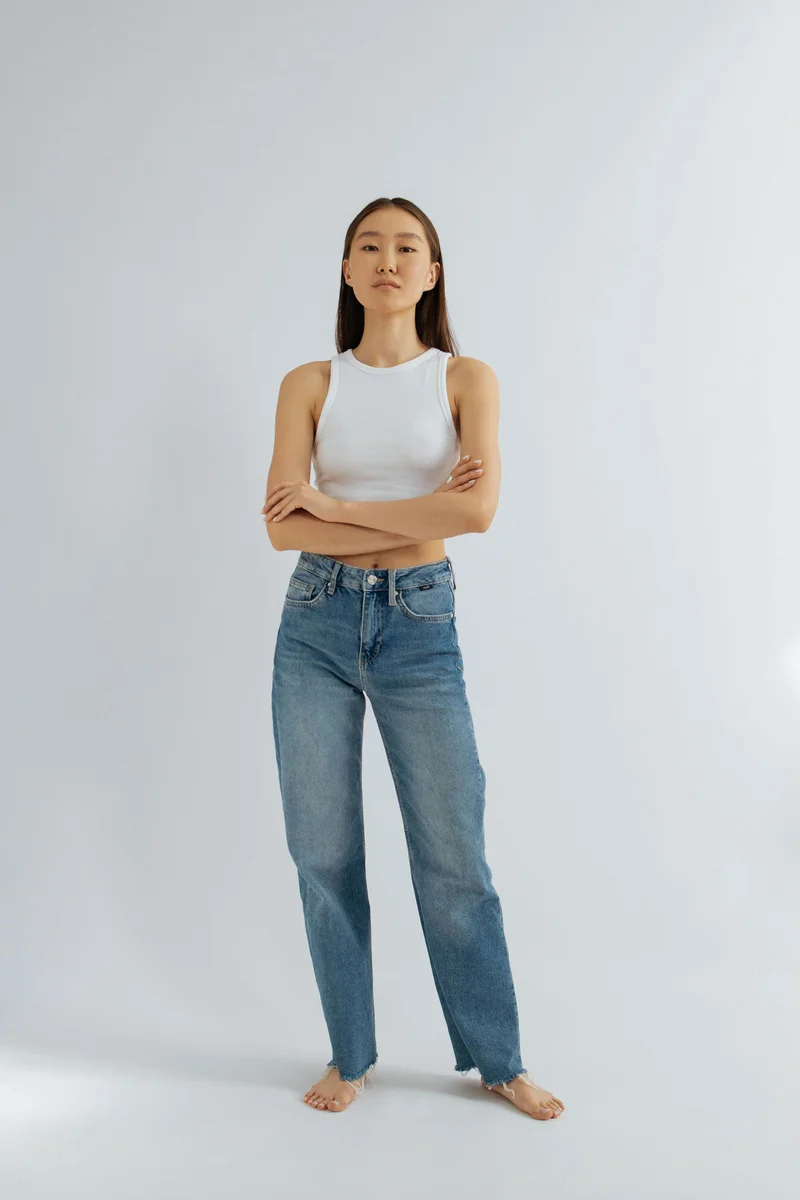 Her photo
What Counts as a Formal Summer Dress?
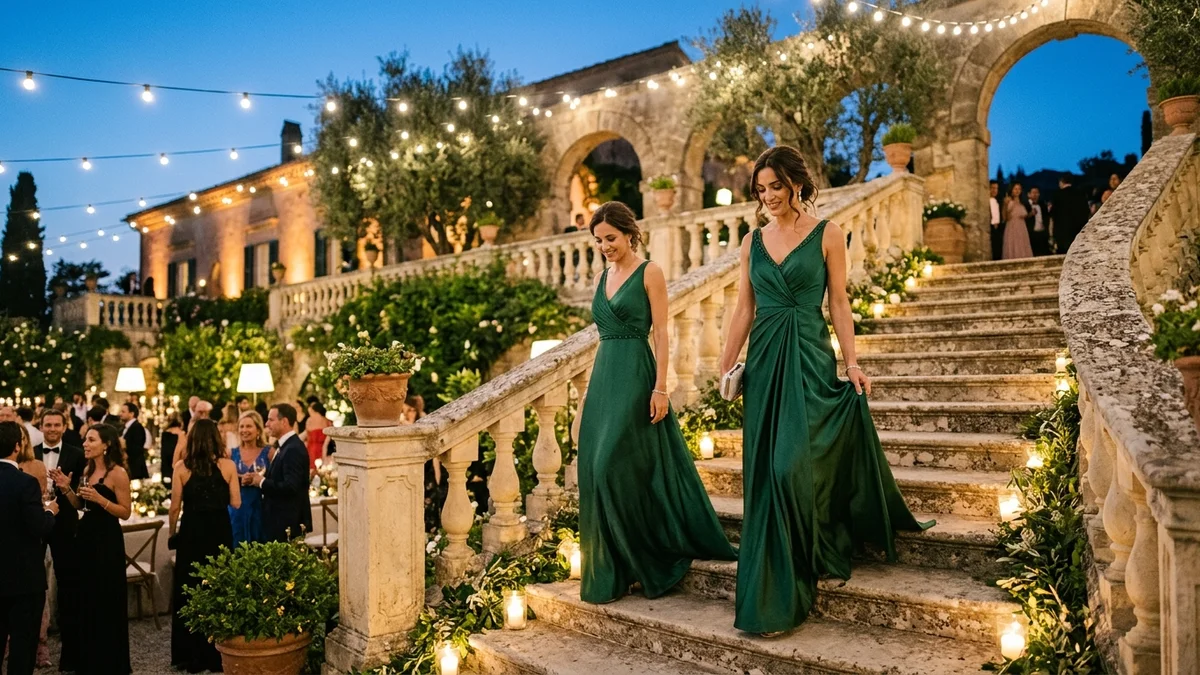
A formal summer dress follows the same dress code rules as any formal event, floor-length or elegant tea-length hemlines, sophisticated fabrics, and refined details, but adapted for warm-weather comfort. The distinction from winter formal is practical, not stylistic: you need the same level of elegance in materials that breathe.
If you're unsure where formal sits in the dress code hierarchy, our complete formal dresses guide breaks down every formality level. For summer specifically, here's how the codes translate:
| Dress Code | Summer Interpretation | Acceptable Lengths |
|---|---|---|
| Black Tie | Floor-length gown in lightweight fabric | Floor-length only |
| Formal | Floor-length or sophisticated tea-length | Floor or tea-length |
| Cocktail | Midi or knee-length in dressy fabrics | Midi, knee-length |
| Semi-Formal | Polished midi or dressy separates | Midi or above |
For more on the semi-formal end of the spectrum, see our semi-formal wedding guest dresses guide.
Formal summer dresses balance dress code requirements with warm-weather practicality by prioritizing breathable fabrics and open silhouettes over heavy, structured construction.
What Fabrics Are Best for Formal Summer Dresses?
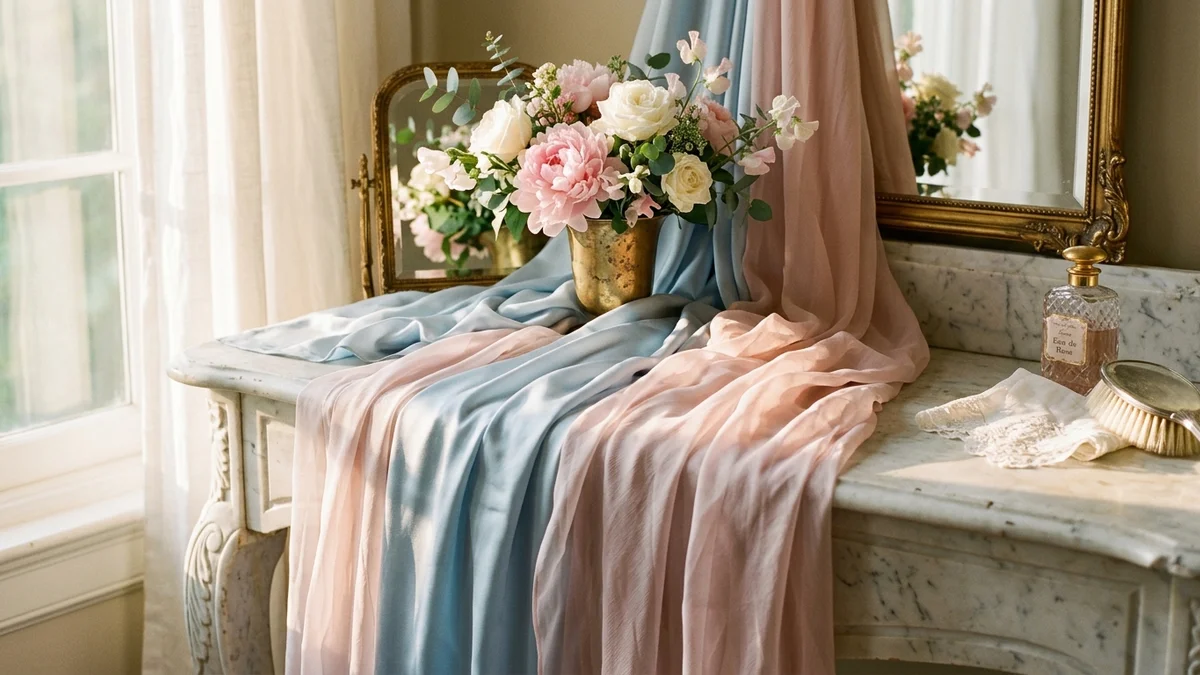
Fabric is the single most important decision for a formal summer dress. The wrong material turns a beautiful gown into a sauna. The right one keeps you comfortable from cocktail hour through the last dance. According to Marie Claire's 2026 summer fashion guide, breathable construction matters more than the fiber name itself, a tightly woven silk will trap heat, while a loosely woven one lets air circulate.
| Fabric | Breathability | Formality | Best For | Wrinkle Risk |
|---|---|---|---|---|
| Chiffon | Excellent | High | Outdoor ceremonies, galas | Low |
| Silk charmeuse | Very good | Very high | Evening events, black tie | Medium |
| Organza | Excellent | High | Garden weddings | Low |
| Crepe | Good | High | Any formal event | Very low |
| Satin (lightweight) | Moderate | Very high | Indoor formal events | Low |
| Jersey | Good | Moderate-High | Destination weddings | Very low |
| Linen blend | Excellent | Moderate | Daytime formal | High |
Bridal Consultant Tip: Test fabric breathability before buying. Hold the material against your inner wrist for 30 seconds (if it feels clammy, you'll be miserable after an hour in the heat. Chiffon and organza almost always pass this test.)
Fabrics to Avoid in Summer
Skip velvet, heavy brocade, thick satin, and polyester blends that don't wick moisture. These fabrics trap body heat and will leave you uncomfortable within minutes at an outdoor summer event. According to The Knot's 2025 summer wedding attire guide, heavy fabrics are the number one formal summer dressing mistake.
What Colors Work Best for Formal Summer Dresses?
Summer unlocks a color palette that other seasons can't match. Where winter formal defaults to black, navy, and burgundy, and spring leans into pastels (see our spring formal dresses guide for that palette), summer invites bold, saturated hues that photograph beautifully in natural light.
Summer power colors for 2026:
- Coral and watermelon pink: the breakout color of summer 2026 according to Who What Wear's trend report
- Cobalt blue: striking in outdoor settings, works from afternoon to evening
- Emerald green: rich enough for formal events, fresh enough for summer
- Sunset orange and scarlet: bold choices that command attention
- Champagne and soft gold: elegant metallic alternatives to white
Colors to handle carefully:
- White and ivory: avoid at weddings entirely
- All-black: can read as heavy in summer; if you must, choose a lightweight fabric with movement
- Neon shades: too casual for formal dress codes
Summer formal dresses in bold, saturated colors like coral, cobalt, and emerald create high-impact looks that photograph beautifully in natural light while signaling seasonal awareness.
How Do You Stay Cool in a Formal Dress During Summer?
This is the question competitors don't answer honestly. Beyond fabric choice, staying cool at a formal summer event requires strategy. Here's what actually works:
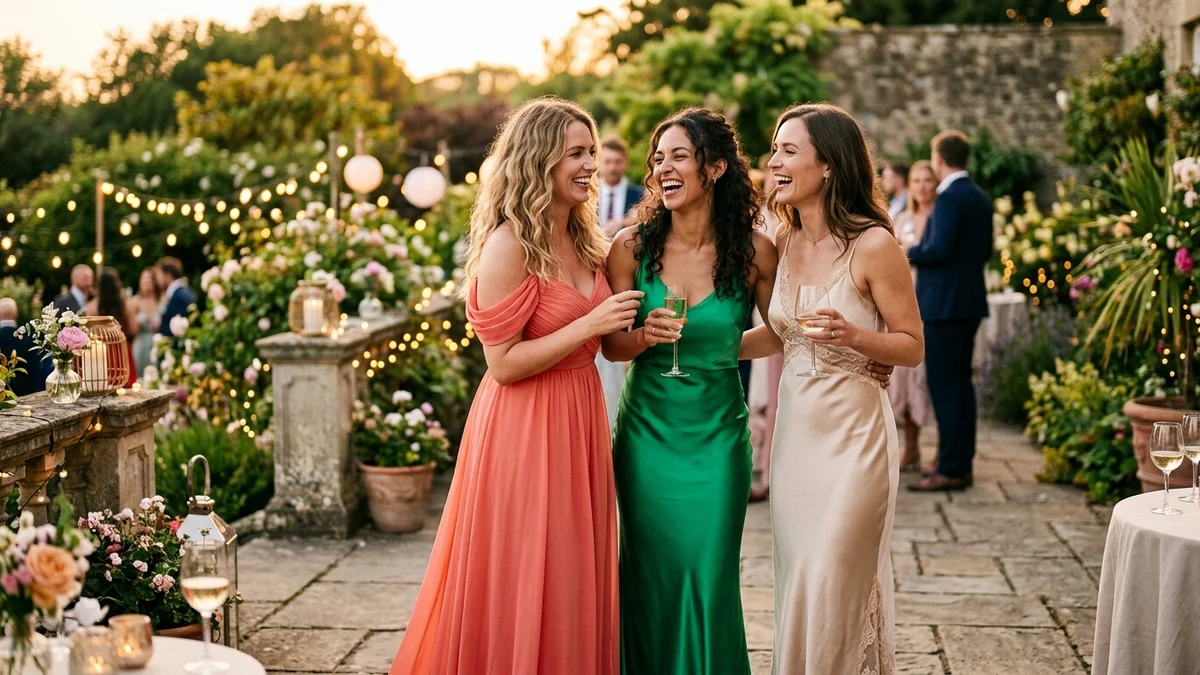
1. Choose silhouettes with airflow. A-line and empire waist dresses create space between the fabric and your body. Column dresses in lightweight fabric also work because they hang straight rather than clinging. Avoid body-hugging styles like tight mermaid or bandage dresses unless the event is entirely indoors.
2. Consider the venue equation. Indoor events with air conditioning open up heavier fabric options. Outdoor events in direct sun demand the lightest fabrics and most open necklines your dress code allows.
| Event Setting | Fabric Priority | Style Considerations |
|---|---|---|
| Outdoor garden | Ultra-lightweight (chiffon, organza) | Open shoulders, flowy skirt |
| Rooftop evening | Medium weight (crepe, silk) | Evening breeze helps; sleeves OK |
| Indoor ballroom | More flexibility (satin, crepe) | AC means more fabric options |
| Beach formal | Lightweight, wrinkle-resistant | Movement-friendly, avoid long trains |
| Destination wedding | Packable, breathable | Jersey or travel-friendly crepe |
3. Go strapless, halter, or one-shoulder. Open necklines are your best friend in summer heat. These styles look inherently formal while maximizing airflow. According to The Knot's 2026 wedding guest trend report, one-shoulder and halter necklines dominate summer formal fashion this year.
4. Prep your skin, not just your outfit. Use setting spray, mattifying primer, and waterproof makeup. Carry blotting papers. These details separate a polished look from one that wilts by dessert.
Bridal Consultant Tip: Pack a small "heat kit" in your clutch: blotting papers, a travel-size setting spray, and a mini deodorant. Five seconds in the restroom keeps your look fresh for hours.
When You're Terrified of Sweating Through Your Dress
You found the perfect formal gown online. It's elegant, it's the right color, and it photographs beautifully on the model. But a small voice in the back of your mind whispers: what if I have visible sweat patches by the ceremony? What if the fabric clings to my skin in the heat?
This fear is more common than you think, and it's completely solvable.
Your action plan:
- Choose a dark or printed fabric over solid pastels. Darker colors and patterns hide any moisture far better than light solids.
- Wear a breathable slip underneath. A moisture-wicking slip creates a barrier between your skin and the dress fabric.
- Apply antiperspirant the night before, not just the morning of. This gives the active ingredients time to work.
- Select a dress with structure. Light boning or a fitted bodice holds the fabric away from your torso, preventing cling.
- Test the dress before the event. Wear it around the house for an hour on a warm day. If it's uncomfortable at home, it'll be worse at a three-hour outdoor reception.
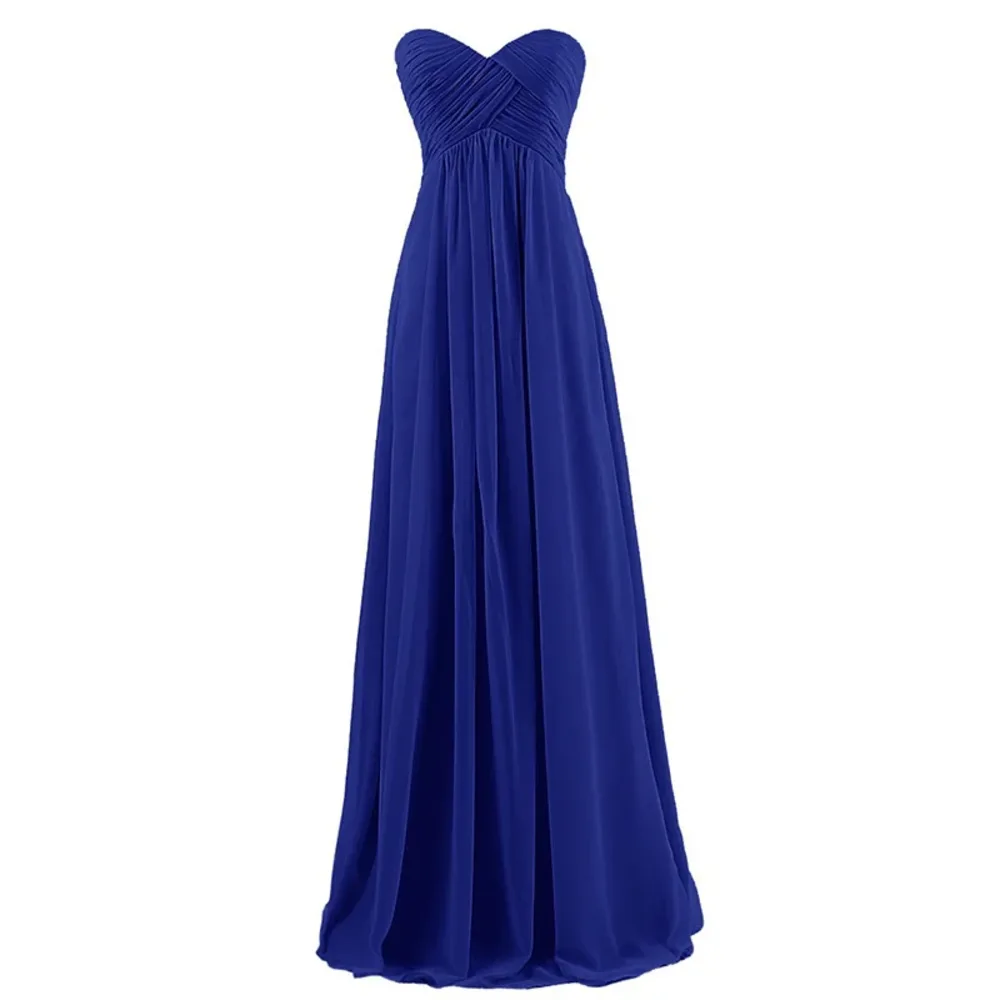
How to Style a Formal Summer Dress
Accessories transform a formal summer dress from simple to spectacular. The goal: complement without competing.
Shoes: Strappy heeled sandals are the quintessential summer formal shoe. Block heels work better than stilettos for outdoor events on grass or cobblestone. According to Emily Post's dress code guide, dressy wedge sandals are now accepted at most formal summer events.
Jewelry: Summer is the season for lighter pieces. Think delicate gold chains, pearl drops, or statement earrings, pick one focal point. Avoid heavy layered necklaces that trap heat against your chest.
Bag: A slim clutch or small crossbody in metallic or neutral tones. Straw or woven clutches work for daytime formal events and add seasonal texture.
Hair: Updos serve double duty in summer, they look formal and keep hair off your neck. A sleek chignon, loose French twist, or low bun with face-framing pieces all read as elegant while maximizing coolness.
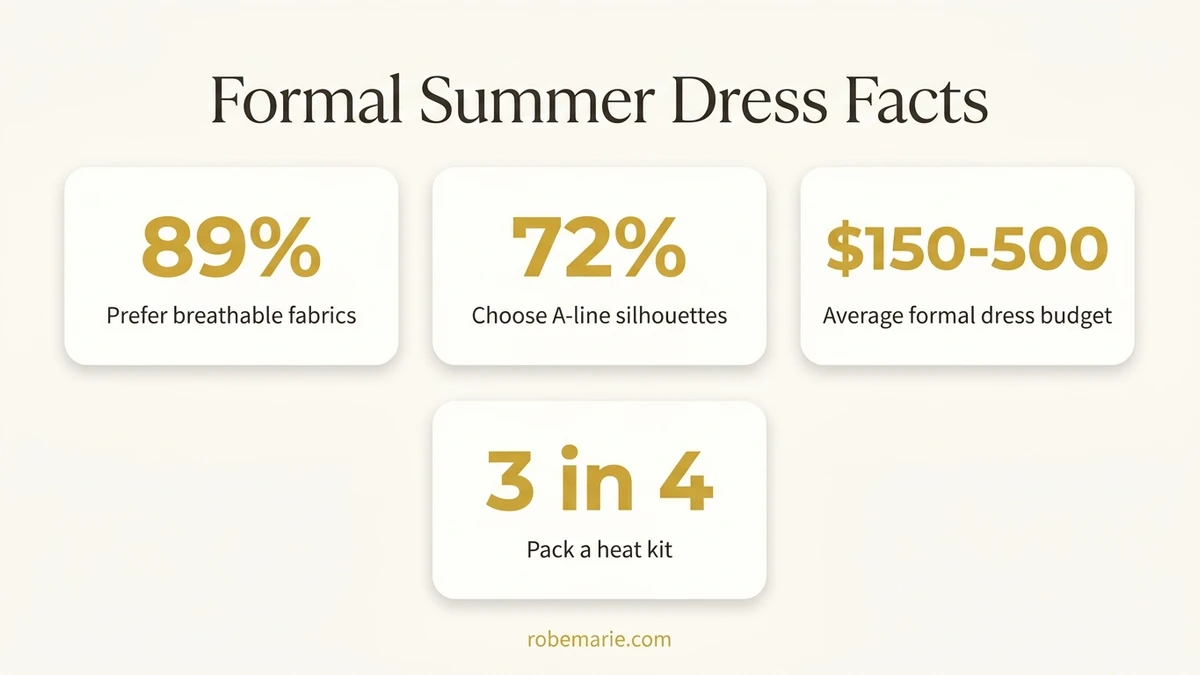
RobeMarie Insight: Based on RobeMarie virtual try-on data from summer 2025, 72% of users exploring formal summer dresses gravitated toward A-line and empire waist silhouettes over mermaid and bodycon styles. This suggests that comfort-forward shapes dominate real purchasing decisions (brides and guests prioritize ease of movement in summer, even when the dress code calls for maximum formality.)
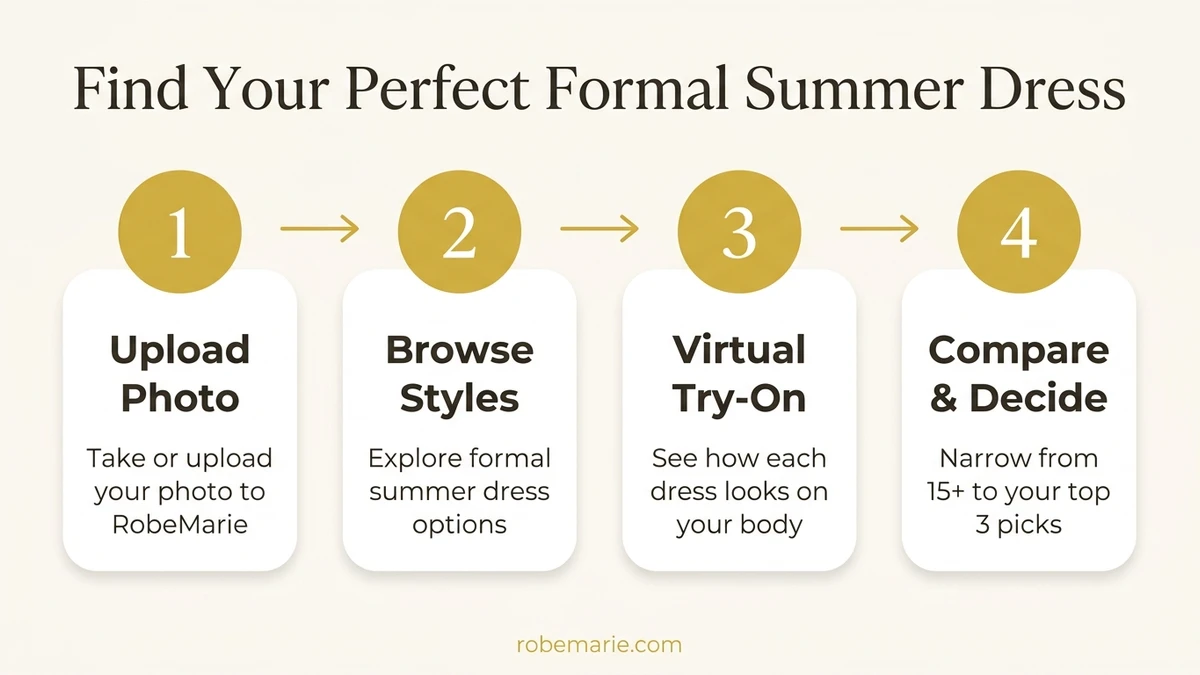
Try Before You Commit with Virtual Try-On
The biggest frustration with formal summer dresses? You can't tell how a fabric will feel or how a silhouette will drape on YOUR body from a product photo. You order a gorgeous chiffon gown, and it arrives looking nothing like the listing.
RobeMarie's virtual try-on solves this. Upload your photo and preview how different formal styles, fabrics, and silhouettes look on your actual body shape, before spending a cent. It's especially valuable for summer formal shopping because you can compare:
- Strapless vs. one-shoulder: which neckline flatters your shoulders?
- Floor-length vs. tea-length: which proportion works for the venue?
- Bold color vs. neutral: which palette suits your skin tone?
Instead of ordering three dresses and returning two, narrow your choices at home in minutes. Try the RobeMarie editor to experiment with different looks.
Frequently Asked Questions
Can you wear a maxi dress to a formal summer event?
Yes, a maxi dress works for formal summer events when it's made from elevated fabrics like silk, chiffon, or crepe and features refined details such as structured bodices, elegant necklines, or subtle embellishments. A cotton maxi or casual sundress does not qualify as formal, regardless of length. The fabric and construction determine formality, not the hemline alone.
What is the difference between formal and semi-formal for summer?
Formal summer attire means floor-length gowns or sophisticated tea-length dresses in premium fabrics like silk or chiffon. Semi-formal allows shorter lengths, simpler fabrics, and more relaxed silhouettes including polished midi dresses and dressy separates. Our semi-formal wedding guest guide covers this distinction in detail.
Can you wear a cocktail dress to a formal summer wedding?
Generally, no. Cocktail dresses fall below the formal dress code requirement. However, an elegant midi dress in a luxurious fabric with dressy accessories can work at some formal summer events, particularly afternoon ceremonies. When the invitation says "formal," default to floor-length or tea-length to avoid being underdressed.
Is a midi dress appropriate for a formal summer event?
A midi dress can work for formal summer events if it's crafted from premium fabrics and styled with elevated accessories. Tea-length (mid-calf) is more universally accepted at formal events than a standard midi (below the knee). Pair it with heeled sandals and statement jewelry to elevate the look. For strict black-tie events, floor-length is still the safest choice.
What should you NOT wear to a formal summer event?
Avoid sundresses, casual cotton maxi dresses, flip-flops, overly revealing cuts, denim of any kind, and heavy winter fabrics like velvet or thick brocade. White and ivory are off-limits at weddings. Neon colors and overly trendy pieces may also read as too casual for formal settings.
How much should you spend on a formal summer dress?
Quality formal summer dresses range from $150 to $500 at most retailers, according to the Accio 2025 summer dress market report. Investment pieces in silk or premium crepe can cost $500 to $1,500. Consider cost-per-wear: a versatile formal dress worn to multiple summer events delivers better value than a trendy piece worn once.
Can you rewear a formal summer dress to multiple events?
Absolutely. A well-chosen formal summer dress in a classic silhouette and neutral or jewel-tone color can be restyled for multiple events by swapping accessories, changing your hairstyle, and varying your shoes. This is one of the strongest arguments for investing in quality over trendy pieces.
What undergarments work best under formal summer dresses?
Choose moisture-wicking, seamless undergarments in nude tones matching your skin. A lightweight shapewear slip prevents fabric from clinging to skin in the heat. For strapless or backless styles, adhesive bras or built-in boning provide support without visible straps. Always test undergarments with your dress before the event day.
Your Summer Formal Checklist
Before your next formal summer event, run through this quick checklist:
- Fabric test: Does the material breathe? Did you do the wrist test?
- Dress code match: Floor-length for black tie, tea-length OK for formal
- Color check: Bold enough for summer, appropriate for the event
- Comfort run: Wore the dress for an hour at home in warm conditions
- Accessories ready: Strappy heels, clutch, minimal jewelry
- Heat kit packed: Blotting papers, setting spray, mini deodorant
- Virtual preview done: Tried styles on RobeMarie to confirm your choice
A formal summer dress doesn't have to mean suffering in the heat. With the right fabric, a flattering silhouette, and smart preparation, you'll walk into any event looking polished and feeling comfortable all night long. Start by exploring formal styles with RobeMarie's virtual try-on, it's the fastest way to find a dress that works for your body and your summer calendar.